16 Year-Old Salish Matter Conquered Sephora. Next is Netflix.
- Business
 ThePostMaster
- 0
- 21 minutes read


It’s a bright Sunday morning in Los Angeles, and a small film crew is following Jordan Matter as he darts around the amusement park on the Santa Monica Pier. The 59-year-old, tall and lanky with spiky ginger hair, looks like a mashup of Conan O’Brien and Sting. He’s attracted a group of excited kids, but they aren’t there for him—they know his presence portends someone better.
“Salish!” screams a small girl wearing glasses and an oversize hoodie when she spots Jordan. You can hear her over the clank of the roller coaster. Jordan’s 16-year-old daughter, Salish, is then wheeled onto the boardwalk, hiding in a garbage can. She pops out and waves at the kids, who absolutely lose their minds.
The adults in the area look bemused. Most don’t realise the teen in the trash is a YouTube sensation and newly minted beauty mogul with a brand that regularly sells out at Sephora. They don’t know she’s just been offered a sweeping Netflix Inc. deal, which will make her a regular on the streamer for at least the next three years. They surely have no clue she’s becoming one of Gen Alpha’s biggest celebrities—well, maybe the screams tip them off.
Jordan and Salish (her older brother suggested the name during a vacation to the Salish Sea in the Pacific Northwest) are both YouTube stars, with more than 34 million subscribers to Jordan’s eponymous account, which has been home to their father-daughter adventures since Salish was 10. Her mom, a former veterinarian named Lauren, appears in the videos only occasionally; she says people often incorrectly think Jordan is a single dad.
The video they’re filming on the pier this December weekend, “Surprising My Best Friend for His Birthday,” will garner 17 million views and counting. The Matters’ 30-minute semi-scripted episodes recall reality TV, with wacky challenges (like building a water park in the back of a truck) and other general zaniness that keep viewers hooked. Jordan is goofy and hyperactive; Salish, who always has the upper hand, sasses him lovingly. (Lauren, who has a soft-spoken and earnest affect, considers herself a “balance” to Salish and Jordan’s “frenetic energy.”) To a grown-up the videos read like silly fun at best or harmful exploitation at worst—depending on how you feel about kids on YouTube—but they resonate with their target audience: girls 16 and under, plus their moms and dads.
“So many parents come and tell me that I’m a great role model, which makes my day,” Salish says, in a lightly raspy voice with the tiniest lisp, at her family’s home the night before the shoot. “It’s just so sweet I can provide that for kids, but I don’t think about how to be one, you know?”
The Matters’ YouTube channel is ranked 70th overall in the US, beating out Justin Bieber and The Tonight Show Starring Jimmy Fallon, according to social media analytics platform Social Blade. Salish also has more than 10 million followers combined on her personal Instagram and TikTok accounts, and she occupies the top spot on Famous Birthdays, which is alternately considered the Wikipedia and IMDb of young internet personalities and influential among fans and entertainment types alike. Jordan says that particular metric was useful in convincing Sephora of Salish’s reach while pitching executives her beauty brand, Sincerely Yours. (When it comes to famous birthdays, middle-aged Jordan ranks No. 2.)
A Mall Frenzy
But Salish didn’t really break into the consciousness of the over-16 crowd until last fall, after hosting a Sincerely Yours pop-up at the American Dream mall in New Jersey. The venue had prepared for around 10,000 people, but 87,000 showed up to catch a glimpse of her, more than the capacity of MetLife Stadium less than a mile away. The turnout was larger than the crowds for Jonas Brothers and MrBeast events previously held at the mall. State police shut it down for fear of someone getting seriously injured, prompting coverage by People and Forbes.

“I wasn’t surprised,” Mila Hannah, 10, who wasn’t there but watched Jordan and Salish’s video of the event, says matter-of-factly. The fifth grader is a skin-care enthusiast who lives outside Toronto and has been following the channel for a couple of years. Salish, she says, is “kind of what I want to be when I’m older.”
The night before the pier shoot, Salish sits in her dad’s office, a small structure just off their large modern farmhouse-style home in a leafy LA neighbourhood. The outdoor walkway is littered with Amazon boxes, filled with possible props for future videos. An orange Nickelodeon Kids’ Choice Awards blimp sits on a shelf. (In 2024, they won favourite creator family, and in 2025, Salish won solo, for favourite female creator.) At one point Jordan asks Salish if she’d be willing to hide out in a giant stuffed animal the next day and if she wants some pizza that looks as if it’s been dropped on the ground (no to both). He shoos out a neighbour’s cat that likes to wander in. It feels like a tamer version of one of their videos.
Salish wears a baby blue sweatsuit, plus slippers from Ugg, her favourite shoe brand. Her long strawberry blond hair is parted in the middle, and there’s a smattering of light acne across her face, something she doesn’t cover up on camera, surely adding to her relatability. She runs track and plays soccer, and her favorite activity is hanging out with friends. Other favorites include plain rice with soy sauce, Stranger Things and Billie Eilish. She looks a little tired, having just returned from a sleepover—a real one, not one filmed for content—at a Venice Beach house her mom rented for a night for her 16th birthday. She’s a pretty typical kid and, having been born a month shy of 2010, holds aspirational status for younger Gen Alphas.
YouTube is Gen Alpha’s favourite platform to watch; they’re absorbing the lesson from stars like Salish that it could also make for a viable career. More than half of 8- to 12-year-olds would like to be content creators, according to data from youth market researcher YPulse. Almost half of teens already make money through digital side hustles, per a 2025 survey by Whop, a business platform for creators. It’s not necessarily about wanting to be famous: The flexible work schedules and glossy sheen of the creator economy are extra appealing thanks to the shrinking market for entry-level jobs many fear will only contract further because of artificial intelligence and the lack of professional mentorship young workers find when they do enter the workforce. YouTube shows a different path, where you can ostensibly get paid just for being you.
“They see themselves in her and this very specific relationship she has with her dad,” Jordan says of Salish’s fans. In videos Jordan is high-energy, like a cartoon character come to life. Off camera he calms down his persona … a little. “He’s cringey!” pronounces Mia Fernanda Villa, a 9-year-old Salish fan from El Paso, Texas, via video call. Mila in Toronto used the same word on a separate call, but she allows that “if he wasn’t there, it wouldn’t be as funny.”
In fact, Salish Inc. wouldn’t exist at all without Jordan. He played Division I college baseball and then had a fledgling acting career, doing regional theatre and appearing on Law & Order. To pay the bills, he taught himself headshot photography, which led to creative projects with the performers he met over the next decade; a photo book series of dancers in striking outdoor settings made him a New York Times bestselling author. He posted videos on YouTube with entertainers, gymnasts and then kids from the reality show Dance Moms; collaborations with Charli D’Amelio and other huge creators followed, growing Jordan’s channel to 5 million subscribers.
Salish and her older brother, Hudson, appeared in Jordan’s videos sporadically, but she started showing up more regularly during a “void of creativity” he was feeling around his work in 2020. Normally a shy kid, she came alive on camera, bringing something out in Jordan no one else could. The audience seemed to love her. During the pandemic the Matters moved from suburban New York to LA so Jordan could dedicate himself, and eventually Salish, to YouTube.
Now, platforms with changing algorithms and brands with fluctuating budgets make earning income from ads and sponsored content less reliable for creators. So the Matters—like many before them—are turning to brand-building on their own. Beauty is particularly attractive; it’s a high-margin business with a relatively low bar for entry. Successful influencer-founded beauty companies such as Summer Fridays and Hailey Bieber’s $1 billion Rhode make it look easy. (Failures, including the brands from TikTok-sensation-turned-pop-star Addison Rae and YouTuber Hyram Yarbro, get quickly forgotten.)
Companies had reached out to Salish to do licensed beauty lines before, and she has a collection of slime with Moose Toys, with whom she’s developing other products. But the Matters were mulling over whether to start their own brand—inspired by Salish’s skin turning red from TikTok-popular products not meant for kids—when they heard from Seth Rodsky. The co-founder and managing partner of private equity firm Strand Equity has a 9-year-old daughter who’s a “rabid fan” of Salish’s, and having co-founded Reese Witherspoon’s production company Hello Sunshine, he knows how to capitalize on fame. Officially, Rodsky, Jordan, Salish and Chief Executive Officer Julia Straus are the co-founders of Sincerely Yours. They’ve all invested in the brand, which has raised about $7 million.
For Gen Alpha, by Gen Alpha
Salish enjoys demonstrating the four Sincerely Yours products: a cleanser, a moisturiser, a face mist and a sunscreen called Sunny Side Up, which comes in a yellow tube. The packaging is high-quality and elevated, rendered in soft pastels. It doesn’t read “kiddie.” She spritzes on the mist with the expertise of someone who’s been using beauty products since she was 12, which she has.
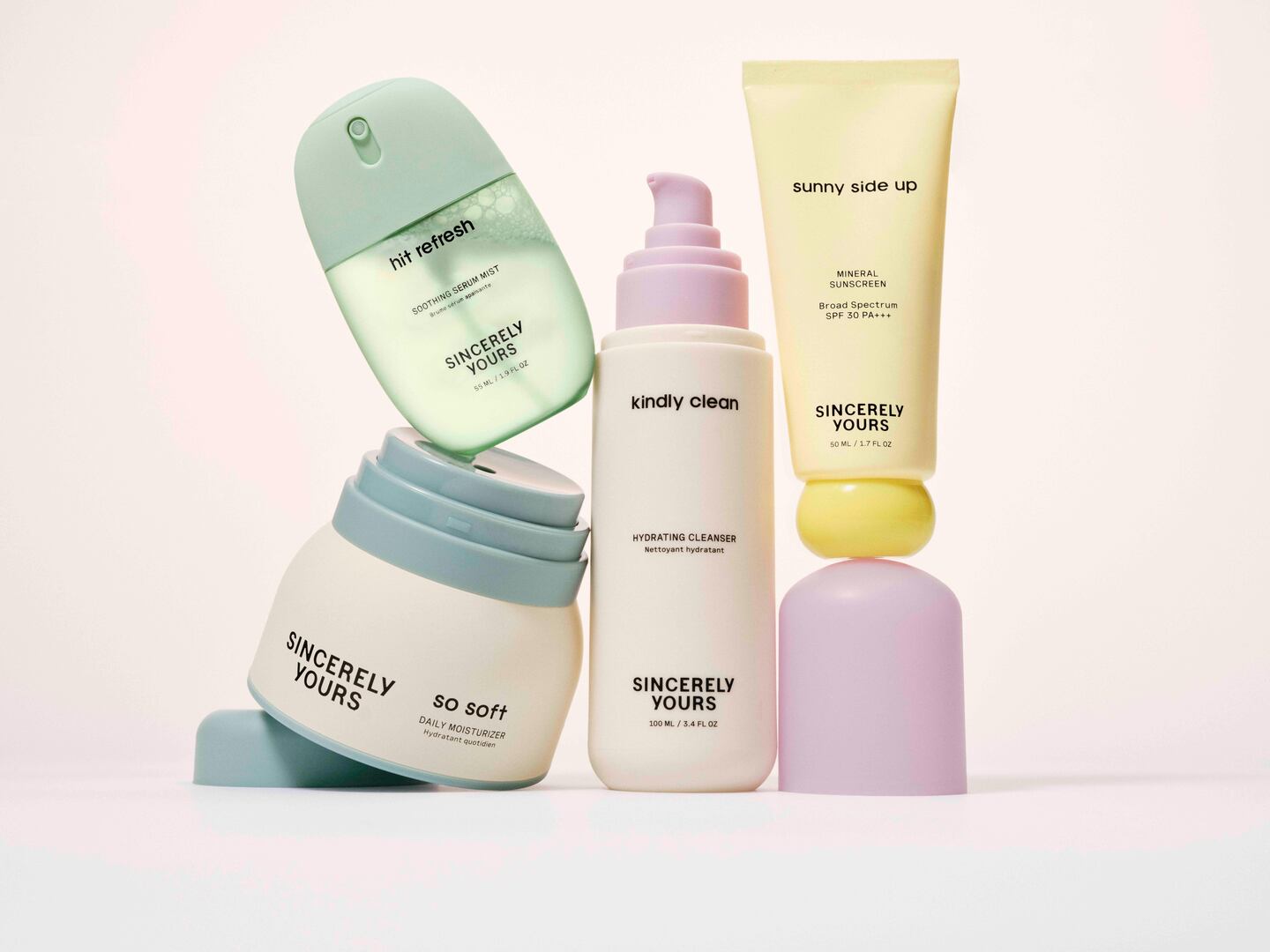
Rodsky says Salish has an “unfair advantage” and is an “incredible megaphone” for the brand. She can already talk about it like a chief marketing officer. “I wanted our skin-care brand to be affordable but still look pretty expensive and be amazing for sensitive skin,” Salish says from the couch in Jordan’s office. The products cost from $22 to $28. She sits in on company calls when she’s not at school. Sincerely Yours is the first beauty brand to be sold at Sephora that’s formulated for and marketed to Gen Alpha, and the products sold out within hours of hitting shelves in some locations; by the next week they were picked clean everywhere. “Who is Salish Matter?!” the beauty industry frantically Googled.
Sincerely Yours is an early entrant into one of the first new white spaces beauty has seen in years: products made for kids. It’s a niche that puts Salish in the middle of a controversial debate, veering into moral panic, as parents and pundits wonder, How young is too young for skin care? When Rini, actress Shay Mitchell’s new beauty brand, introduced face masks for 4-year-olds, critics deemed it “dystopian.” Since 2023, tweens using harsh skin care and taking over beauty stores have forced the industry to pay attention to the demographic. A 2024 report by Ulta Beauty Inc., which introduced in-store kids’ birthday parties last year, noted that Gen Alpha starts experimenting with beauty products at around 8 years old, five years earlier than Gen Z did.
“I think this whole obsession with beauty at such a young age is a little problematic,” says Mila’s mom, Rebecca Hannah, prompting Mila to roll her eyes. “There’s plenty of time for that, and I’m just trying to quell it a bit.” Nonetheless, she’s open to letting Mila try Sincerely Yours if it launches in Canada.
A 2025 white paper from the Fashion Institute of Technology found that Gen Alpha spent an estimated $14 billion on beauty in 2024, up 70 percent from 2023. The authors noted the cohort provides “the longest customer relationship opportunity in beauty history,” since they’re being hooked by the industry much younger than previous generations were. Fifty-six percent of kids age 10 to 17 spend between $25 to $99 per month on average for beauty and personal-care items, according to data from market-research firm Mintel. The media has dubbed these “Sephora kids,” and legislators in California even introduced a Sephora kids bill to card young people trying to buy products with harsh antiaging ingredients.
“I would never tell a parent what to do, what to buy, what not to buy,” says Sincerely Yours CEO Straus, who has three preteen daughters. “When you’re marketing to minors, or to their parents, you really have to be thoughtful about what that looks like.”
Selling at Sephora was a must for the Sincerely Yours founders, its 32-person teen advisory board and the focus group of 60,000 fans they have on a closed texting platform. Salish says she’s recognised at Sephora all the time, because it “has a lot of kids and teenagers.” For Gen Alpha there’s a “social element to spending time in beauty retail,” says Lauren Goodsitt, director of beauty and personal care at Mintel. Beauty stores have become a third space for them, with 66 percent of tweens opting to spend time there even when they’re not shopping, according to Mintel data. Sephora has been squeamish about addressing how it’s selling to the demographic, and executives from the retailer, owned by LVMH Moët Hennessy Louis Vuitton SE, declined to be interviewed for this story.
Salish will appear at the sold-out Sephoria event in March, a sort of Coachella for beauty fans, where tickets cost $180 to $465. The moisturiser is already a top 10 bestseller in the category at Sephora, despite being sold out for months. Sincerely Yours premiered in 384 of the chain’s US stores and will expand to all 600-plus standalone locations this spring. Straus jokes that she hopes the brand will be placed on a lower shelf than in the initial launch so that fans can reach it.
Salish isn’t precocious in the way some kid celebrities can be—if anything, she has a disarming naivete befitting your average high school sophomore. She’s expressive, with a playful enthusiasm when she talks, the same as her YouTube persona, which, like Jordan, she dials up when filming. “When I was, like, 12, a lot of people said that I smiled too much. I got that I was a ‘pick me’ a lot. Do you know what that is?” Salish asks. (For the Olds reading, she explains it’s “someone trying to get all the attention.”)
After the shocking mall turnout this fall, touring companies reached out, guessing they could sell out 20,000-seat venues for shows starring the father-daughter pair. (Jordan says he didn’t feel comfortable monetizing their audience relationship in this way and thought about doing what he calls a “gratitude tour” to visit fans in multiple cities free of charge.) Netflix came calling shortly afterward. The wide-ranging deal with the streamer sets Salish up to produce a variety of potential shows, from scripted series starring her to animated ones voiced by her to unscripted projects like a game show Jordan has teased; products and events are also part of the package.
She recently met Gen Z podcasting phenom Alex Cooper, who offered to counsel her through “any hate that I get and said that I can always talk to her if I need anything.” But while Cooper ascended to fame at 23 by talking candidly about her sex life, Salish is in a different category entirely. The rise of child influencers has led to concerns over financial manipulation by caregivers, minors’ ability to consent and exposure to predators online. “People will assume the worst,” Jordan says. “There’s this built-in assumption of exploitation.”
Jordan’s critics point to videos he’s made of his kids in “dating” situations. Hudson had his “first kiss” shown in slow motion when he was 14. For years Salish and Nidal Wonder (the best friend she was filming with on the pier) have been “shipped” by fans who want them to be in a relationship. Jordan insists they’re teaching viewers how to have healthy boy-girl friendships, though episode thumbnails sometimes tease a romantic connection. Salish says she comes up with the “dating ideas,” not her dad. Lauren gets angry at suggestions of exploitation, saying she always saw YouTube as a “positive outlet” for her daughter.
The family is protective about revealing her finances, but Jordan says he has set up two trusts for Salish, one she gets when she’s 18 and one at 25. She shares YouTube profits with Jordan and his editing partner but gets 100 percent of the proceeds from all brand deals she does on her own. For newer deals, a tax attorney and their joint manager decide what’s equitable, with final approval by Salish. Jordan says he’s asked Salish frequently if she wants to continue filming. She confirms she has input into every video, and she shoots only on Sundays so she can be a “normal kid” the other six days of the week. On the pier it’s obvious Salish has a close and comfortable relationship with the team she shoots with, some of whom have known her since she was born.
The Matters, gearing up for the next level of Salish’s fame, are thinking about increased security. Fans have sent packages to the house, which Lauren finds “creepy” even though she knows they likely have good intentions. The focus is on protecting “normalcy.” “What I can control is how I treat her, the boundaries I put in place to protect her childhood, the revenue that she will receive,” says Jordan. “What I can’t control is how being in the spotlight at a young age will impact her growth and development as a person.”
For now Salish is focused on the immediate future and excited about all the new things on her plate. “I hate being, like, alone or just bored and not doing anything,” she says. “So I’m really excited to do everything.”
By Cheryl Wischhover
Sign up to The Business of Beauty newsletter, your complimentary, must-read source for the day’s most important beauty and wellness news and analysis.
