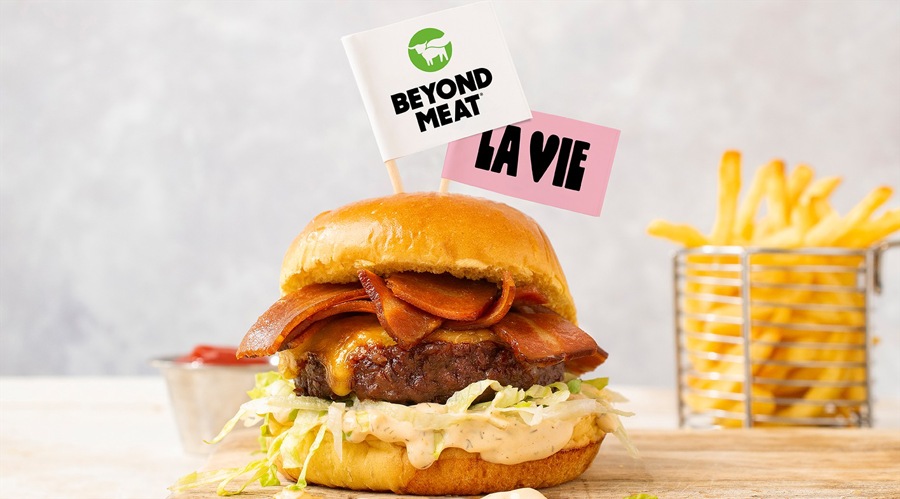

Retail traders have resurrected Beyond Meat from penny-stock purgatory,
proving once again that fundamentals are optional when the internet gets hungry.
Once the darling of plant-based optimism, Beyond Meat was the company
that made Wall Street believe pea protein could save the planet. When it went
public in 2019, shares rocketed from $25 to nearly $240, giving the company a
valuation north of $14 billion. Then reality arrived. Consumers weren’t biting,
margins vanished, and investors lost their appetite.
By October 2025, Beyond Meat’s stock had collapsed to around $1.10
after the company finalized a debt exchange deal that massively diluted
shareholders. According to The New York Post, the swap handed bondholders
hundreds of millions of new shares, effectively wiping out most existing
investors. The company said 97%
of creditors had agreed to trade their old notes for new ones due in 2030,
but that came at a cost: as many as 316 million new shares were issued, up from
just 76.6 million before the deal.
$BYND – The Meat Revolution Begins
From 132K → 1.1M
That’s not luck – that’s precision.When everyone was laughing at a “Beyond Meat memecoin”, I saw what others missed:
Hype brewing across WallStreetBets
Shorts getting squeezed hard on the real $BYND stock
Memecoin narrative… pic.twitter.com/2UmIWgAW6H— ShadowX (@x_shadow0x) October 21, 2025
That’s a huge dilution, and if all bondholders convert, they’ll own
roughly 88% of the company. TD Cowen promptly cut its target price to 80 cents
and kept its “Sell” rating. The analysts’ message was clear: the fake meat
bubble had finally burst.
Beyond Meat’s market cap, once in the billions, shrank to under $80
million. Revenue was projected to fall nearly 14% this year to about $281.6
million, while consumer enthusiasm in its biggest market, the U.S., had
evaporated faster than a soy burger on a hot grill.
Enter the Meme Lords
Just when it looked like Beyond Meat was cooked, the meme-stock
faithful returned for seconds. According
to reports, retail investors began flooding into the stock last week,
sending trading volumes and options activity surging to multiples of their
30-day averages.
Why? Because it checked all the boxes of a perfect meme-stock target:
low price, high short interest, and a nostalgic ticker symbol. A Reddit thread
titled “MAKE
$BYND GREAT AGAIN” started making the rounds, and soon Beyond Meat was
trending on social media alongside GameStop, AMC, and Opendoor.
$bynd is now officially $gme 2.0
I thought many others were but now based on what I’m seeing if retail band together and unite nothing can stop this from double digits then maybe just maybe into triple digits pic.twitter.com/tZLbmw7bL7— FoxHunter (@shandor423) October 20, 2025
“Today’s reversal and high short-interest will put it back on meme
traders’ radars,” said
Tom Bruni, head of markets and retail investor insights at Stocktwits.
Translation: time to squeeze the shorts.
Beyond Meat surged
more than 100% in 24 hours, up as much as 137% during the session. By the
afternoon, trading volume had hit a jaw-dropping 700 million shares, for some
context, it’d normally sit around 20 million.
The Great Short Squeeze Revival
The irony? The same debt-swap deal that crushed Beyond Meat’s valuation
is what sparked its comeback. The expiration of lock-up restrictions on October
16 gave new shareholders the ability to sell and meme traders seized the
liquidity to engineer a classic short squeeze.
As of the end of September, about 54% of Beyond Meat’s float was sold
short, making it one of the most shorted stocks in the U.S. When retail traders
piled in, shorts were forced to buy back shares to cover positions, fueling the
frenzy even more.
It’s the same playbook used on GameStop and AMC during the pandemic’s
wild trading days. The difference is that Beyond Meat doesn’t make video games
or popcorn. It makes fake beef that no one seems to want anymore. Yet somehow,
the stock was “to the moon” again, at least for a day.
Still Beyond Saving?
Even with the hype, nothing fundamental has changed. The company is
still losing money, its revenue is falling, and its debt restructuring was more
of a last-ditch survival tactic than a strategic win.
Unfortunately, I’ll be tapping the sign.
Y’all want to get some money back from many of the same players? $BYND meat is around 100% short and is at dirt levels. pic.twitter.com/LuCyomNJ2R
— Kryftz (@Kryftz) October 21, 2025
At the end of the second quarter, Beyond
Meat had $1.14 billion in convertible notes versus $691.7 million in assets.
The tender offer might have bought time, but it didn’t fix the underlying
problem: a broken business model and dwindling consumer interest.
The stock seems an obvious sell, and while Reddit may have resurrected
it temporarily, the fundamentals are still, well, meatless.
Still, the spectacle says something larger about today’s market.
Fundamentals are optional, risk appetite is back, and as long as there’s
internet access and a high short-interest ratio, any corpse of a stock can be
reanimated.
Beyond Meat’s slogan used to be about saving the planet. Now it’s about
saving itself, one meme at a time.
For more stories making the waves in finance and tech, visit our Trending pages.
Retail traders have resurrected Beyond Meat from penny-stock purgatory,
proving once again that fundamentals are optional when the internet gets hungry.
Once the darling of plant-based optimism, Beyond Meat was the company
that made Wall Street believe pea protein could save the planet. When it went
public in 2019, shares rocketed from $25 to nearly $240, giving the company a
valuation north of $14 billion. Then reality arrived. Consumers weren’t biting,
margins vanished, and investors lost their appetite.
By October 2025, Beyond Meat’s stock had collapsed to around $1.10
after the company finalized a debt exchange deal that massively diluted
shareholders. According to The New York Post, the swap handed bondholders
hundreds of millions of new shares, effectively wiping out most existing
investors. The company said 97%
of creditors had agreed to trade their old notes for new ones due in 2030,
but that came at a cost: as many as 316 million new shares were issued, up from
just 76.6 million before the deal.
$BYND – The Meat Revolution Begins
From 132K → 1.1M
That’s not luck – that’s precision.When everyone was laughing at a “Beyond Meat memecoin”, I saw what others missed:
Hype brewing across WallStreetBets
Shorts getting squeezed hard on the real $BYND stock
Memecoin narrative… pic.twitter.com/2UmIWgAW6H— ShadowX (@x_shadow0x) October 21, 2025
That’s a huge dilution, and if all bondholders convert, they’ll own
roughly 88% of the company. TD Cowen promptly cut its target price to 80 cents
and kept its “Sell” rating. The analysts’ message was clear: the fake meat
bubble had finally burst.
Beyond Meat’s market cap, once in the billions, shrank to under $80
million. Revenue was projected to fall nearly 14% this year to about $281.6
million, while consumer enthusiasm in its biggest market, the U.S., had
evaporated faster than a soy burger on a hot grill.
Enter the Meme Lords
Just when it looked like Beyond Meat was cooked, the meme-stock
faithful returned for seconds. According
to reports, retail investors began flooding into the stock last week,
sending trading volumes and options activity surging to multiples of their
30-day averages.
Why? Because it checked all the boxes of a perfect meme-stock target:
low price, high short interest, and a nostalgic ticker symbol. A Reddit thread
titled “MAKE
$BYND GREAT AGAIN” started making the rounds, and soon Beyond Meat was
trending on social media alongside GameStop, AMC, and Opendoor.
$bynd is now officially $gme 2.0
I thought many others were but now based on what I’m seeing if retail band together and unite nothing can stop this from double digits then maybe just maybe into triple digits pic.twitter.com/tZLbmw7bL7— FoxHunter (@shandor423) October 20, 2025
“Today’s reversal and high short-interest will put it back on meme
traders’ radars,” said
Tom Bruni, head of markets and retail investor insights at Stocktwits.
Translation: time to squeeze the shorts.
Beyond Meat surged
more than 100% in 24 hours, up as much as 137% during the session. By the
afternoon, trading volume had hit a jaw-dropping 700 million shares, for some
context, it’d normally sit around 20 million.
The Great Short Squeeze Revival
The irony? The same debt-swap deal that crushed Beyond Meat’s valuation
is what sparked its comeback. The expiration of lock-up restrictions on October
16 gave new shareholders the ability to sell and meme traders seized the
liquidity to engineer a classic short squeeze.
As of the end of September, about 54% of Beyond Meat’s float was sold
short, making it one of the most shorted stocks in the U.S. When retail traders
piled in, shorts were forced to buy back shares to cover positions, fueling the
frenzy even more.
It’s the same playbook used on GameStop and AMC during the pandemic’s
wild trading days. The difference is that Beyond Meat doesn’t make video games
or popcorn. It makes fake beef that no one seems to want anymore. Yet somehow,
the stock was “to the moon” again, at least for a day.
Still Beyond Saving?
Even with the hype, nothing fundamental has changed. The company is
still losing money, its revenue is falling, and its debt restructuring was more
of a last-ditch survival tactic than a strategic win.
Unfortunately, I’ll be tapping the sign.
Y’all want to get some money back from many of the same players? $BYND meat is around 100% short and is at dirt levels. pic.twitter.com/LuCyomNJ2R
— Kryftz (@Kryftz) October 21, 2025
At the end of the second quarter, Beyond
Meat had $1.14 billion in convertible notes versus $691.7 million in assets.
The tender offer might have bought time, but it didn’t fix the underlying
problem: a broken business model and dwindling consumer interest.
The stock seems an obvious sell, and while Reddit may have resurrected
it temporarily, the fundamentals are still, well, meatless.
Still, the spectacle says something larger about today’s market.
Fundamentals are optional, risk appetite is back, and as long as there’s
internet access and a high short-interest ratio, any corpse of a stock can be
reanimated.
Beyond Meat’s slogan used to be about saving the planet. Now it’s about
saving itself, one meme at a time.
For more stories making the waves in finance and tech, visit our Trending pages.