
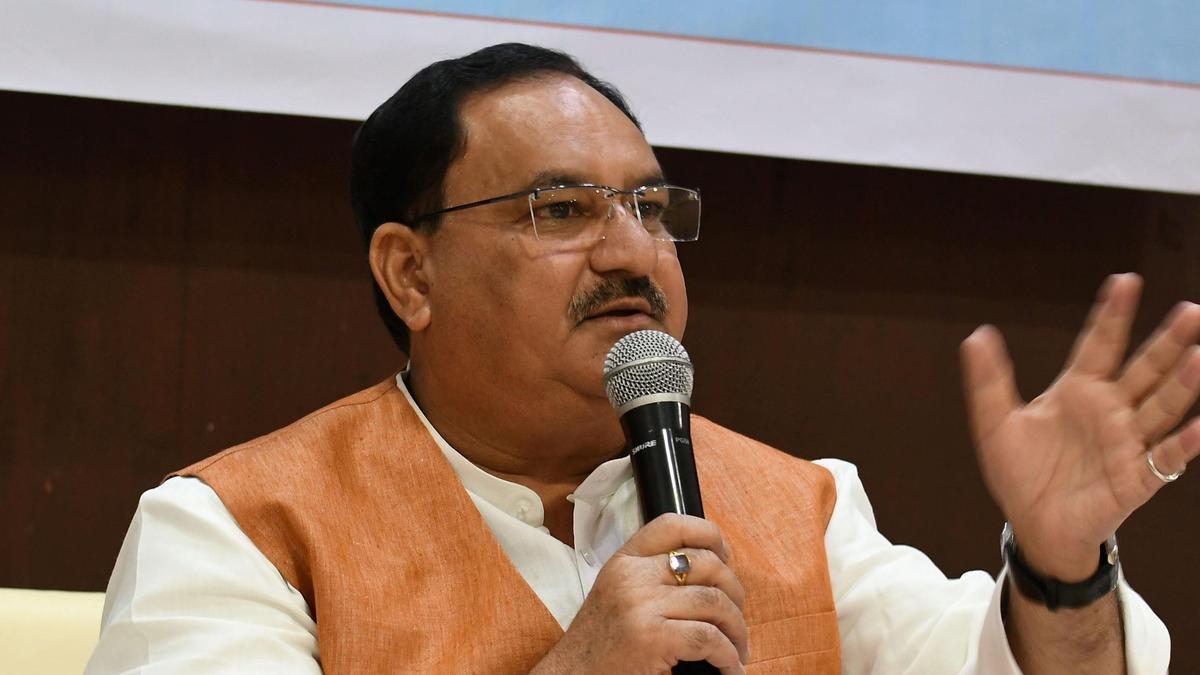
The Union health minister underlined the importance of the Integrated Disease Surveillance Programme (IDSP), stressing that coordinated and synergistic efforts by the Centre and states are essential to ensure robust and collaborative surveillance systems across India |Image used for representational purpose only
| Photo Credit: VIJAY SONEJI
The discussions reinforced the need for timely information sharing, clarity of roles and responsibilities, and coordinated action across departments
Union Health Minister J P Nadda on Monday directed that preparedness and response activities, including surge capacities, be ensured to contain influenza, cases of which are expected to rise this season.
He was speaking at the two-day ‘Chintan Shivir’ on “strengthening interministerial and intersectoral convergence for influenza preparedness and response”.
The event was organised by the National Centre for Disease Control (NCDC) under the Union health ministry in collaboration with WHO India from December 22-23.
Addressing the inaugural session virtually on Monday, Nadda stated that the ‘Chintan Shivir’ offers an important opportunity for all stakeholders to deliberate on various dimensions of preparedness for resilience against influenza.
He emphasised that it is vital to ensure preparedness and response activities, including surge capacities, are well aligned for the forthcoming influenza season.
The Union health minister further underlined the importance of the Integrated Disease Surveillance Programme (IDSP), stressing that coordinated and synergistic efforts by the Centre and states are essential to ensure robust and collaborative surveillance systems across India.
The ‘Chintan Shivir’ witnessed participation from around 110 representatives from a wide range of ministries, departments and institutions, reflecting strong multi-sectoral engagement, the health ministry said in a statement.
Participants included officials from the Ministry of Environment, Forest and Climate Change, Department of Animal Husbandry and Dairying, Directorate General of Health Services (DGHS) of the Ministry of Health and Family Welfare, Indian Council of Medical Research (ICMR), Indian Council of Agricultural Research (ICAR), National Institute of Virology (NIV), partner organisations, and States and Union territories.
Eleven states participated in person, while others joined virtually, enabling cross-learning through the sharing of best practices and experiences, the statement said.
Influenza continues to pose a significant public health challenge in India and globally, with periodic outbreaks resulting in substantial morbidity and mortality, particularly among vulnerable populations such as young children, older adults, pregnant women and individuals with chronic illnesses, it stated.
The Union health ministry continues to closely monitor seasonal influenza trends across States and UTs in real time through the IDSP network, the statement said.
Deliberations emphasised that influenza preparedness cannot remain siloed and must be supported through convergence across sectors for surveillance, early warning, laboratory preparedness, clinical readiness and effective risk communication.
A key outcome of the ‘Chintan Shivir’ is the advancement of a more structured and actionable approach to preparedness review by states, UTs and institutions.
This includes the development of a practical preparedness checklist to support readiness assessments, identify gaps and guide time-bound follow-up actions, the statement said.
The discussions reinforced the need for timely information sharing, clarity of roles and responsibilities, and coordinated action across departments.
Published – December 22, 2025 10:45 pm IST