Image source: Amazon
A lot of the technology that we take for granted as mass consumers made their debut in sci-fi comics decades ago. The 3-D printer, AirTag, smart devices, video calls, A.I. virtual assistants, and more made their inspirational debuts in sci-fi comics a long time ago. The story idea for the first atomic bomb even made its debut in a Superman comic months before the United States used it in WWII!
Here are 11 examples of sci-fi comics that would predict technologies of the future that we now take for granted today.
1. The U.S. Government Censors Superman #34 For Predicting the Atom Bomb
In 1945, the U.S. government told DC Comics to delay a story for a year. In Superman #34, set to come out in early 1945, Lex Luthor unsuccessfully tries to use an “atomic bomb” on Superman. Readers of the era, a short window months before the first atom bombs dropped on Japan, would not have known what the term meant.
The U.S. would later drop two atom bombs on Japan in August 1945. DC Comics and the writers had no clue about the atomic program, but were under the thumb of government censors. The story, “Battle of the Atoms,” was an early example of sci-fi comics predicting future technology.
2. Dick Tracy’s Wrist Watch
Dick Tracy was a hard-boiled detective inspired by real-life crime fighter Eliot Ness. Tracy made his debut in comic strips in 1931. The Dick Tracy comics would feature some sci-fi and technology elements that later inspired real-world inventions.
Tracy’s Two-Way Wrist Radio made its debut in 1946; it became a Two-Way Wrist TV in 1964. The device would inspire the invention of modern communication devices, like smart devices and especially the smart watch.
3. Flash Gordon’s View Screens and Space Phones
Flash Gordon, one of the earliest sci-fi comics, made its debut in 1934 to compete with Buck Rogers. It’s about a human adventurer battling space tyrant Ming the Merciless from the planet Mongo. The earliest Flash Gordon comic strips featured characters using “space-phones” and later view screens for communication. These ideas were in the sci-fi comics of post-Depression Era America a century before smart devices and modern video screen calls became reality.
4. Iron Man’s Heads Up Display
In the Iron Man comics, and especially the 2008 film, Iron Man uses holographic communication and data interfaces within his helmet. While some military and commercial pilots utilize rudimentary data display screens, many tech companies are trying to mimic the Iron Man heads-up display. The first smart glasses made their debut in 2012 and aesthetically display similar visual data.
5. Ultron’s Need to Constantly Upgrade Its A.I.
Utron made his debut in Avengers #54 in 1968. In the comics, Hank Pym, the original Ant-Man, uses a digitized model of his brain to create Ultron. Ultron gains sentience, its own adamantium body, and a severe God complex. After each defeat by the Avengers, Ultron upgrades its AI and its body and comes back stronger. Ultron’s need to continually upgrade its model would predate society’s current anxiety about A.I. by decades.
6. X-Men’s Supercomputer Cerebro
X-Men is one of the best sci-fi comics at Marvel, although many people think it is only about superheroes. In X-Men #7, from 1964, Cerebro made its debut. Prof. X uses Cerebro, a supercomputer, to augment his powers and locate mutants anywhere on the planet. Cerebro was an eerily accurate prediction of the fast-processing supercomputers and cloud-based servers of today.
7. MCU J.A.R.V.I.S. Predicts the Rise of A.I. Virtual Assistants
A.I. and supercomputer intelligences have been in sci-fi comics for decades. However, the idea of the superhero A.I virtual assistant would gain popularity with J.A.R.V.I.S. from 2008’s Iron Man. The first A.I.virtual assistant, Siri, made its debut in 2011. Amazon’s Alexa would follow in 2013 as well as Microsoft’s Cortana in 2014.
Today, you have a non-descript virtual A.I. talking to you from your laptop, smart device, smart watch, and car display console. No one is saying that the MCU is the sole reason why A.I. virtual assistants exist. However, J.A.R.V.I.S. was obviously an inspiration for the personable and over-friendly interface function of modern AI virtual assistants.
8. Spider-Man’s Spider-Tracers Predicted AirTags
Spider-Man first began using Spider-Tracers, tiny spider-shaped tracking devices, back in Amazing Spider-Man #11 in 1964. If a villain got away, Spider-Man would throw a Spider-Tracer on them to track their movements. This proves that Spider-Man comics function as much as sci-fi comics as much as superheroics. Spider-Tracers may also have been the inspiration for the AirTag, which made its commercial debut in 2021.
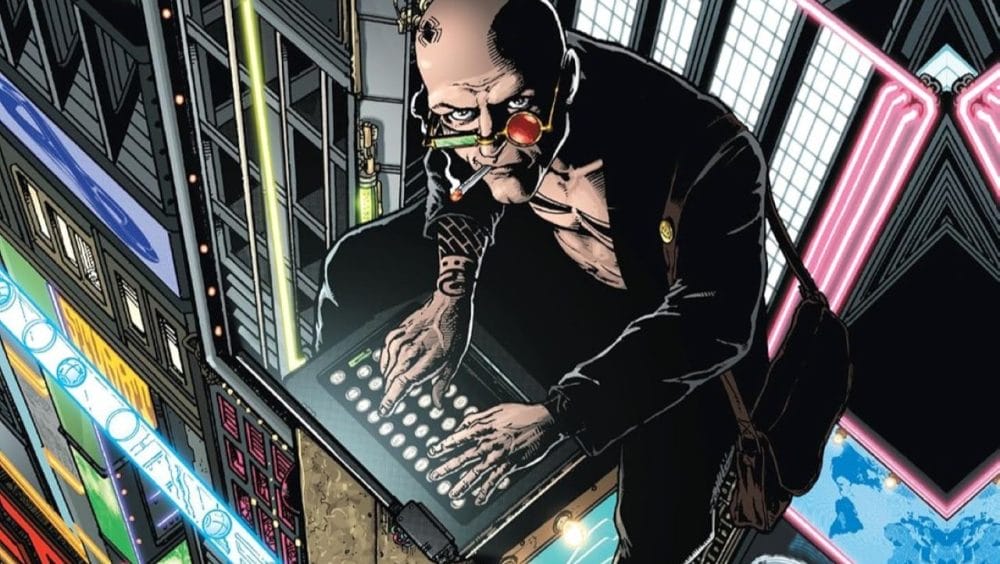
9. Transmetropolitan Predicts Social Media Newsfeeds
Transmetropolitan was one of the most groundbreaking political and sci-fi comics of 1997, when the internet was in its infancy. The series is about a renegade journalist, Spider Jerusalem, and his quest to fight corruption in a dystopian, 23rd-century United States through journalism. The comic would predict social media newsfeeds instantaneously transmitting news to online users, a decade before Twitter came into existence.
Absolute Transmetropolitan Vol. 1 is a 544-page hardcover that collects the first 21 issues of the series. Get it for $131 on Amazon.
10. Spider-Man and Spider-Woman’s Web Wings Predicted Wingsuits
The first wingsuit prototypes made their debuts in the 1910s and 1930s, but were never functional on a commercial scale. The first commercial wingsuits for extreme sports adrenaline junkies came out in the 1990s. However, Spider-Man had web wings since his debut in Amazing Fantasy #15 in 1963.
Spider-Woman, who made her debut in Marvel Spotlight #32 in 1977, had much larger and functional web wings for gliding on her suit. While there is no proof that the Spider web wings were the inspiration for modern web suits, it’s still a major coincidence.
11. Superman’s Girlfriend, Lois Lane #51 Predicts 3-D Printers
In Superman’s Girlfriend, Lois Lane #51 from 1964, Superman uses a “processing machine.” He uses it to create 3-D busts of the faces of his friends from 2-D pictures as the model. This comic was probably the inspiration for the 3-D printer, which made its prototype debut in 1980 and commercial debut in the 2000s.
Sci-Fi Comics That Predicted Today’s Technology
The technology of tomorrow finds inspiration from the ideas of yesterday and yesteryear. It is not just comic books, either. In the early 1980s, Knight Rider’s K.I.T.T. was the only talking, hi-tech car on TV. Now, everyone can get a modern car with a virtual AI assistant that talks to them.
The U.S. military has been trying to develop exo-armor suits for its soldiers since 2008’s Iron Man. Remember the beeping hospital beds from Star Trek? The hospital smart beds of the future will exist partially because of inspiration from a sci-fi TV show.
The most unrestrained ideas for tomorrow’s tech usually manifest in sci-fi films, TV shows, and comic books.
This post includes affiliate links. If you purchase anything through these affiliated links, the author/website may earn a commission.
You May Also Like…

Allen Francis is a full-time writer, prolific comic book investor and author of The Casual’s Guide: Why You Should Get Into Comic Book Investing. Allen holds a BA degree from Marymount Manhattan College and has decades of experience in comic investing and personal finance. Before becoming a writer Allen was an academic advisor, librarian, and college adjunct for many years. Allen now focuses on comic book reviews, collectible investments, and helping others collect and enjoy comics.