


Joseph Curatolo was studying architecture four years ago when he took a summer job, teaching music to middle school students. When he told them he might leave the program to focus on his studies, he said, they burst into tears.
“The fact that I had such an impact on these kids led me to reconsider my career,” said Curatolo, 22. He is now a seventh- and eighth-grade social studies teacher, based in New York City.
Amid a nationwide decline of teaching, Curatolo is not alone: a striking number of gen Z graduates are entering the classroom, despite longstanding concerns over pay and conditions.
Teach For America (TFA), a non-profit education organization, experienced a near 43% increase in applicants for teaching fellowships over the past three years.
A generation whose formative years were spent in isolation during the Covid-19 lockdown is “craving human connection and experiences that feel real”, suggested Whitney Petersmeyer, TFA’s chief growth and program officer. “Teaching is the job where they can find that.”
Gen Z is “responding to the opportunity for purpose and responsibility at a time where many entry jobs feel uncertain or disconnected from impact”, she added.
During periods of economic uncertainty and turbulence, college graduates have been known to turn to industries fields with major shortages, like education.
“As someone who witnessed the economic downturn of 2008, it’s possible we will see an uptick once these gen Zers realize they don’t have many other employment options,” Deirdre Armitage, director of clinical collaborations at the College of Staten Island, wrote in an email.
Luke Van De Vijver, 23, a third-grade math teacher in Fairfax, Virginia, found his love for teaching through a part-time job. He was a classroom monitor, tasked with smoothing the transition from online to in-person for elementary students after the pandemic lockdown. By the end of the year, he had switched his university major in film to education.
“You hear a lot of negative things about education, and if it’s worth it or not,” he said. “But just making an impact, and the sense of community I felt in the elementary school system, made me realize that this job is going to work out.”
This generation came of age “in a rapidly changing world,” Randi Weingarten, president of American Teachers Federation, said in a statement, “and that lived experience helps them relate to students in powerful ways.”
New arrivals in the classroom are bringing a new perspective, according to Weingarten. “They’re reimagining how we teach, bringing new approaches to technology and social-emotional learning.”
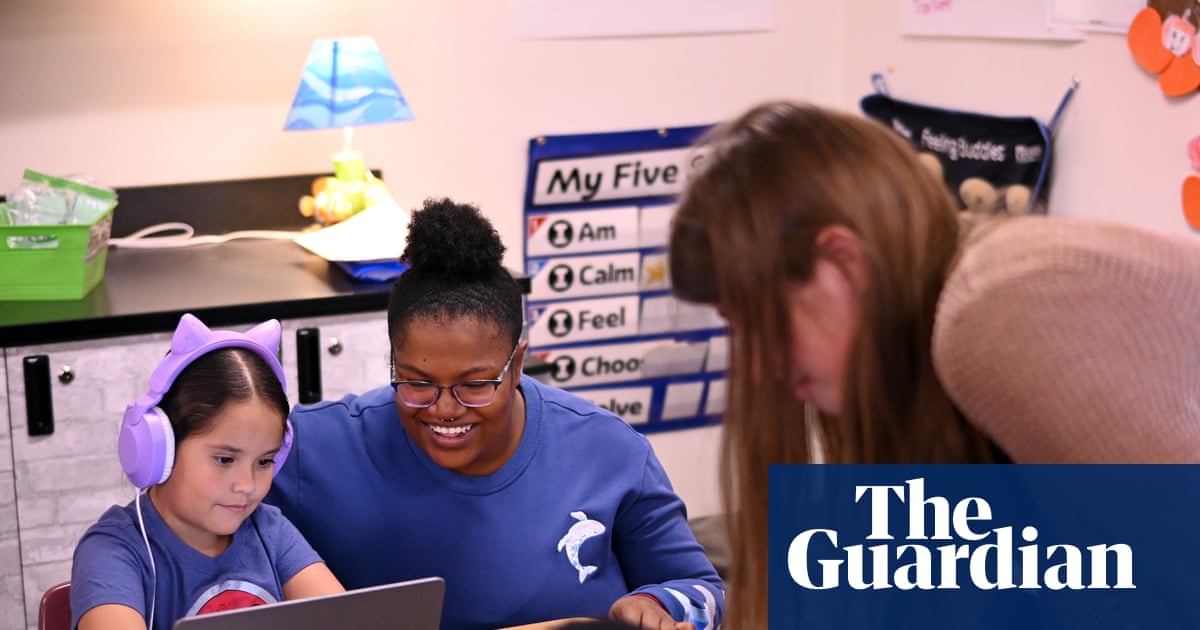
Social and emotional learning exercises include mindfulness and journaling. Such check-ins “help open the students up”, said Curatolo, who introduced the exercises to his students. “If something’s going on mentally, they don’t have to stay isolated and let that emotion build.”
Van De Vijver is similarly concentrated on students’ social development alongside academic progress. “My philosophy is focused much more on being a good human at this age,” he said. “If they leave my classroom, as someone who is willing to help others, who keeps an open mind and is caring, as long as they also don’t get zeros on everything, then I feel like I have done a good job teaching.”
Others are rethinking the content and structure of lessons themselves.
“I was frustrated with how I was taught history which never mentally challenged me or engaged in meaningful, nuanced discussions or debates,” Samuel Ramey, a seventh-grade social studies teacher in Cincinnati, Ohio, said. “I teach my students how to participate in healthy discourse and become active learners.”
Ramey also held a weeklong mini-unit focused on how core content in class can help the students analyze current events, and think critically, rather than simply accepting something at face value. “We all struggle with media literacy, but I need to remind my students we cannot be lazy when it comes to investigating something we see online.”
With less than desirable pay, high burnout rates and increasing responsibilities, teaching can often be a challenging profession. In the US, educators have also been forced to reckon with danger.
“It’s scary when you wake up and see headlines like, ‘Department of Education’s going away’, and gun violence being a major threat in American schools, and what that means for us,” said Gabriella Sheffler, 25, a sixth- and seventh-grade social studies teacher in San Diego, California.
“Being a teacher means being in a constant state of worry.”
Notes from students line Sheffler’s classroom walls, serving as reminders of why she teaches. She credits a supportive work environment, and a strong commitment to work-life balance, with ultimately making teaching sustainable for her.
About 53% of teachers report burnout and 16% expressed wishes to resign due to wellbeing and compensation, according to recent research by Rand, a non-profit institute. If schools want to attract and retain more gen Z teachers,Petersmeyer said: “Salaries need to keep pace and reflect the value that is being created by teachers.”
But a study conducted by the Century Foundation, an independent thinktank, found that US schools are underfunded by about $150bn annually.
“Gen Z educators are choosing the classroom because they believe in making a difference in our students’ lives,” said Weingarten. “If we want this generation to stay and lead, and we do, we must meet their commitment with fair wages, respect, and the professional support they deserve.”