
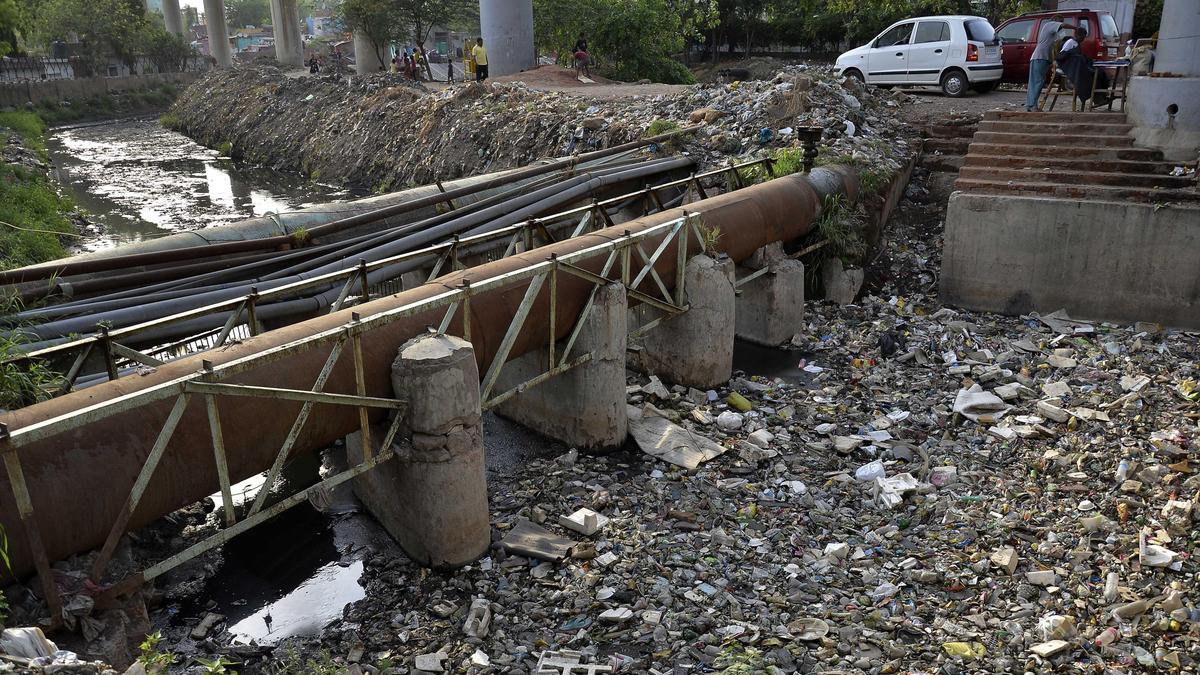


At the 30th Conference of the Parties to the United Nations Framework Convention on Climate Change (COP30), at Belem, in November 2025, host Brazil quite fittingly placed waste at the heart of the climate agenda. Sizeable funds were committed to a new global initiative, No Organic Waste, NOW, to cut methane emissions. The Conference noted Circularity as the way to inclusive growth, cleaner air, and healthier populations. COP30 called upon cities to accelerate circularity initiatives where waste is recognised as a resource. Mission LiFE (Lifestyle for Environment), espoused by India at COP26, in Glasgow in 2021, calling for “deliberate utilisation, instead of mindless and destructive consumption” was strongly premised on the idea of circularity as well.
Urban India, its growing problem of waste
Expanding cities and towns are an irreversible reality in growing India. The choice is between good and bad cities. Often, this choice gets translated into clean and pollution-free cities or waste-ridden, ugly urban areas. A number of studies suggest that Indian cities do not match up to global standards in providing a clean and healthy environment. Pollution is the talk of the town, posing questions to an aspirational India.
The National Capital Region (NCR) as well as many other cities in the country are also among the world’s most polluted. Governments and regulators are at work, with courts also stepping in, but with limited effect. Citizen grievance is at its peak. The Swachh Bharat Mission (SBM), that ended open defecation in India within a specific timeframe, has the active goal of making the cities clean and garbage free.
It is estimated that cities in India will generate 165 million tonnes of waste annually by 2030, and emit over 41 million tonnes of greenhouse gases. By 2050, as the urban population grows to about 814 million, the waste burden could rise to 436 million tonnes. Without early solutions, these will result in grave levels of emissions, and creating havoc with peoples’ health, the economy and the overall climate. The goal of Garbage Free Cities (GFC) by 2026 is an existential necessity, not a matter of aesthetics.
Under SBM Urban 2.0, about 1,100 cities and towns have been rated free of dumpsites, if not exactly free of garbage. Complete freedom from garbage, fortified by sustainable waste management and resource optimisation, is possible when all 5,000 cities and towns adopt the circular economy model, which underlines waste as a resource. India needs to move away from a linear to circular mode of waste management, with the twin objectives of minimising waste and recovering energy and other resources.
Plastic, construction and demolition waste
The good thing is that more than half of municipal waste is organic that can be managed through composting from a house to large bio-methanation plants. Compressed Biogas Plants (CBG) have created possibilities of generating green fuel from municipal wet waste, whereas complete combustion of this also yields power. More than a third of the waste piled in cities is dry, all of which is not recyclable. The demon in this category is plastic, posing a threat to the ecosystem and human health.
Editorial | Mountains of garbage: India’s neglected waste management crisis
Plastic waste also poses the toughest challenge to waste management. Dry waste is dependent on the critical habit of efficient segregation at households before recycling is done through material recovery facilities, which need to be constantly augmented with the rise in the waste burden. Refuse derived fuel from dry waste, as a source of energy for cement and other industries, is still under consolidation. But there is much distance to cover for entrepreneurship and market linkages in these modes of circularity.
Construction and demolition waste — about 12 million tonnes is generated in a year — is a major city spoiler, as it causes pollution in urban centres. It is collateral damage from relentless construction, at times unplanned, in India’s fast-growing economy. Unauthorised dumping of construction discards wherever there is space, by the roadside, or even city lanes, is a common sight in India.
Much of this waste can be reused or recycled as cost-efficient raw materials of substantial value. This will also cause less damage to the environment. Minor construction and demolition waste mixed up with other unsegregated household waste and dumped in waste bins do not help processing. The recycling capacity in India is rising but is not sufficient to match the rate of construction and demolition waste being generated.
What could help is ensuring more serious compliance with the Construction and Demolition Waste Management Rules, 2016, which seek to levy a charge on generators of high volumes of construction and demolition waste, besides setting out other parameters. The Environment (Construction and Demolition) Waste Management Rules, 2025 are to come into effect from April 1, 2026.
Wastewater is the other thread in waste management and circularity. Water and sanitation are state subjects and States need to take proactive steps to recycle wastewater and reuse it in agriculture, horticulture, and for industrial purposes. Water security in cities has a causal link with complete used water and faecal sludge management, as outlined under urban missions such as Atal Mission for Rejuvenation and Urban Transformation (AMRUT) and SBM. With India’s water stock inadequate to meet the needs of its population, recycling and reuse are the only ways out to meet increasing water demand.
Hurdles before circularity
The path to achieving circularity is not an easy one, considering the multiplicity of actors. The smooth functioning of segregation of waste at source, collection logistics and processing, and aggregation and distribution are far from ideal. Recycled products face quality issues, marketing challenges and consequential financial feasibility.
Besides infrastructure, there are shortfalls in testing and monitoring. Extended Producer Responsibility (EPR) has yet to extend to all categories of dry waste. Construction and demolition waste has issues of identification, tracing and tracking of its origin. This is an issue that has not been integrated in an ideal way with construction and building laws to ensure proper accountability. Inter-departmental coordination, stakeholder awareness, and incentive and penalty systems must vastly improve, with sharper focus to make meaningful circularity possible in city societies.
Resource shortfalls with municipalities for taking up circularity projects require early resolution. It is heartening that policymakers, experts and industrial houses deliberated on these issues at a national urban conclave in New Delhi recently while working out an agenda for urban rejuvenation. Last year, Asia-Pacific nations, at their meeting in Jaipur endorsed an Indian initiative of ‘Cities Coalition for Circularity (C-3)’ for efficient knowledge and expertise sharing among cities and institutions of the region.
Citizens need to get a clear sense of profit and a true cause in order to be partners in the circularity movement. In a society that is becoming increasingly consumerist, the first R of the three Rs — ‘Reduce, Reuse, Recycle’ — looks a difficult proposition to achieve. With products and consumable items arriving in new incarnations each day, ‘reuse’ may become a tall order too. ‘Recycling’, aided by technology and private enterprise and with sound policy backup, could emerge as a pillar of circularity. It could also be an assured way of helping India’s cities and towns move away from swamps of waste while adding to national resources.
Akshay Rout is former Director General, Swachh Bharat Mission. The views expressed are personal
Published – January 03, 2026 12:16 am IST