

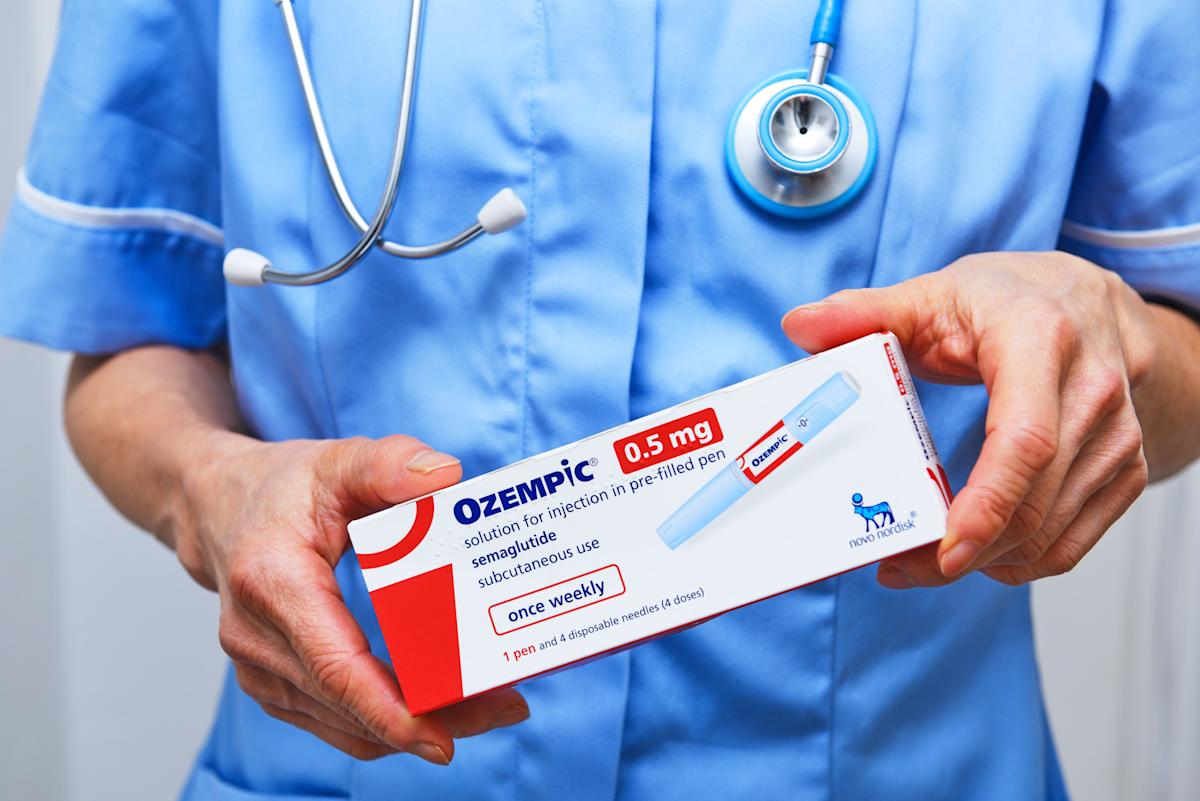

Roughly 12% of adults in the U.S. take a GLP-1 drug like Ozempic, Mounjaro, Zepbound, or Wegovy, according to the 2025 KFF Health Tracking poll. But these blockbuster drugs can cost more than $1,000 per month for patients who pay out of pocket. Even with insurance, the monthly costs can exceed several hundred dollars.
You may be able to deduct GLP-1s as a medical expense from your taxes, depending on why the drugs were prescribed. But doing so may not actually reduce your tax bill. Here’s why.

Read more: Is health insurance tax deductible? Here’s what you can claim.
Unreimbursed medical expenses you incur for yourself, your spouse, and your dependents are often tax deductible, but several caveats apply. Here are the rules.
You can’t take the standard deduction
You can only deduct medical expenses if you itemize versus claiming the standard deduction. Itemizing will only save you money if your deductions add up to more than the standard deduction for your tax filing status. The standard deduction is $15,750 for single filers and $31,500 for married joint filers in 2025 (applies to returns due April 15, 2026). These amounts rise to $16,100 for single filers and $32,200 for married joint filers in 2026 (applies to returns due April 15, 2027).
The medical expense deduction only applies to reimbursed costs above 7.5% of your adjusted gross income, or AGI. In other words, if your income is $100,000 and you had $12,000 in medical bills for the year (excluding health insurance premiums), you could only deduct $4,500 in health expenses.
Healthcare costs are only tax deductible if they’re what the Internal Revenue Service (IRS) calls qualified medical expenses. That means a licensed clinician prescribes them for the “diagnosis, cure, mitigation, treatment, or prevention” of a disease. As we’ll discuss in the next section, GLP-1 medications can sometimes fall into a gray area on this front.
Read more: Standard deduction vs. itemized: How to decide which tax filing approach is right
The IRS will generally consider GLP-1 medications a qualified medical expense that’s tax deductible if both of the following qualifications are true:
A doctor or another medical provider diagnoses you with a disease, AND
A GLP-1 medication like Wegovy or Ozempic is prescribed to treat that disease.
If your physician prescribed a GLP-1 because you’ve been diagnosed with type 2 diabetes, that’s a pretty clear-cut example of when you can deduct your unreimbursed costs — as long as you itemize and you’re deducting expenses above 7.5% of your AGI.
Likewise, if your practitioner diagnosed you as obese and prescribed a GLP-1 to help you lose weight, you could deduct the cost because the IRS accepts obesity as a chronic medical condition. You may also be able to deduct the expense if your doctor diagnosed you with another disease and prescribed a GLP-1 as part of a weight-loss program aimed at treating it. For example, if a practitioner diagnosed you with hypertension and prescribed a GLP-1 to help you lose weight and lower your blood pressure.
Medications prescribed simply for weight loss aren’t tax deductible. If your doctor prescribed a medication because they recommend shedding pounds to improve your overall health, the expense isn’t tax deductible.
Weight-loss drugs prescribed through telehealth companies and filled by compounding pharmacies may fall into this gray area. Many offer GLP-1 prescriptions through an online consultation where a licensed clinician reviews your self-reported height, weight, medical history, and health goals. The prescriber determines if the drug is medically appropriate, but they usually aren’t diagnosing you. Your costs typically wouldn’t be tax deductible in this situation because you didn’t incur them for disease treatment.
Read more: Tax credit vs. tax deduction: Which is better?
You can only deduct unreimbursed medical expenses. That means if your health insurance or a patient assistance program paid for part of your GLP-1 costs, you can only deduct the portion that you paid for out of pocket.
Suppose you’re on a medication that typically costs $1,000 a month, but your health insurance pays most of the cost, so you’re only responsible for a $150 monthly co-pay. If you itemize, you can deduct your $150 co-pay once your medical expenses hit 7.5% of your AGI for the year ($1,800 total if you paid that amount each month for the entire year). But you can’t deduct the full $1,000 monthly cost of the medication.
Read more: Paying cash for healthcare could help you cut your medical bills
You can pay for weight-loss medications with your health savings account (HSA) or healthcare flexible spending account (FSA) — but only if they’re used to treat a specific disease. If you’re taking the drug solely for weight loss with no medical diagnosis, you won’t be able to pay with your HSA or FSA or seek reimbursement from your account.
You can’t deduct any expense that you pay for with an HSA or FSA. Because you’re not taxed on money you contribute to either type of account, you don’t get another tax deduction when you use those funds for health costs.
You may need to obtain a letter of medical necessity from your provider to get reimbursed for GLP-1s from your account. The letter should include your diagnosis, prescribed treatment, and how it will improve your prognosis. The document can also be helpful in case you’re audited.
Read more: HSA contribution limits for 2025 and 2026: Here’s how much you can save
Itemizing deductions only makes sense if your tax write-offs are higher than the standard deduction — and about 90% of taxpayers take the standard deduction instead of itemizing. As you prepare your return, you’d need to have deductions totaling at least $15,750 if you’re single or $31,500 if you’re a married joint filer to save money by itemizing.
If you qualify for many additional deductions, like write-offs for mortgage interest and state and local taxes, it’s possible that GLP-1s and other medical expenses could tip the scales in favor of itemizing. But keep in mind that the first 7.5% of your AGI that goes toward medical bills isn’t tax deductible. Even in years when you have significant healthcare costs, taking the standard deduction often yields greater tax savings.
For many taxpayers whose insurance meets the criteria for a high-deductible health plan, funding an HSA and using it to pay for GLP-1 medications and other medical costs often saves more money on taxes. You contribute pretax funds, and withdrawals are also tax-free.
In 2026, you can contribute up to $4,400 if you have single coverage or $8,750 for family coverage. So if you have an individual plan, you could max out the account for the year and lower your taxable income by $4,400. You could then withdraw those funds tax-free to pay for GLP-1s and other health costs — or you could let the funds roll over from year to year, since the money stays with you even if you switch plans.
Read more: Free tax filing: How to file your 2025 return for free
GLP-1s are a medical expense that you can deduct on your taxes if they’re prescribed to treat a health condition you’ve been diagnosed with, like diabetes, obesity, or heart disease. If you were prescribed the medication because you want to lose weight, but it’s not being used to treat a specific disease, you can’t deduct the cost for tax purposes.
You may be able to write off Ozempic for weight loss if your provider prescribed it to treat a specific disease, like obesity, diabetes, fatty liver disease, or hypertension. However, if the medication was prescribed to help you lose weight for cosmetic reasons or to improve your overall health, it’s not tax-deductible.
Gym membership fees aren’t tax-deductible, but you may be able to deduct the cost of participating in a weight-loss program at a gym if it’s aimed at treating a diagnosed disease.