Are Shoppers Ready for Beauty Robots?
- Business
 ThePostMaster
- 0
- 14 minutes read


Visitors to the Ulta Beauty in Braintree, Massachusetts will discover a sleek mauve box placed among the aisles of products. It’s a robotic manicure station by the company 10Beauty: A human nail tech guides a person’s hand into the machine, which cleans up cuticles, files and paints nails in about 30 minutes.
It’s a conversation happening across industries: Soon, the robots will be very good at doing our laundry, cooking our dinners, summarising our meeting notes and writing our love letters. In the beauty world, there are already robots who can paint your nails, apply lash extensions, and give you a massage — whether they’re wanted or not.
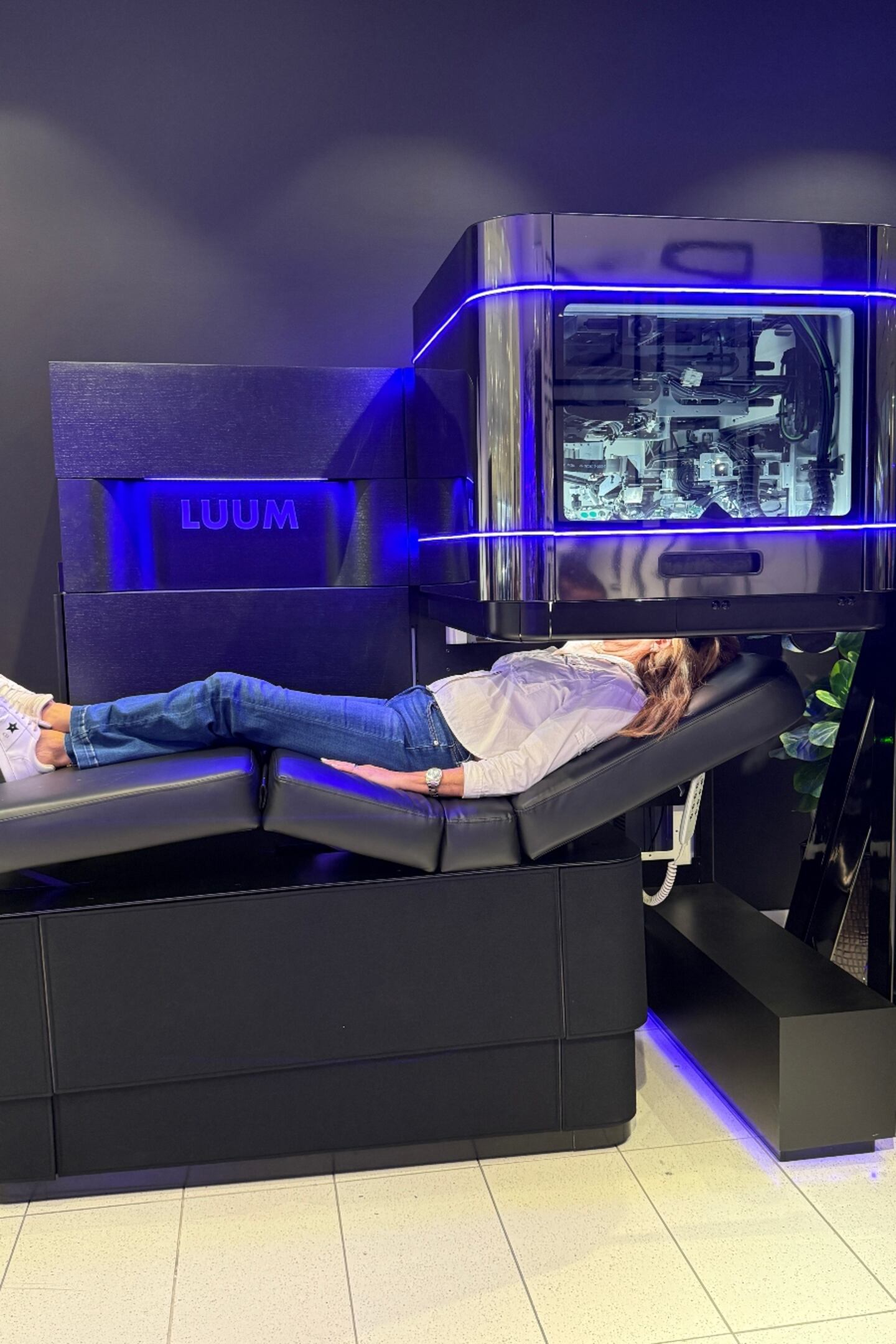
If you live in California or NYC (or, soon, Texas) you can get your automaton fix with the Luum lash extension machine, a set of spindly, precise robot arms hanging over an operating-table-meets-spa-bed. These arms work quickly to apply a perfect set of lash extensions in under an hour, though not as quickly as they physically could; the company has slowed them down to be less terrifying.
Both of these — and the other beauty service robots already on the market — are powered by the buzziest two words in the world right now: artificial intelligence. The Business of Fashion and McKinsey’s State of Fashion: Beauty report from 2025 lists AI as both the number two “theme expected to shape the beauty industry in the next few years” and AI adoption as a top 10 “greatest perceived risk to industry growth.” In the case of these particular machines, the clearest risk is that they will one day replace the beauty professionals relied on for services — threatening the livelihoods of manicurists, masseuses and more.
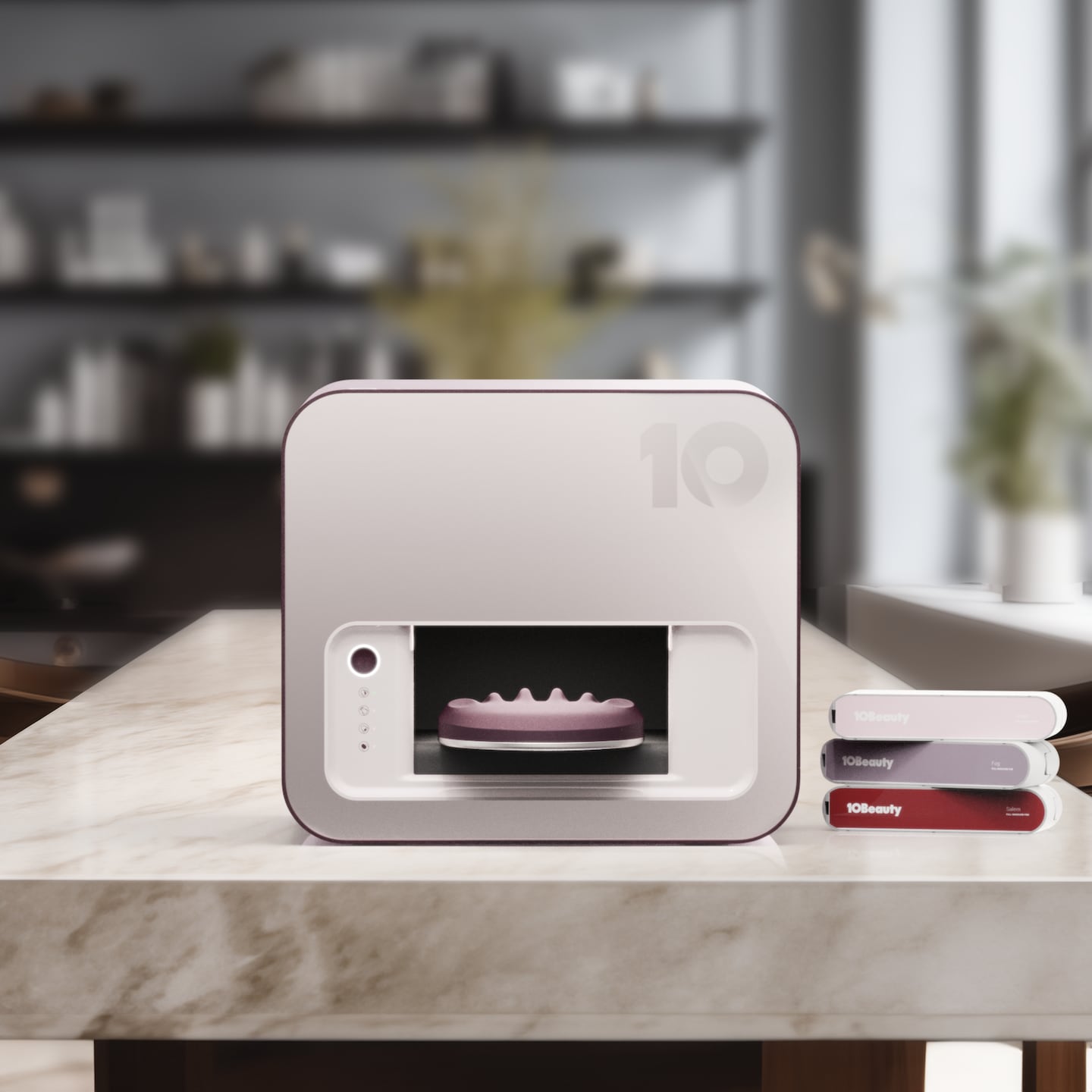
Investors and retailers are excited. 10Beauty has raised $52 million to date, and installed its machine in two Ulta Beauty doors outside of Boston. Luum has raised $30 million, is working on a Series B and has Nordstrom as a primary partner. Their bet is that something as futuristic as an eyelash extension robot will soon become a common feature of specialty and department stores.
Brenda, a 37-year-old textile artist who lives in Brooklyn and gets her nails done monthly, said she would try the robots, “but not if it means real people losing their jobs.”
“I’d try it in a vacuum,” she said. “But in our real, capitalist society, it seems unethical.”
Anna Miles, a nail artist based in New York City, is similarly frustrated by the “presumption of the disposability of manicurists,” she said.
As AI tools become commonplace and ever more sophisticated, it’s likely that these robots will improve with time. But the past decade is littered with failed experiments. Most beauty consumers rely on human-provided services, and continue to, even if the industry is betting against them.
The Beauty Industry’s Machine Dreams
Who are the beauty robots for? Regular beauty consumers don’t seem to be into them. Both Alexander Shashou, co-chief executive of 10Beauty, and Jo Lawson, CEO of Luum, said around 45 percent of their customers are people who don’t get these services regularly or have never gotten them at all.
Currently, both 10Beauty and Luum have humans overseeing the robots. In 10Beauty’s case, their primary role is to fix the aforementioned imperfect manicure when it’s what the robot delivers, plus greet the customer and sanitise the machine between appointments. Shashou hopes this is temporary.

“The goal is that, within the next three to six months, we’re able to build out software so that we don’t need nail techs,” Shashou said. He emphasises that these robots, especially if they don’t need to be accompanied by a human with special training, can be placed in many different locations: a beauty retailer, a hotel, an airport or eventually your home.
Shashou said the focus is to expand the manicure market, rather than taking customers away from human-run salons, by tapping into a customer base that wasn’t getting their nails done in the first place.
Luum’s human lash techs, on the other hand, hires three to five lash artists for each robot it “puts into the wild,” Lawson said. They perform services the robot can’t do and that, according to Lawson, the company never intends to have it learn: taping the clients eyes to prep for the application, positioning them in the machine, touching up any spots where the robot missed a lash or went too heavy and answering questions about the process.
Lawson added that Luum’s current partners have requested over a thousand robots. Once a new round of funding comes through, “we’ll start putting robots all over the place in the United States.”
Shashou predicts nail artists will become more focused on intricate work. “We have a lot of nail salons calling us saying, ‘Can we actually have one of your machines to put in the back?’” he said. According to Lawson, many of the artists working for Luum have musculoskeletal injuries that prevent them from working in a traditional lash tech setting. “We give them a tool that takes the hardest part of their job away and allows them to focus on the artistry and the client experience,” she said.
While Miles said she prefers to do her own filing and basic polish application, she could definitely see the benefit of a robot that handles some of the more taxing parts of doing nails. “There’s a physical toll that doing manicures takes on your body,” she said, especially when it comes to tedious tasks like removing gels or acrylics.
These robots could also be accessibility tools for people with social anxiety and other neurodevelopmental conditions that make human interaction difficult, she added.
A Slow Road to the Future
It’s worth noting that major conglomerates like L’Oréal, The Estée Lauder Companies or Shiseido, which are bullish on technology — and especially AI — have yet to get into the service robot business.
Shiseido did roll out a pilot program testing humanoid robots on the assembly line, but ultimately the “humanoid” part was scrapped. A rep for the company confirmed that it does still use robots “in some assembly lines of cosmetics filling and finishing” at one factory in Japan which has boosted productivity by three times compared to Shiseido’s other facilities.
The company is also using machine learning to help with product development. In 2024, it introduced Voyager, a “unique digital platform for cosmetics development” that is powered by proprietary algorithms. Most recently, Shiseido announced the first formulation created with Voyager: a “mist-type suncare product” set to launch in summer 2026.
This behind-the-scenes work seems to be where legacy brands are most comfortable investing in machine learning, at least for now. Guive Balooch, global vice president of tech and open innovation at L’Oréal, said the company (which announced a formal partnership with AI computing company Nvidia last year) is seeing the most value in AI for consumer-facing personalisation, hardware integration, and digital commerce experiences.
For companies looking to start smaller than humanoid robots, AI can also help with product development for less-controversial in-home tools. L’Oréal’s recently announced Light Straight + Multi-Styler, which uses “proprietary algorithms and machine learning that allow the device to learn from how you actually use it,” Balooch said. The company also has HAPTA, a computerised makeup application device developed for customers with limited hand motion and piloted by Paralympians and US veterans, which will be “available more broadly soon,” according to Balooch.
That’s not to say these large companies have written off the service robots entirely. “Our focus today has been on innovations that fit naturally into people’s daily routines and can scale globally, but we keep a very open mind,” Balooch added.
Beauty is, at its core, a uniquely human-centric, creative industry. The most widely-accepted machines will be created by companies who can provide genuinely innovative or meaningfully improved service, but steer clear of the experiences that benefit from a person’s pesky inefficiency.
“I’m pretty confident that a robot couldn’t possibly ever replace human interaction and the warm experience of creative collaboration while holding hands,” Miles said. “I’m ultimately not that existentially concerned.”
Sign up to The Business of Beauty newsletter, your complimentary, must-read source for the day’s most important beauty and wellness news and analysis.
Want to dive deeper into an insight from this article? Check out The Brain of Fashion, BoF’s new generative AI tool where you can unlock BoF’s beauty archive with a single question.
