

Sitting on the floor of her modest two-room house in Kalugotla village near Yemmiganur in Kurnool district of Andhra Pradesh, Mahalakshmi (name changed), her face careworn and eyes drooping, pulls out a sheaf of health reports from multiple hospitals. A daily wager who earns barely ₹200 a day and receives a monthly pension of ₹4,000, she is the sole breadwinner for a family of eight—her aged parents, two daughters, and their three children.
Yet, it is not merely the meagre income that weighs upon Mahalakshmi. The heavier burden is Huntington’s Disease (HD), a rare medical condition that has afflicted her family. Mahalakshmi’s husband and his two siblings lost their battle against the disease, and later her son E. Jagadeesh Goud, who suffered from Juvenile Huntington’s Disease, also passed away on November 2, 2025. Now, Mahalakshmi is caring for her daughter Rani (name changed), who was diagnosed with HD two years after giving birth to her own child.
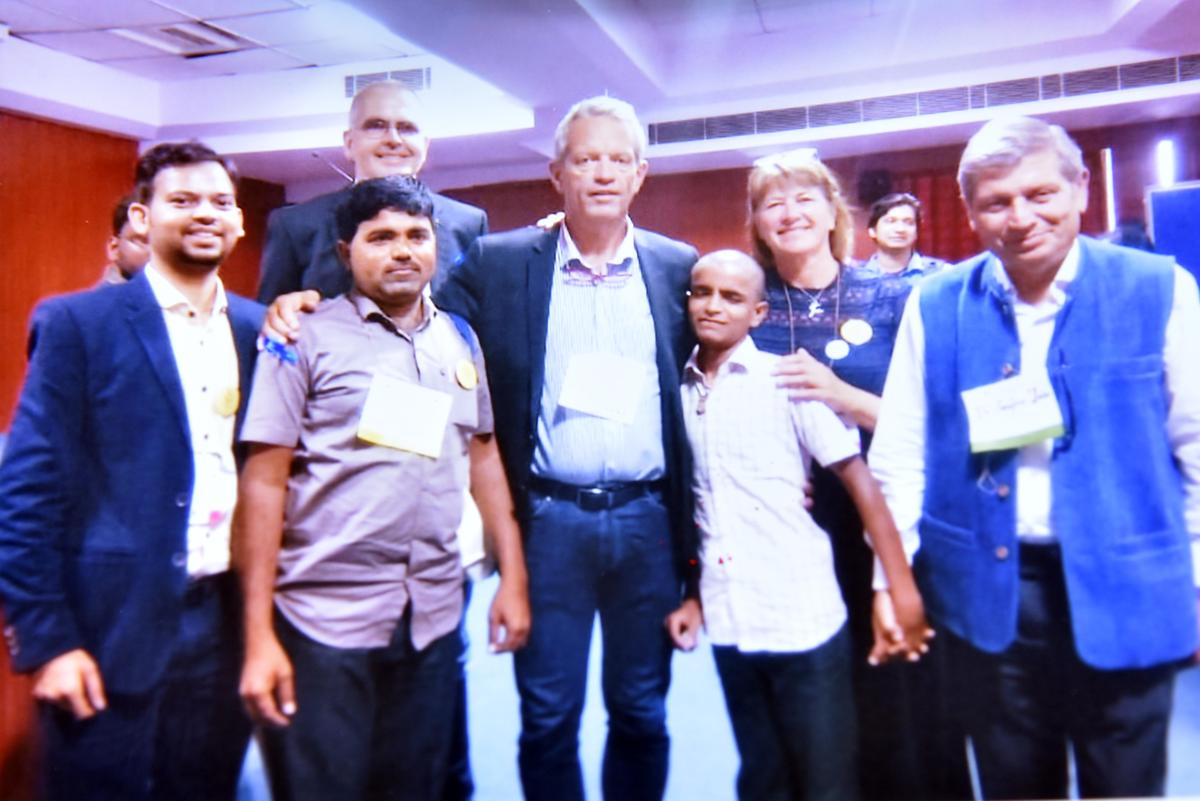
E. Jagadeesh Goud (second from right) along with medical expert during the inaugural function of the Huntington’s Disease Society of India, in Bengaluru in 2019.
| Photo Credit:
U. Subramanyam
“It is a strange thing,” Mahalakshmi says in a tone heavy with sadness, when asked if she understands the disease. “They do not have a fever, but they somehow become very ill. They cannot walk or talk properly. For some reason, they do not sleep either,” she says, adding, “No one else in the village has it. It seems to run only in my family.”
Sleep-deprived and burnt out, Mahalakshmi points to a report from the heap of files, issued by a neurologist in Kurnool, which mentions the condition “possible Huntington’s Disease” that her son Jagadeesh had. “That is what my son had,” she says, gazing at his photo frame adorned with a garland in the corner of the living room.
Recalling her son’s condition, Mahalakshmi says that what began in 2016 as a slight bend in his shoulder—initially attributed to an external injury—gradually progressed into something far more debilitating and unfathomable: Juvenile Huntington’s Disease. Nine years later, Jagadeesh, aged 23, passed away following complications from a fall at home.
“He was a bright student. Even after being diagnosed in Class IX, he continued going to school and later to intermediate college, three villages away, despite our protests,” Mahalakshmi says, proudly displaying her son’s mark sheets. He fell multiple times while getting on or off the bus and struggled to hold a pen. Yet that did not stop Jagadeesh from pursuing his studies. In his final days, Jagadeesh was bedridden and unable to speak. Mahalakshmi, who had already lost three members of her family to the disease, donated Jagadeesh’s brain for research at National Institute of Mental Health and Neurosciences (NIMHANS), making it the first juvenile HD brain donation in the country.
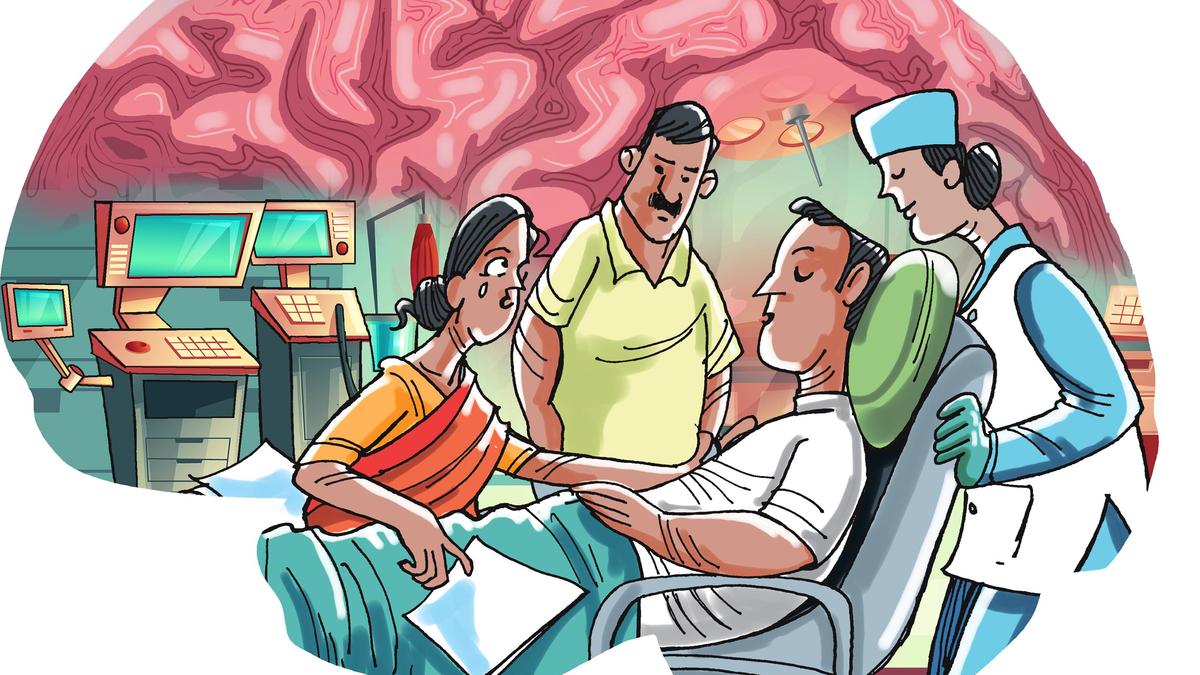
According to medical experts, Huntington’s Disease (HD) is a progressive, hereditary and adult-onset neurodegenerative condition causing severe involuntary movements, motor dysfunction, cognitive, and behavioural symptoms, leading to lifelong disability and loss of independence.
Rani’s monthly medical expenses amount to ₹2,000. In addition, with a debt of ₹15 lakh weighing on her, Mahalakshmi constantly worries but never complains. Rani cannot walk without support, and her slurred speech is incomprehensible to everyone except her mother. “They cannot do anything on their own,” says Mahalakshmi, who once bathed Jagadeesh, fed him, dressed him, and helped him to the washroom. Now, she does all of these for her daughter, even though she is painfully aware that her daughter, too, may die soon. “I have accepted the reality that I may lose my daughter as well, but I only hope my granddaughter does not inherit it,” she says, wiping away tears.
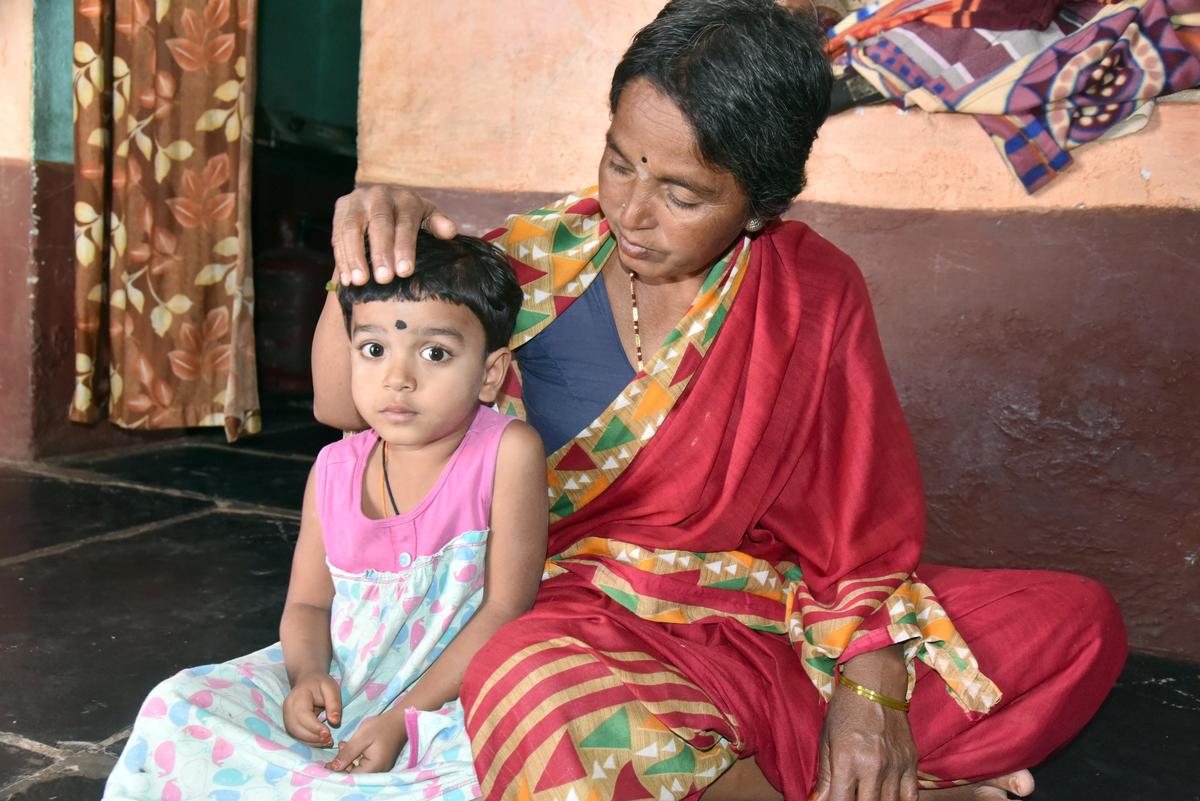
Mahalakshmi with her four-year-old granddaughter, at her house in Kalugotla village near Yemmiganur of Kurnool district.
| Photo Credit:
U. Subramanyam
“Had I known about her condition, I would not have let her marry or have children,” says Mahalakshmi. Rani’s husband abandoned her after learning of her condition and accused the family of betrayal for hiding the truth.
Although globally classified as a rare disease, Huntington’s Disease is increasingly recognised as underdiagnosed in India due to limited awareness, according to Dr. Nikhil Ratna, a doctor and founder member of the Huntington’s Disease Society of India (HDSI), formed in 2019.
Symptoms in HD patients typically begin between 40 and 50 years of age and progress over 15–20 years, leading to complete loss of independence. In more severe mutation ranges, HD can also occur in childhood or adolescence (juvenile HD).
Dr. Nikhil Ratna, also a clinician-researcher specialising in HD, explains that people with HD suffer from regular falls, are easily prone to infections such as pneumonia, have psychiatric disturbances such as depression, psychosis, irritability, OCD. Usually, HD follows an autosomal dominant inheritance pattern, placing each first-degree relative of an affected individual at 50% risk. The risk of children inheriting the disease increases to 75% in consanguineous marriages, says Dr. Nikhil Ratna.
Mahalakshmi married her maternal uncle, who had HD, and two of her three children inherited the disease. “People say our elders must have committed a sin, and that is why my family is suffering,” says Mahalakshmi, who has withdrawn from social life.
“Jagadeesh always wanted me by his side. Now Rani needs me in the same way,” she adds. Mahalakshmi, 55, has spent the last 15 years caring for her husband, her son, and now her daughter. She no longer attends functions in the village, and notes that people have stopped inviting her to events.
According to available data, there is currently no database on Huntington’s Disease at either the national or State level. However, scientific literature and studies conducted by academicians report more than 900 known HD cases across the country. “In addition to this, there may be many unreported cases,” says Dr. Nikhil Ratna.
The World Health Organisation (WHO) defines rare disease as often debilitating lifelong disease or disorder with a prevalence of one or less, per 1,000 population. In 2021, the Union government formulated the National Policy for Rare Diseases (NPRD)-2021 for identification, prevention and providing support to families with rare diseases.
According to the National Policy for Rare Diseases (NPRD), there are more than 7,000 rare diseases worldwide, but fewer than five per cent of them have treatment options. With limited drugs available, such conditions are often referred to as “orphan diseases.” The NPRD recognises 63 rare diseases in India, but Huntington’s Disease is not among them.
Therefore, a full-fledged survey is yet to be taken to arrive at the epidemiological data of HD patients in the country. In Andhra Pradesh, there is no database on how many people are living with HD or with any of the recognised rare diseases. Director of Medical Education, A.P., G. Raghunandan acknowledged that it is high time they maintained a registry.
At NIMHANS, the nodal centre for neurological disorders in the country, there are 11 patients from Andhra Pradesh receiving treatment for HD at present, as per information from the institute. But, the number may be more, says Dr. Nikhil Ratna.
“It is not easy to care for an HD patient,” says HDSI chairman Koushik Venkateswara Rao. “It drains the caregiver mentally and physically,” he adds, recalling the co-founder of HDSI from Mumbai, who died by suicide after caring for her mother, an HD patient, for 25 years.
“The patients experience regular falls, fractures and need physiotherapy, speech therapy regularly. Not everyone can afford these,” said Mr. Koushik.
A scientist, Mr. Koushik, wakes up at 4 a.m., cooks and feeds his wife, who is battling HD, gives her medicines, locks the door, and leaves for work. He returns at lunchtime to feed her, and then leaves again for work. “In the past 15 years, there has not been a single day when I did not fear that I might find her dead upon returning home,” he says, choking on his words.
“There are no trained nurses to handle HD patients. There is very minimal awareness about frontline paramedical staff and health workers about the same anywhere in the country,” says Dr. Nikhil Ratna.
There is also the constant fear that the disease may be carried on to the next generation. The fear of inheriting the disease, the social stigma and the lack of support take a toll on one’s mental health, says Dr. Nikhil Ratna, who stresses the need for a centre that offers genetic counselling. Even if one wants to go for genetic testing, there are not many government centres in the country, he adds.
Director of Medical Education Dr. Raghunandan said that there is a proposal to set up a centre in Visakhapatnam, but nothing much has come out of it yet. The State does not have a government neurosciences centre, too. This forces people from the State to either travel to Bengaluru or Hyderabad for treatment.
For Raghu (name changed), from Narasannapeta in Srikakulam district, travelling to Bengaluru—around 1,200 km away—has become a worrisome hurdle. His father, aged 56, was diagnosed with HD in June 2025. Since then, they have visited NIMHANS twice for treatment, and his next appointment is scheduled for January. “We have to spend around ₹7,000 on the journey, accommodation, and food,” notes Raghu (21), who has just completed his bachelor’s degree.
His father, who worked at a gold shop for a monthly salary of ₹9,000, was the main breadwinner for the family of four. Now, Raghu’s elder brother works part-time at a restaurant in Hyderabad, while his mother sells papad (an Indian snack), earning about ₹5,000 to help manage household expenses. Raghu, who takes care of his father while preparing for the railways exam, says they have not asked relatives for help, fearing stigma. “But one uncle, who knows that my father is not doing well, sends money,” says Raghu, who is hoping to secure a disability certificate for his father.
However, obtaining the certificate is not an easy task. Three doctors from NIMHANS must certify his father’s disability. Only then, depending on the degree of disability, the State government may provide a pension under the Dr. NTR Bharosa Pension Scheme.
Mahalakshmi also said that she has been running from pillar to post to secure a disability certificate for Rani. While Jagadeesh used to receive ₹6,000, Rani has yet to get any support from the government. Under the scheme, the government provides between ₹6,000 and ₹15,000 to people with disabilities.
Due to financial constraints, Raghu, who learned that protein-rich food is important for HD patients, says he is able to buy milk for his father. “We cannot afford eggs or chicken, even if he is willing to eat them,” says Raghu, grateful that his father can still eat normal food. Typically, because of their continuous irregular and involuntary movements (chorea), HD patients struggle to eat properly. Even feeding them becomes a challenge.
Members of the HD Society of India have requested the governments, both Centre and State, to set up multi-disciplinary care centres, which can provide specialised care involving neurology, psychiatry, physiotherapy, genetic counselling, palliative care at one place. It submitted a representation to the Union government requesting it to include HD in the list of recognised rare diseases to provide respite to patients and caregivers and to allow surveys and research to be taken up.
Every person suffering from any of the 63 recognised rare diseases is eligible to get a financial aid of up to ₹50 lakh from the Union government under the Pradhan Mantri Jan Arogya Yojana. The same benefits, however, elude patients of HD since it has not been recognised as a rare disease in the NPRD-2021 yet.
This has forced families engaged in long-term care of their loved ones with HD to make out-of-pocket expenses on medication and treatments.
There is no cure for the disease, but there are treatments available that can improve the life of the patient and reduce burden on the caregivers, says Dr. Nikhil Ratna. Mr. Koushik spent ₹15 lakh on a treatment for his wife that helped control her chorea. However, others cannot afford it.
In Andhra Pradesh, the disease is not covered under the Dr. NTR Vaidya Seva. “If there are any surgical corrections required, then those will be covered under the scheme,” says Dr. Raghunandan. Other genetic diseases, too, are not covered under the scheme.
For any progressive and developing society, the personal, social, and economic burden imposed by a genetic disease is huge. Therefore, it should be made a priority to make inclusive of these diseases, adds Dr. Nikhil Ratna.