


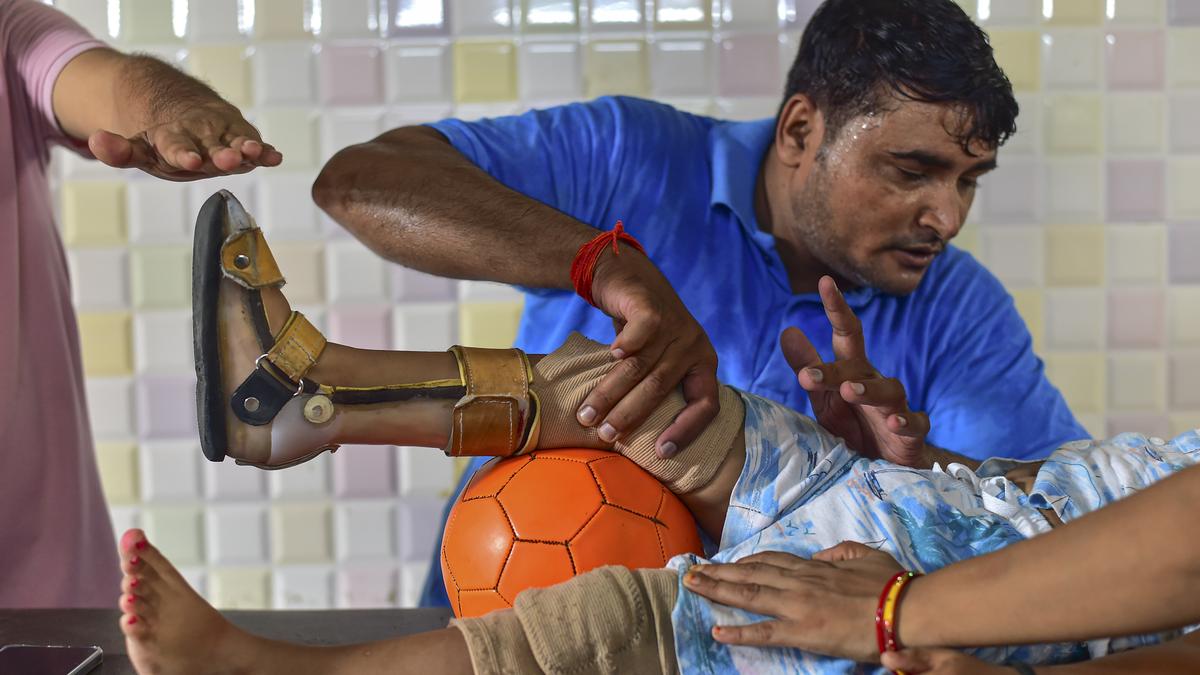
Cerebral palsy affects every child differently. While some may have trouble with movement, balance, or speech, others may need ongoing support in their daily lives. Photograph used for representational purposes only
| Photo Credit: PTI
Cerebral Palsy (CP) is one of the most common groups of childhood disorders, and about 17 to 18 million people suffer from this condition worldwide. Every year, about 2 out of every 1,000 babies are diagnosed with CP. The condition leads to an imbalance in muscle tone, posture, and movement due to damage in the developing brain during early childhood.
Cerebral palsy affects every child differently. While some may have trouble with movement, balance, or speech, others may need ongoing support in their daily lives. An early diagnosis, the right therapy, and coordinated care from different specialists are crucial to enable children with cerebral palsy to lead meaningful and independent lives. Greater awareness and acceptance in society can help ensure that every child with CP gets the care, encouragement, and the opportunities they deserve.

Recognising individuality
World Cerebral Palsy Day, celebrated on October 6 every year, is a global movement to raise awareness and celebrate the lives of people living with cerebral palsy.
This year, the theme for World CP Day 2025 is Unique and United, which aims to recognise the individuality and diverse experiences of people with cerebral palsy while also advocating for greater unity within the global CP community.

Breaking myths
Although CP is common and widespread, it is still vastly misunderstood. Families often face stigma, misinformation, and confusion regarding their child’s future and well-being. It is important to address and clear some common myths surrounding CP.
Myth 1: Cerebral Palsy is a genetic and contagious disease
Fact: CP is neither genetic nor transmittable. It can be caused by complications during pregnancy, infections, or conditions such as epilepsy that affect the developing brain.
Myth 2: Cerebral Palsy can be cured
Fact: There is no proven cure for CP. However, early intervention and multidisciplinary management involving neurologists, therapists, and orthopaedic surgeons can significantly improve outcomes and enhance a child’s quality of life.
Myth 3: Children suffering from Cerebral Palsy have low intelligence
Fact: Many children with CP have normal intelligence. With the right combination of medical care, therapy, and support, they can pursue education, careers, and lead independent, fulfilling lives.
Myth 4: Delayed treatment improves recovery
Fact: Early treatment is crucial. Timely referral to a neurodevelopmental clinic and initiation of therapy in early childhood play a key role in helping children achieve their best potential and quality of life.
Myth 5: All children with CP suffer from epilepsy
Fact: Not all children with CP develop epilepsy. While premature birth or significant brain lesions may increase the risk of seizures, epilepsy, when present, can be effectively managed with proper medical care.

A call to action
On World Cerebral Palsy Day, there is a collective call to raise awareness, promote inclusion, and ensure that every child receives the support they deserve.
Let us pledge to look beyond the myths, spread awareness, and work together to build a society where every child with cerebral palsy has the opportunity to live with dignity, independence, and hope.
(Dr. Atul Bhaskar is senior consultant, paediatric orthopaedics, Narayana Health, SRCC Children’s Hospital, Mumbai. Info.Srcc@narayanahealth.org)
Published – October 07, 2025 02:43 pm IST


