

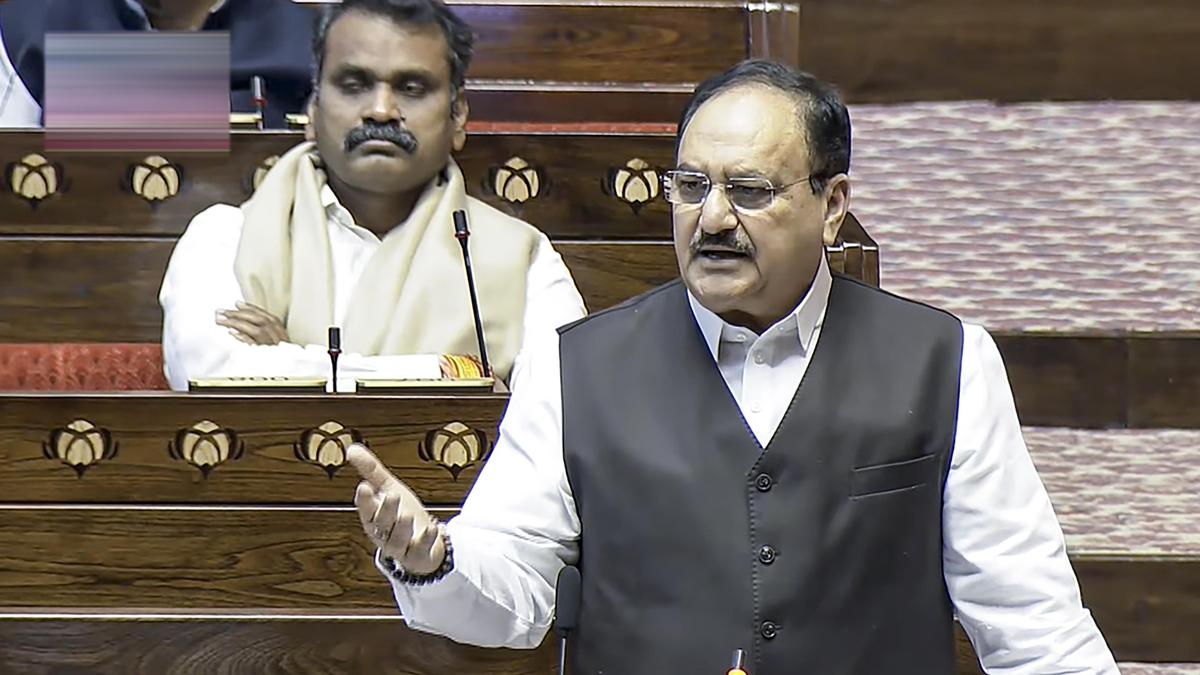
Union Minister J P Nadda speaks in the Rajya Sabha during the Winter Session of Parliament, in New Delhi.
| Photo Credit: Sansad TV
The doctor-population ratio in the country is 1:811, the Centre informed Parliament on Tuesday (December 2, 2025), in a written reply submitted in the Rajya Sabha.
Assuming 80% of registered practitioners in both allopathic and AYUSH (Ayurveda, Yoga and Naturopathy, Unani, Siddha, and Homeopathy) systems are available, the doctor-population ratio in the country is estimated to be 1:811, the Health Ministry said.

There are 13,88,185 registered allopathic doctors in the country, and 7,51,768 registered practitioners in the AYUSH system of medicine, Union Health Minister J. P. Nadda said.
Also read: The problematic globalisation of medical education
There had been a significant increase in the number of medical colleges, and undergraduate (UG) and post-graduate (PG) medical seats in the country, he added. Since 2014, the number of medical colleges had gone up from 387 to 818; UG seats from 51,348 to 1,28,875; and PG seats from 31,185 to 82,059, Mr. Nadda said.

Several measures had been taken to improve the availability of doctors in under-served, rural, and tribal areas, the Minister said, adding that a “hard-area allowance” is provided to specialist doctors for serving in rural and remote areas, and for their residential quarters.
Under the National Health Mission, States are allowed to offer a negotiable salary to attract specialists, including flexibility with strategies such as “You Quote We Pay”, the Minister said.
Published – December 02, 2025 06:22 pm IST


