
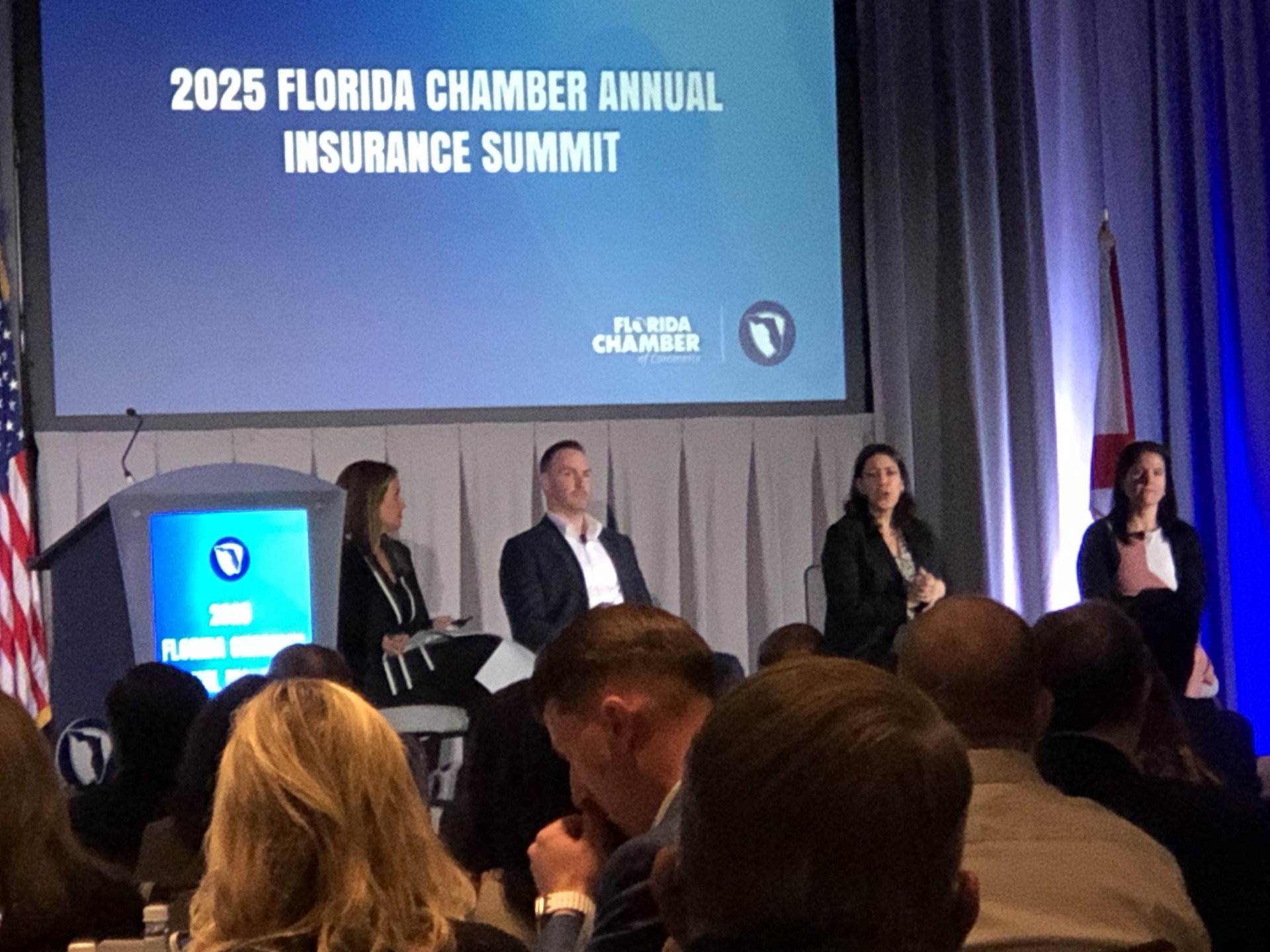

The message from the Florida Chamber of Commerce Insurance Summit was loud and clear: Don’t mess with legislative changes that have all but restored the state’s property insurance market.
And while you’re at it, don’t repeal Florida’s personal injury protection (no-fault) auto insurance law, either.
“Thanks to the reforms, PIP is finally working pretty well. We need it to keep shining a light on auto fraud,” said Stephen Rosansky, an auto insurance defense attorney with Goldstein Law Group who spoke Thursday at the Chamber’s annual summit in Orlando.
Efforts have been made in each of the last few legislative sessions to undo Florida’s PIP system in favor of a bodily injury, tort-based system that some have said would provide some injured motorists with more relief. But the measures have failed to pass, and the fate of a similar bill in the upcoming 2026 Legislature is uncertain.
Others at the 400-person conference, including some of the biggest names in property insurance, reinsurance, and the global bond market, said again and again that the 2022 and 2023 legislative reforms have had a better-than-expected result – throttling unnecessary homeowner claims litigation while prompting multiple rate decreases from carriers.
“I really believe that the dream is in sight: Florida can have a $100 billion hurricane loss with no appreciable increase in insurance prices,” said John Seo, co-founder of Fermat Capital Management, considered the largest manager of catastrophe bonds in the world.
The heralded 2022-2023 statuory changes, passed in the depths of the property insurance crisis, ended assignments-of-benefits agreements and one-way attorney fees and made it more difficult for plaintiffs to claim bad faith by insurers. All of that has made loss costs and loss adjustment expenses much more predictable and manageable, panelists said.
“I’ve never felt better about this market,” said Chris Spencer, executive director of the State Board of Administration, which oversees the Florida Hurricane Catastrophe Fund.
While some lawmakers and policyholder attorneys have called for rolling back some of the reforms, that would be “unthinkable,” Spencer said.
One of the biggest indicators of the rejuvenated Florida property insurance landscape is Citizens Property Insurance Corp. Created in 2002 by state lawmakers as an insurer of last resort, Citizens had ballooned to the largest carrier in the state, with 1.4 million policies in 2023.
Today, after multiple new carriers have entered the market in the last two years and have assumed tranches of Citizens’ policies, the corporation is down to just 385,000 policies.
“We’ve never been that small,” Citizens CEO Tim Cerio said to applause from the crowd.
A smaller Citizens, which has its rate increases limited by law, means more pickings for market-based carriers, a strong indication that the once-teetering Florida property insurance system is functioning as intended. “I’m happy to report that Citizens is no longer Florida’s largest insurance company,” Cerio said.
The Chamber conference continues today. The 2026 Florida legislative session begins Jan. 13.
Photo: A panel discussion at the Summit Thursday. (IJ photo)
Topics
Carriers
Florida
Reinsurance
Interested in Carriers?
Get automatic alerts for this topic.