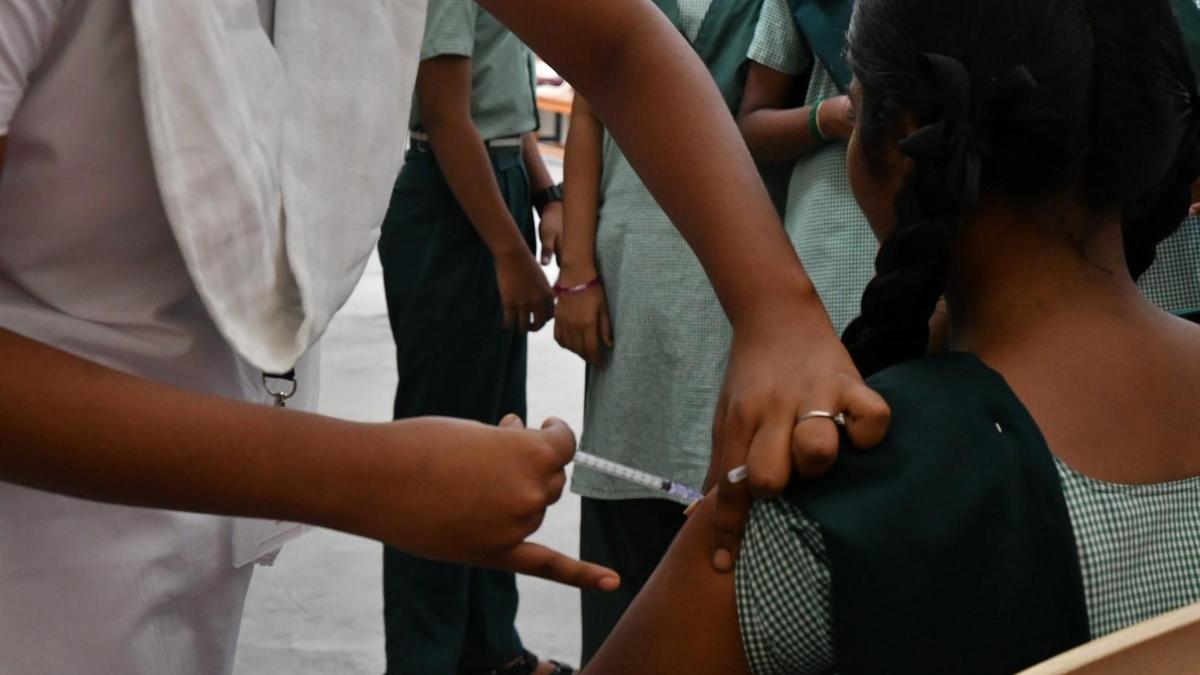

In October 2025 reports from Bihar described several schoolgirls fainting after receiving the cervical cancer vaccine. Within hours, social media brimmed with conspiracies about vaccine safety claims amplified by prominent but medically unqualified voices. Yet what these posts missed is that fainting, known medically as vasovagal syncope, is a short-lived stress response, not a toxic reaction. Such episodes, though dramatic, often reflect fear of needles rather than any flaw in the vaccine itself. To understand why these incidents are investigated with care but not alarm, it is helpful to comprehend how India’s vaccine-safety system operates one of the most extensive and scrutinised in the world.

Before a vaccine
Every vaccine starts its journey years before the first public dose. From laboratory cultures to animal studies and three phases of human trials, scientists assess whether the vaccine produces protective antibodies without undue harm. Only after the national regulator’s approval does it enter the markets and immunisation programmes. Even then, the watch never ends and enters phase 4. Doctors and healthcare workers report any illnesses, fainting, fevers, or other events occurring after vaccination in phase 4. These are called Adverse Events Following Immunisation (AEFI), medical occurrences that may or may not be caused by the vaccine.

AEFI classification
Under India’s updated 2024 National AEFI Operational Guidelines, every event is placed into one of five groups. The first includes normal vaccine-product reactions, such as mild fever or soreness. The second covers manufacturing or vaccine-quality defects though these are exceedingly rare. The third arises from immunisation errors, such as mistakes in dosage or storage conditions. The fourth are the immunisation-triggered–stress-responses (ITSR) such as fainting, dizziness, or nausea triggered by anxiety rather than biology. The fifth group consists of coincidental events, where an unrelated illness occurs around the time of vaccination. The point of this classification is not to assign blame but to ensure that no possible signal of harm escapes scrutiny.
India’s vaccine safety journey began in earnest with the 2005 AEFI guidelines, refined in 2010 and 2015. In 2017, the World Health Organization assessed the system and declared it robust. The COVID-19 mass vaccination campaign then stress tested this machinery at an unprecedented scale, leading to the 2024 overhaul. The new framework expands surveillance from child vaccines to adult and emergency-use shots, integrates digital platforms such as SAFE-VAC and U-WIN for real-time reporting, and extends the time for submitting detailed case forms to 21 days, allowing fuller investigation. It also calls for specialist participation namely, neurologists, cardiologists, and obstetricians in State committees, reflecting the diverse biological range of vaccine recipients.

What the data shows
India vaccinates over 60 million people (children and pregnant women) every year in 1.4 million immunisation sessions all over the country. To oversee such a vast programme, the country follows measurable benchmarks. The national reporting ratio now expects at least one serious or severe AEFI per 10,000 surviving infants each year, a number that signals active detection, not danger. Over 80% of districts are expected to report at least one serious case annually, and 90% of reports must be submitted to the Central database within 48 hours. At the investigation stage, more than 80% of serious cases should have their Case Investigation Forms uploaded within the 21-day window, and fewer than 20% should be deemed “ineligible” for causality review. Each State AEFI Committee meets quarterly and shares its minutes within a fortnight, while the National AEFI Committee reviews cases every quarter to maintain oversight. Between 2012 and 2019, nineteen national bulletins summarised 5,025 serious cases that underwent full causality assessment none of which were linked to manufacturing defects. During the COVID-19 pandemic, the database expanded to over 23,000 serious or severe reports, reflecting a shift towards more digital capture and inclusion of adult vaccines, rather than an increase in risk.
Whenever several people react in one place as in the Bihar episode the process begins within hours. District health officials verify the time, location, and batch numbers, check cold-chain logs, and interview vaccinators and witnesses. If necessary, vaccine samples are tested at the Central Drugs Laboratory in Kasauli. When most cases show stress-related features, they are labelled ITSR. The guidelines recommend practical steps: seat recipients during vaccination, provide water, and observe them for fifteen minutes before they leave. These small measures, repeated nationwide, prevent injury and reassure communities.

Culture of transparency
The 2024 manual emphasises that trust is the ultimate goal. Health authorities are now urged to communicate findings openly, issue timely press notes, and counter misinformation through verified channels. States are ranked quarterly on their AEFI performance, encouraging friendly competition in vigilance. India’s system, the guidelines remind readers, exists “to ensure that vaccines used in the country are safe and that public confidence is sustained.”
The fainting of schoolgirls in Bihar was not a failure of vaccination it was proof that surveillance works. Each report, however minor, feeds into a nationwide web of doctors, laboratories, and programme managers who treat vaccine safety as a living process.
In a country that delivers millions of doses every week, rare events will occur. But the measure of a welfare state is not the absence of such events; it is how swiftly, transparently, and scientifically it responds. When that process functions as it quietly does every day, the real story is not about fainting, but about faith: faith in evidence, in public systems, and in the power of prevention to save lives far beyond the headlines.
(Dr. C. Aravinda is an academic and public health physician. The views expressed are personal. aravindaaiimsjr10@hotmail.com)
Published – December 24, 2025 02:00 pm IST


