

Cancer treatment is essentially governed by the holy trinity of surgery, radiation and chemotherapy. In advanced or aggressive tumours, a multimodal approach yields the best outcomes by targeting cancer at various levels. Surgery excises the solid tumour and adjoining lymph-nodes, adjuvant radiation destroys microscopic cancer cells in the tumour bed after surgery, and chemotherapy destroys cancer cells that are potentially circulating in the body.
With advances in robotics and radiation therapy enhancing precision care and saving patients’ lives, it is important for patients and caregivers to understand these new techniques.

Robotic surgery
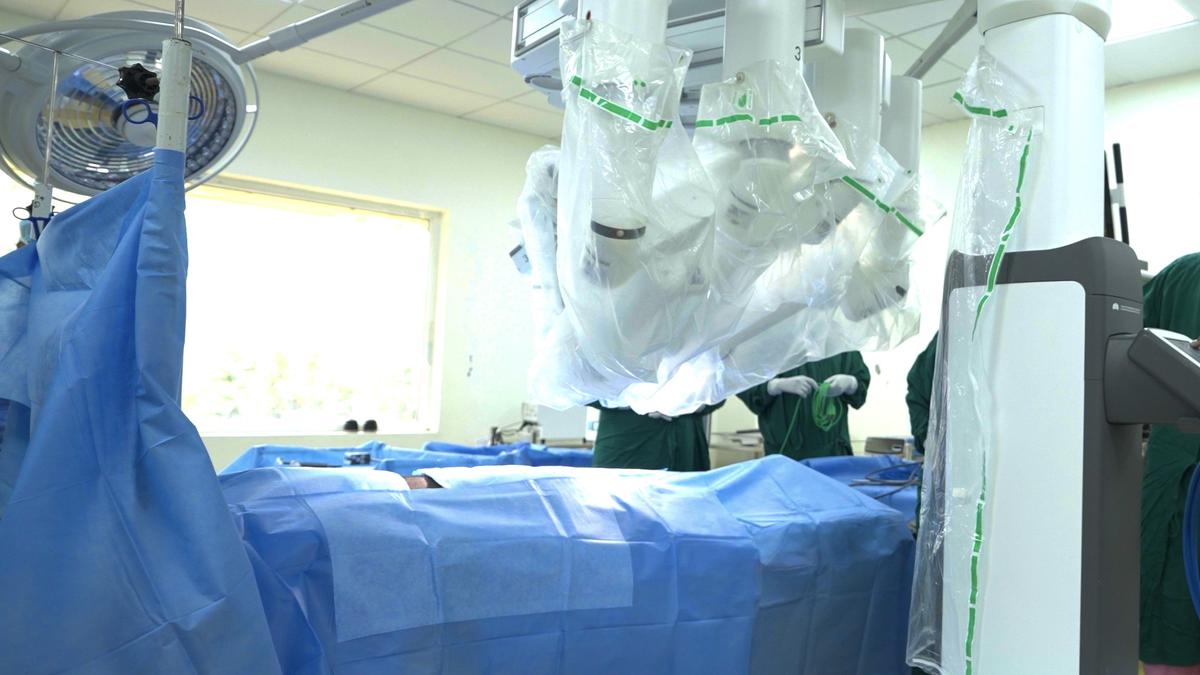
Robotic surgery, a cutting-edge form of minimally invasive (keyhole) surgery, is rapidly transforming cancer care worldwide. Unlike traditional open or laparoscopic procedures, robotic platforms allow surgeons to operate in hard-to-reach areas of the body with unprecedented precision and flexibility, making it an increasingly preferred option for complex cancer surgeries.
The most widely used system today is not an autonomous robot but a highly sophisticated master-slave tele manipulator. The surgeon sits at an ergonomic console, viewing a magnified 3D high-definition image while controlling robotic arms equipped with wristed instruments that offer greater dexterity than the human hand. Every movement is directly translated in real time — the robot never acts independently. Features such as tremor filtration and motion scaling enable delicate tasks that were previously difficult or impossible with conventional methods.
For cancer patients, robotic surgery offers significant advantages: considerably less pain, minimal blood loss, fewer infections, smaller scars, shorter hospital stays, and a quicker return to normal life. Importantly, multiple large studies have shown that cancer cure rates and long-term cancer outcomes are equivalent to open or laparoscopic surgery. This is particularly beneficial in pelvic cancers (prostate, cervix & endometrium, rectum), kidney, bladder, oesophagus, lung, and throat cancers.
While robotic procedures are currently more expensive due to high equipment and maintenance costs, prices are expected to fall as new indigenous and international players enter the Indian market. Most health insurance plans in India now cover robotic surgery (often with sub-limits) following the Insurance Regulatory and Development Authority of India’s 2019 guidelines.
The future is even brighter. India recorded a 53% growth in robotic procedures in 2024 alone, and is Asia-Pacific’s fastest-growing market. From $78 million in 2022, the sector is projected to touch $390 million by 2030. Next-generation robots are integrating artificial intelligence, superior ergonomics and multi-quadrant access to reduce surgeon fatigue and complications further. For suitable patients, robotic surgery is no longer just an option — it is fast becoming an acceptable standard of care for minimally invasive oncology surgeries.

Radiation therapy
Radiation works by delivering high-energy X-rays to damage cancer cell DNA. Earlier, machines were effective but lacked precision, often exposing nearby normal tissues to unnecessary radiation, thus increasing the side-effects of treatment. Over the years however, radiation therapy has evolved from simple, uniform beams to highly personalised and precise treatments. Today, with the help of modern imaging, powerful computers, engineering and physics, radiation therapy has become safer, faster and far more precise. In India, the Cancer Institute (WIA) had played a pioneering role in modernising radiation treatment, with one of Asia’s first Cobalt-60 units, the Eldorado, installed in 1956, and later, India’s first RapidArc system.
A major advancement is Image-Guided Radiation Therapy (IGRT), where machines capture images before each session to ensure accurate tumour targeting. This compensates for natural internal movements caused by breathing, shifting organs, or changes in tumour size. Techniques such as Intensity-Modulated Radiation Therapy (IMRT) and Volumetric Modulated Arc Therapy (VMAT) further allow the radiation beam to be shaped exactly to the tumour, significantly reducing side effects in cancers of the head and neck, breast, brain, and prostate.
Stereotactic radiation represents another leap forward. Stereotactic Radiosurgery (SRS) for brain tumours and Stereotactic Body Radiation Therapy (SBRT) for lung, liver, and spine cancers deliver high-precision treatment in just 1–5 sessions instead of the traditional 25–40. Often called “surgery without a knife,” these methods spare surrounding healthy tissues while delivering high doses accurately.
Adaptive Radiation Therapy is the next step, allowing treatment plans to be modified during the session as the tumour shrinks or the patient’s anatomy changes. The MR (magnetic resonance)-Linac, which combines MR imaging with a radiation machine, enables real-time visualisation of the tumour during treatment, allowing instant adjustments for tumours that move with breathing.
Beyond X-rays, proton and carbon-ion therapies offer more selective radiation delivery, reducing long-term side effects, especially in children. Newer innovations including FLASH therapy, robotics, tumour-tracking systems, and digital “virtual patient” models are shaping the future. Artificial intelligence is now reducing radiation planning time by automatically outlining tumours and critical organs, helping radiation oncologists work more efficiently and accurately.

Ensuring safety, improving health
The armamentarium of tools to fight cancer has evolved to become sharper, more precise and most importantly, safer. These advances, from robotics to radiation therapy, have improved outcomes, shortened hospital visits, and minimised side-effects. The overarching benefit has been bilateral: satisfaction to clinicians and careproviders, witnessing the countless lives healed and saved.
(Prof. Arvind Krishnamurthy is head of surgical oncology at Cancer Institute (WIA). a.krishnamurthy@cancerinstitutewia.org; Prof. Priya Iyer is head of radiation oncology at Cancer Institute (WIA) i.priya@cancerinstitutewia.org)
Published – December 05, 2025 06:00 am IST