

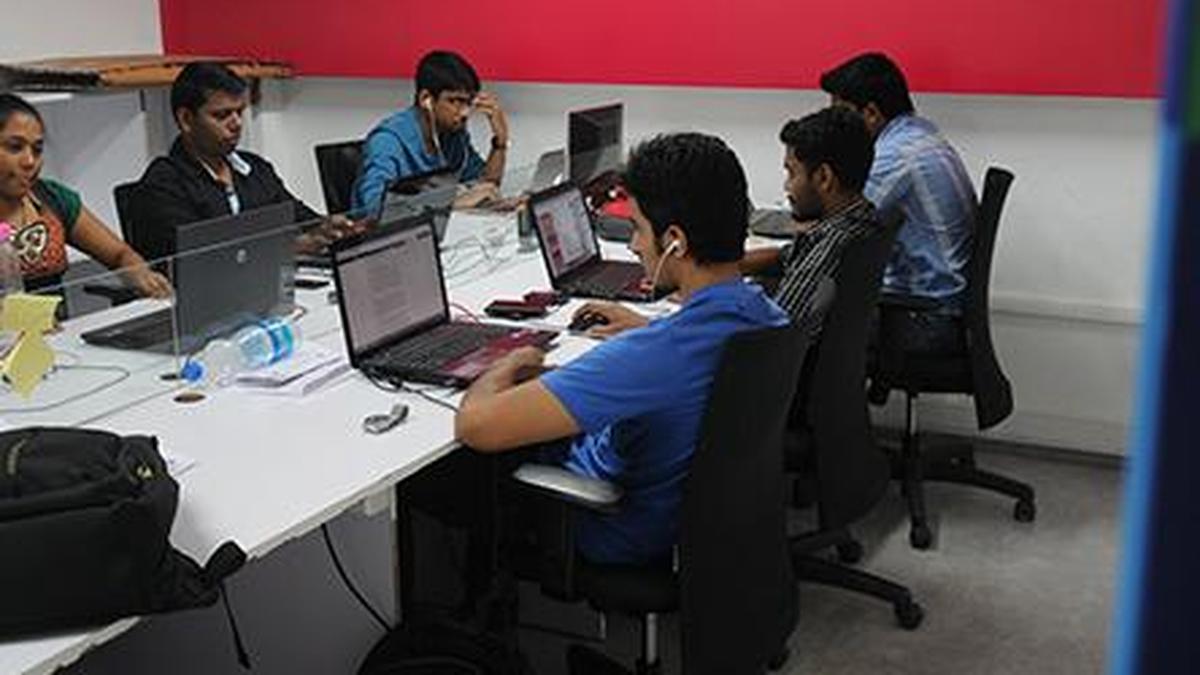

Global Capability Centres, offshore subsidiaries set up by multinational corporations, mostly known by an acronym GCCs, are now the primary engine sustaining India’s tech job market, contrasting sharply with the hiring slowdown witnessed by large firms in the country.
In the October-December quarter of FY26, GCCs have demonstrated a resilient momentum, with 5-7% sequential growth, and 48% of GCCs planning workforce expansion in the coming year, signalling a strategic growth, driven by a pivot to high-value, specialised work, as per data exclusively shared by Tholons, a New York-based strategic advisory firm focused on digital innovation, investment and location strategies including GCCs.
“This people’s growth is strategic, driven by a pivot to high-value and specialised work. The current hyperactivity in GCC space is a Second Wave of capability, not just cost-arbitrage, and it is about positioning the GCC as the strategic core for high-end talent and R&D,’’ Avinash Vashishtha, CEO and Chairman of Tholons Inc., and former Chairman and CEO of Accenture India, told The Hindu.
According to Tholons, India currently hosts 1,850 GCCs employing close to two million professionals and projected to have over 2,400 GCCs by 2030 and employ over 3 million workers to achieve a $125 billion market size, signaling its transition into strategic ‘enterprise AI brains.’
Commenting on GCC jobs that are coming up even in non metros, Mr.Vashishtha, a thought leader said, GCC growth has been spreading as Tier II and Tier III cities such as Nagpur, Indore, Coimbatore and Kochi recorded 8-9% quarterly growth, decentralising the tech workforce beyond major metros.
“A specialised nature of this growth commands a premium salary. GCCs offer 12-20% higher salaries compared to traditional IT services firms,’’ added Mr. Vashishta.
GCC leadership hiring saw quantum growth
Xpheno, a specialist staffing firm in Bengaluru, conducted a comparative study of the leadership talent growth between IT services and the GCC sector. The IT services expanded its leadership talent pool from 88,600 to 90,700 from December 2024 to December 2025 period, and this net addition of 2100 leaders translated to 2.4% growth. In comparison, high-growth GCCs had a net addition of 3,400 leaders to move from 44,000 to 47,400, at a high 7.7%.
According to Kamal Karanth, Co-founder, Xpheno, the growth trends of the leadership talent pool are a reflection of the overall growth patterns and prospects of the GCC sector. “The talent action in the GCC space has been relatively positive and stable over the last 3-year period, while the IT services sector stayed conservative and cautious in response to market conditions.’’
GCCs’ hiring action was driven by talent plans that have a relatively longer horizon of visibility, compared to the market sensitive hiring plans that the IT services sector operated, Mr. Karanth explained adding, “GCCs typically have a 3 to 5 year rollout and ramp-up plan for talent and operating infrastructure, as compared to quarterly calibrations that the IT services carries out.’’
Ashutosh Sharma, VP & Research Director, Forrester, a Cambridge-based research and advisory, observed that GCCs were continuing to hire, especially the new ones which have been setup in the last three years. “With rising numbers of GCCs and hiring in the existing ones each year they add approximately 2,00,000 to 2,50,000 new jobs,’’ adding, “The GCC outlook for CY 2026 is consistent. We don’t see any major changes in their direction barring any geo-political event or issue disrupting the trend. We will also see 100-120 new GCCs coming up across a variety of sectors, indicating a positive hiring trend.’’
Kamal Pal Hoda, CEO, Bluspring, a recently demerged entity from Quess Corp, that offers infrastructure services, said, even as tech hiring cools, GCCs in India were ramping up blue-collar workforce recruitment to fuel their expansion, with the sector projected to add 2.8-4 million jobs by FY30 amid 18-27% YoY headcount growth—far outpacing IT services at 4-6%.
Milind Shah, Managing Director, Randstad Digital India, said, based on Randstad Digital’s proprietary hiring demand data and its ongoing GCC mandates in India through 2025, the firm continued to see steady hiring momentum from GCCs, even as large technology firms take a more cautious approach.
“GCC hiring has remained stable and expansion-led, focused on building long-term digital and platform capabilities rather than short-term scale,’’ he said.
According to Mr. Shah, unlike traditional tech hiring cycles, GCC roles are being created to support AI adoption, data platforms, cloud modernisation, and product engineering. “In 2025, we have seen a 15–17% increase in demand for specialised technology roles, even as overall tech hiring softened elsewhere.’’
Thyagu Valliappa, Founder of Sona Centre for Advanced Learning & Entrepreneurship (SCALE), a finishing school for GCCs by Sona Valliappa Group, said as more GCCs set up operations and scale existing centres, hiring momentum was expected to strengthen further over the next few years, making GCCs a key driver of tech employment in the current environment.
Published – December 25, 2025 07:16 pm IST


