GST summons are for inquiry, don’t amount to detention: HC
- Finance
 ThePostMaster
- 0
- 4 minutes read


The court has also ruled that there is no requirement of a seven-day notice before issuing summons under the section, which empowers GST officers to summon anyone if that was found necessary to obtain information or documents during an inquiry.
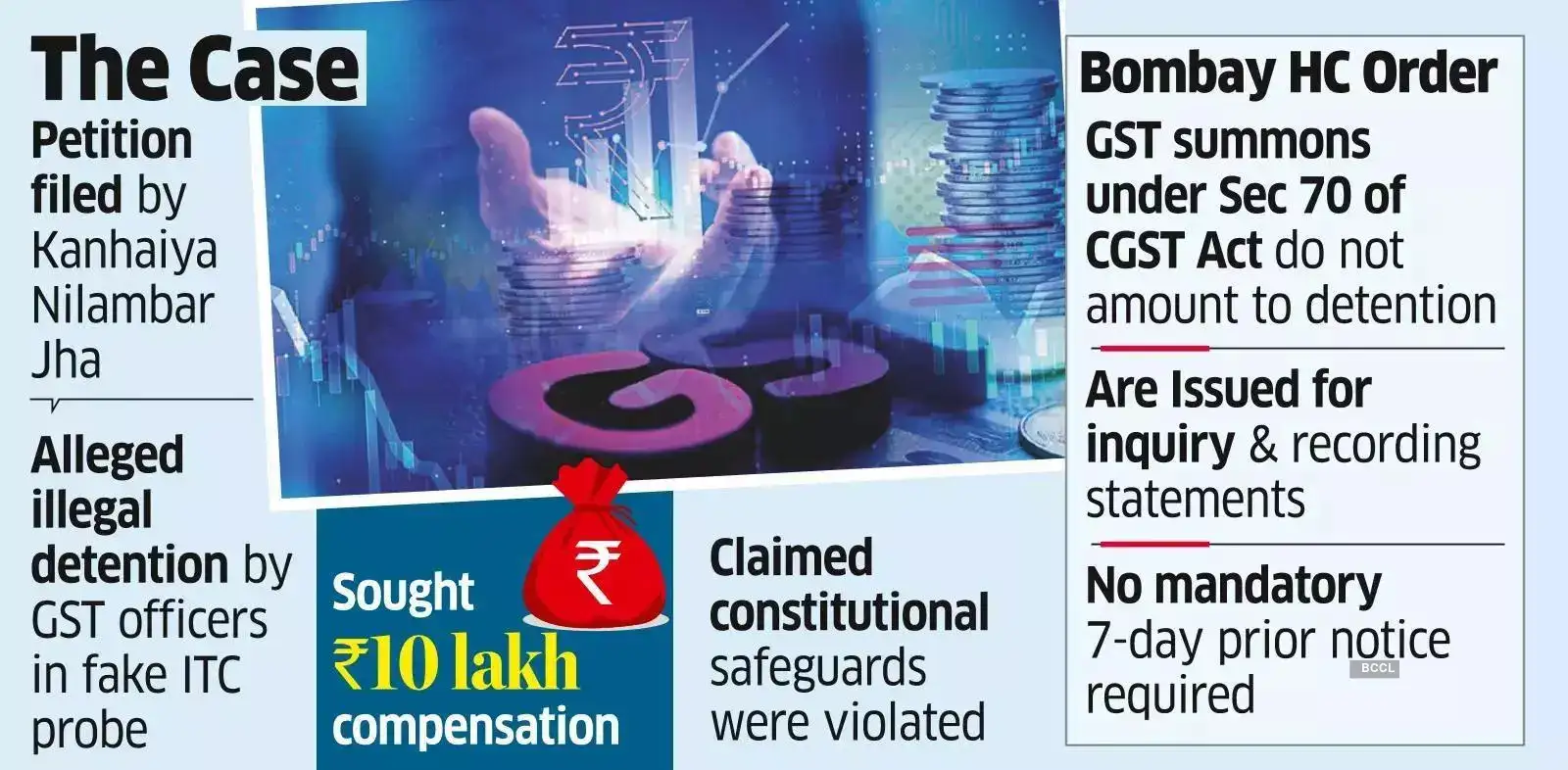
The division bench of Justices YG Khobragade and Sandipkumar C More made the ruling last week while dismissing a writ petition filed by Kanhaiya Nilambar Jha, who had sought a ₹10 lakh compensation alleging illegal detention by GST officers in connection with a fake input tax credit probe.
“When the section is silent in respect of seven days’ notice, it cannot be held that such notice is mandatory,” the court said, and clarified that a person may be summoned for inquiry and recording of statements without it amounting to detention.
According to Jha, GST officers took him from Mumbai to Chhatrapati Sambhajinagar (formerly Aurangabad) on June 17, 2025 without issuing any summons or arrest memo, and formally arrested him only on June 21 for alleged tax fraud. He accused the authorities of violating his constitutional safeguards.

Relying in part on recent Supreme Court observations upholding the constitutional validity of arrest under the GST law and the power for summons, the bench said investigative authorities must be allowed to conduct inquiries in accordance with law while ensuring safeguards against misuse.
Finding no evidence of illegal detention, the court rejected the plea for compensation and dismissed the petition. The order noted that Jha was kept at GST Bhavan in Aurangabad as per his own wish and was allowed to use his four mobile handsets. The revenue authorities argued that Jha was summoned as a witness during an anti-evasion inquiry and that he attended questioning voluntarily between June 17 and June 20. He was arrested only after charges were ascertained.
The high court order brings much needed clarity to GST summons jurisprudence, said Amit Maheshwari, managing partner of tax and consulting firm AKM Global. “The ruling reinforces a dual message that authorities may act firmly within legal limits, and taxpayers must assert objections promptly and maintain proper records during investigations.”
