


(In the weekly Health Matters newsletter, Zubeda Hamid writes about getting to good health, and staying there. You can subscribe here to get the newsletter in your inbox.)
This week, you’d be forgiven for thinking that India does not take the health of its children seriously. After the tragic cough syrup deaths we detailed in our last newsletter, today’s begins with the health of children compromised once again: five children in Jharkhand have tested positive for HIV, following blood transfusions that they underwent for the treatment of thalassemia. The issue came to light after the family of a seven-year-old thalassemia patient alleged that the local blood bank in Chaibasa, which is the district headquarters of West Singhbhum, had transfused infected blood to their child. Following this, an inquiry found that four other children had also contracted HIV.
The State government sprung into action, suspended multiple officials and announced financial aid and has promised to bear the entire cost of treatment. The Jharkhand High Court has also ordered a probe. So far, an initial probe has indicated that contaminated blood was transfused to the children. If the full investigation confirms this, it points to serious lapses within the health system and calls for stringent action to be taken. Yet again, a system meant to treat, heal and cure has caused harm: an outcome that should be unacceptable at all levels.
While we’re on the subject of blood, another news item that made it to headlines this week, was American media personality Kim Kardashian stating that she had been diagnosed with a brain aneurysm, according to U.S. media reports. If you’d like to know more about what a brain aneurysm is, how it is diagnosed and treated, do read this piece by Dr. Vikram Huded, where he decodes brain bleeds. Brain bleeds apart, it’s useful to know how to deal with bleeds in cases of accidents at home or outside as well, and here, Athira Elssa Johnson offers a primer on what to do in cases of injuries and other emergencies while waiting for medical help to arrive.
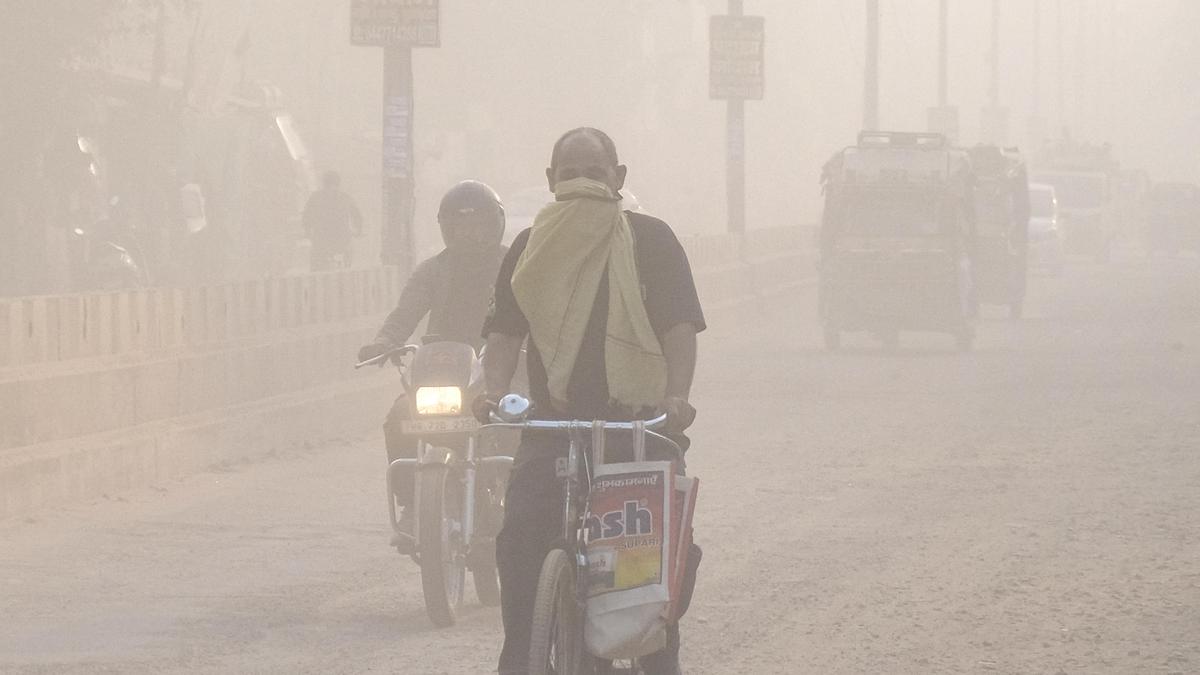
Deepavali may be over, but as many in several parts of the country are finding out, the effects of toxic are lingering on. Ashna Butani details the struggles of pregnant women in New Delhi, where hospitals registered a sharp increase in the number of patients with breathing difficulties, as the air quality swung between ‘poor’ and ‘very poor’.
While the festive season puts a spotlight on air pollution, it is important to remember that this is a year-long problem, and one that needs urgent measures if we are serious about protecting the country’s health. Air pollution apart, another issue that came up was that of ‘carbide guns’ — makeshift explosive devices sold as toys that became a fad this year in Madhya Pradesh and which, so far, have led to over 300 persons, primarily children suffering injuries — many of them serious eye injuries. A prohibitory order was subsequently issued, banning the use of these ‘firecrackers’. Eye safety is not something to be taken lightly — Serena Josephine M., speaks to doctors who explain the urgent need to raise awareness on protecting our eyes.
It’s not all dismal this week: there’s been exciting news as well: Jacob P. Koshy writes, researchers have reported that Google’s suite of artificial intelligence (AI) tools, is successful at not only suggesting new drug combinations for cancer therapy but even stood up to early tests in the laboratory. Built on the Gemma family of open models, the Cell2Sentence-Scale 27B (C2S-Scale) is a 27-billion-parameter foundation model designed to “understand” the language of individual cells.
This a signal, he says, that research-scientists ought to be integrating AI into the process of scientific discovery. In other research news, Nagaland University researchers have identified a naturally occurring plant compound called Sinapic acid that can as a powerful therapeutic agent capable of significantly accelerating wound healing in diabetic conditions, officials have claimed.
And preliminary research has also found that mRNA COVID-19 vaccines may offer a surprise benefit for some cancer patients – revving up their immune systems to help fight tumors. People with advanced lung or skin cancer who were taking certain immunotherapy drugs lived substantially longer if they also got a Pfizer or Moderna shot within 100 days of starting treatment, researchers from MD Anderson Cancer Center in Houston and the University of Florida found.
Do also check our this quiz by Ramya Kannan on the Nobel Prizes in Medicine.
Our tail-piece for the week is Shrabana Chatterjee’s story exploring why young India women are facing decreased ovarian reserves, impacting their fertility. Do give it a read!
And as always, here’s our list of explainers for you to dive into when you have a few minutes:
This week, our all you need to know series focused on fibromyalgia
Dr. C. Aravinda writes why pigeons should be significant for public health managers
On cancer: Dr. Shalini Kapoor, Chandra Mouli Pandey and Himani write on how disability-adjusted life years can help define the real burden of cancer and indicate where resources should go; Afshan Yasmeen explains a study that projects deaths due to cancers related to metabolic and lifestyle factors are due to rise, while Dr. Shraddha Modi writes on life after a mastectomy
Dr. Dinesh Ramaswamy stresses the need for early detection of liver cancer
Heat stress may have played a role in the Karur stampede, this study found
P.S. Niranjana tells you what you need to know about why ORS is in the news
Siddharth Kumar Singh writes on unexplained kidney disease emerging as a major health concern in Telangana
Anirban Mukhopadhyay decodes a new study that finds different roots for early and late autism diagnoses
Dr. Boopesh Pugazhendi details how much we have learnt about brain tumours over the years
And finally, this podcast tells you why so many still die of rabies in India
Published – October 28, 2025 04:52 pm IST