

Just in the last few months, there have been major investments in ambient scribes. It’s a clear — and exciting — sign that the industry wants to improve how we capture data in healthcare and that artificial intelligence is already being lauded as an essential part — perhaps the essential part — of the solution. Ambient scribes in physician office environments remove a heavy burden from providers by quickly, easily, and accurately generating data.
Beyond their immediate application, ambient scribes have also prepared the healthcare market for variations on this kind of technology. But, before the healthcare industry widely adopts such tools, it first needs to prove the return on investment. Ambient scribes aren’t quite there, as there’s been some recent evidence that they don’t yet demonstrate the financial or patient outcomes that many health systems need to justify the long-term financing. And, perhaps more importantly, they aren’t yet providing the relevant data needed to improve patient care in the moment the care is being provided.
For AI to truly transform care delivery, it must not only be accurate, immediate, and effortless. It also needs to provide data that is relevant and actionable — preferably in real time — to guide providers toward the best intervention when it is most timely and impactful. To achieve this, our entire health system needs to aim higher by implementing ambient technology that captures more contextual and immediately useful data across its built environment, especially when and where patients receive care.
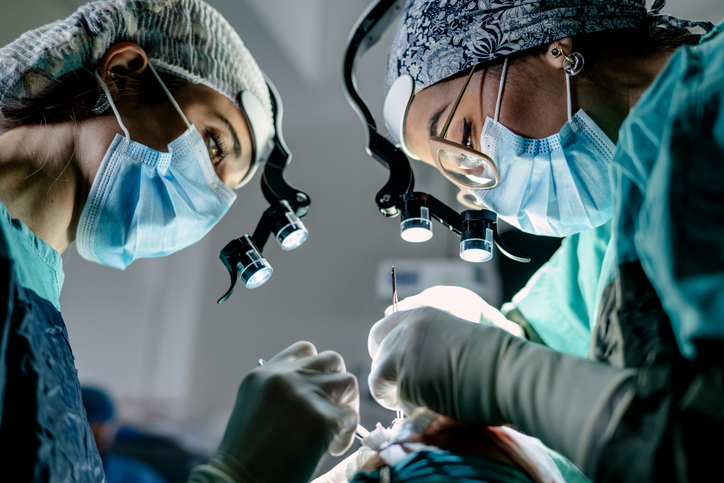
The need for more relevant and actionable data is perhaps most acute in the surgical suite, which is not only the most notable care site in most hospitals, but also the financial backbone of health systems, generating more than half of their revenue. Inefficiencies and waste in and around the operating room reverberate across the hospital and into the bottom line.
Traditionally, OR data is manually recorded by nurses who are simultaneously caring for the patient, which means, due to the nature of documenting cases by hand, the data typically is delayed, has errors, and is incomplete. And data inefficiencies contribute to operational setbacks; over half of surgical procedures have at least one delay.
One of the biggest and most exasperating delays in surgery is referred to as the “PACU hold.” This occurs when the surgery is over but the recovery room, or PACU (post-anesthesia care unit), is not yet ready for the patient, so the patient must stay in the OR. The extra time is documented in the EHR as part of the procedure, creating a misleading picture of a surgery that is reported to have taken longer than it actually did.
When schedulers analyze the data to estimate how long future cases will take and build a surgeon’s schedule, they far too often rely on inaccurate information previously lodged in the EHR that also lacks necessary context and detail. In short: shoddy data means wasted time.
Another critical bottleneck in the OR occurs during turnover times between cases, which measure the period between one patient exiting the OR (otherwise known as “wheels-out”) and the next patient entering (or “wheels-in”). During this break, the perioperative team must properly disinfect and rearrange the room, equipment, and supplies to prepare for the specific needs of the next case. It’s important that this period consistently be both long enough to do this critical work without creating risk and also not so long as to waste time and delay wheels-in.
That’s why turnover time is widely viewed in OR management as a key metric of quality, safety, and efficiency.
However, many health systems don’t have good visibility into this important metric due to limited data from the EHR. And inconsistent and slow turnover times can wreak havoc on an OR, frequently delaying the surgical schedule, frustrating staff, and limiting the number of cases per day.
Ambient technology — specifically ambient video and computer vision — can offer immediate and ongoing visibility into what occurs before, during, and after OR turnovers, revealing opportunities for process improvement. Using these insights — combined with staff input — health systems can identify which process changes to make. This can not only improve average case and turnover times, but also result in broader patient and capacity benefits, such as parallel processing and improved instrument management.
Imagine a scenario where PACU team members receive real-time data that tells them precisely when they can expect the patient so they can prepare the recovery room on time. The patient leaves the OR sooner, reducing complications. The team turns over the OR for the next case and has sufficient time to clean effectively, reducing the risk of infections. And the surgeon’s schedule is more accurate, allowing them to serve more patients and spend less time waiting.
Additionally, with a rapid feedback loop, surgical teams can review minute-by-minute changes to case and turnover times after implementing any new processes or workflows. That detailed data allows them to rapidly evaluate the impact of a change and iterate as needed.
Though turnover times may often seem like a small metric — they can have a big impact on the OR day, helping surgeons more reliably complete cases and reduce the risk of overages or delays. At scale, the additional time can potentially create capacity for dozens of additional cases per OR per month, driving greater patient access and a significant revenue windfall for health systems.
A future where ambient technology is integrated across all hospital spaces — patient rooms, ORs, even waiting areas — will revolutionize decision-making to improve care. Ambient sensors that capture video and AI that automatically identifies, categorizes, and documents perioperative events can bring rich, novel data to immediately inform smarter interventions.
As hospitals move toward smarter AI-powered systems, a new category of ambient technology that produces actionable and relevant data in real time will be the invisible force making healthcare better.
Photo: German Adrasti, Getty Images

David Schummers is co-founder and chief executive officer of Apella, a health technology company that makes operating rooms work better. He is passionate about finding innovative solutions to challenges in our health care system. With over 20 years of health technology experience, David has led teams that create new standards of care for multiple disease states including spinal pathologies, gastrointestinal disorders, and cancers. In 2014, David became the first commercial executive of Auris Health, a robotic medical company, and helped transition it from an early start-up to the largest start-up transaction in medical technology history, a $5.7B sale to Johnson and Johnson in 2019.
This post appears through the MedCity Influencers program. Anyone can publish their perspective on business and innovation in healthcare on MedCity News through MedCity Influencers. Click here to find out how.