

Not all of those who have retired or on the verge of hanging their boots have completely well planned and funded silver years. Some of those who turn 60, especially from the private sector, find themselves having exhausted all or most of their savings in educating and marrying their kids, buying a house, or spending on medical needs of parents/themselves and so on. There are instances of some exhausting most of their provident fund balance.
However, for those retired persons with meagre income sources, but with a house to call their own, reverse mortgage loan can be a source of income for a reasonably long period of time.
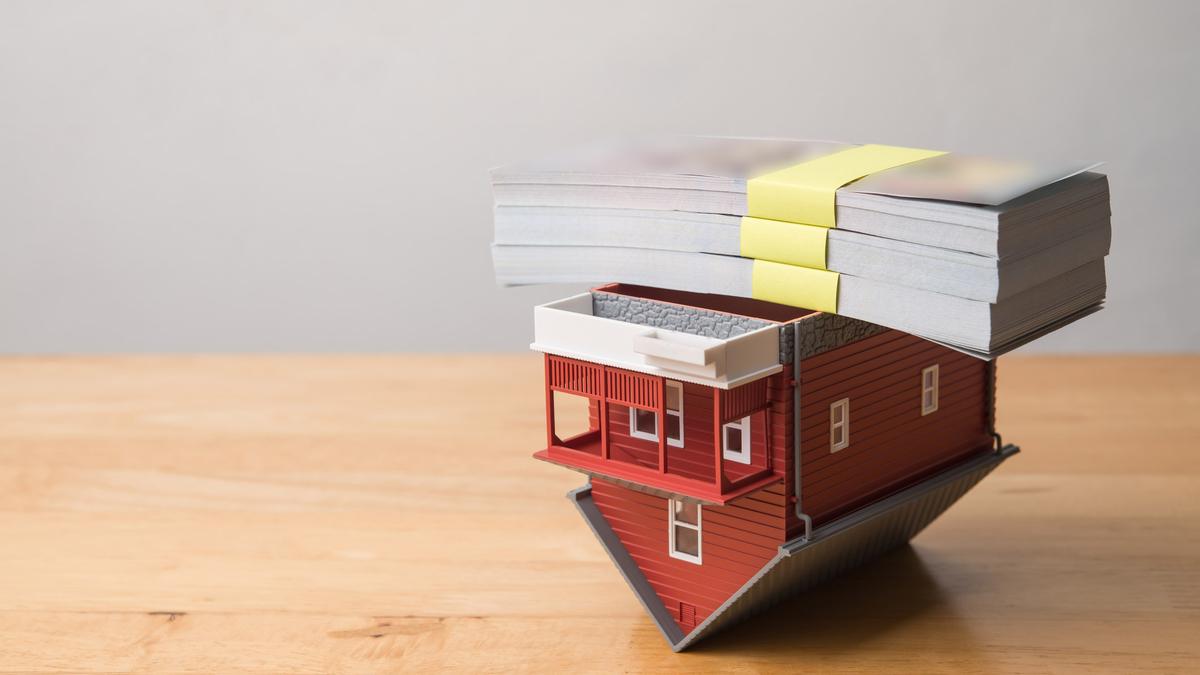
This reverse mortgage involves your pledging the house to the bank, while the lender pays you a sum at periodic intervals. What’s more, you need not repay the loan and the lender’s payment to you is tax free.
Right now, mostly public sector banks and select finance companies offer the product. Bank of Baroda, Canara Bank, Punjab National Bank, LIC Housing Finance, IDBI Bank are among the few giving reverse mortgage loans.
Loaning the house
Before opting for a reverse mortgage loan, it is important to understand multiple factors from the operational front to see if it works for you.
The reverse mortgage loan is available only for those aged 60 or above. The spouse must be at least 55 years of age.
The loan amount that you are offered is typically 60-80 per cent of the value of the property that you wish to mortgage.
Usually, the period for which a bank makes payments on the mortgage ranges from 10-20 years.
You can opt for a specific frequency of payments — monthly, quarterly, half-yearly or annually.
Now, the property must be in your own name and must have no encumbrances (loans outstanding) and must be free from any legal claims. The documentation (title deed etc) must be clear and specify that you are the legal owner of the property by virtue of having bought it yourself or acquired it via inheritance.
Once you reverse mortgage the property, the ownership shifts to the bank.
You must necessarily reside in the house that you wish to reverse mortgage and are not allowed to rent it out to someone else.
After the loan period ends, you can continue to reside in the house till you are alive or till you decide to sell the property. Even your spouse can live in the house after your time even after the loan period.
Your children or legal heirs can repay the loan on your behalf and take back possession of the house.
In case of yours and your spouse’s death (during or after the loan period), the property can be sold by the bank and the loan amount would be recovered. The balance amount would be returned to the surviving spouse (if he/she is alive and chooses to move out after agreeing to sell) or the legal heir (if both spouses are not around anymore).
The payment
Now, the working of reverse mortgage needs to be understood to get a grip on the cashflows you can expect. The total loan-to-value (LTV) is fixed. This amount includes the principal and interest payments.
An example can illustrate the concept better.
Now, assume the property you wish to reverse mortgage is valued at ₹2 crore. Also, your lender is willing to give, say, 75 per cent of the property’s value as loan. So, the principal and interest payment would total up to ₹1.5 crore.
The payment period is taken as 15 years and the frequency of the instalments is assumed to be monthly. Now, the interest rate on offer is taken to be 10 per cent.
For the above-mentioned scenario, the monthly payment from the lender to you would be ₹36,191. So, in all, the bank would have disbursed a little in excess of ₹65 lakh to you over a 15-year period.
The concept is that the total amount disbursed to you and the interest on it should add up to the entire loan amount, in this case ₹1.5 crore (with payments totalling only to ₹65 lakh made to you and ₹85 lakh being the interest on the amount).
After instalments stop
As seen from the illustration earlier, reverse mortgage can help you gain regular income for a defined period, though the payoffs may not be spectacular.
So, what happens if you survive the payment period and the bank’s instalments to you stop?
You will have to consider your cash-flow requirements if one or both spouses are alive beyond, say, the 15-year period as in the earlier example.
You would have options. Since the chances of the property prices rising over the 15-year period are reasonably high, the value of your residence would have increased. Therefore, when you allow the bank to sell the property, you could get a reasonably healthy amount even after the loan due.
With the lumpsum after selling the property, you could consider renting a comfortable apartment near your old place and park the amount in fixed income instruments for your monthly income.
If you have health issues and you (or your spouse) find moving around challenging, you can opt for assisted living through retirement homes if you aren’t averse to the idea. Taking the lease/rent option in an assisted living complex while keeping the corpus from house sale for your rents and expenses can work in your favour.
Tax implications
When a bank makes payments to you during the period of the reverse mortgage, it is treated as a loan from a taxation perspective. So under section 10(43), these payments are tax free in the hands of the borrower.
However, when you decide to sell the house that is on reverse mortgage, any capital gains would be taxable according to usual applicable laws.
Published on November 22, 2025