Inside Will Lewis’s tumultuous two years as publisher of the Washington Post | Will Lewis
- Business
 ThePostMaster
- 0
- 15 minutes read

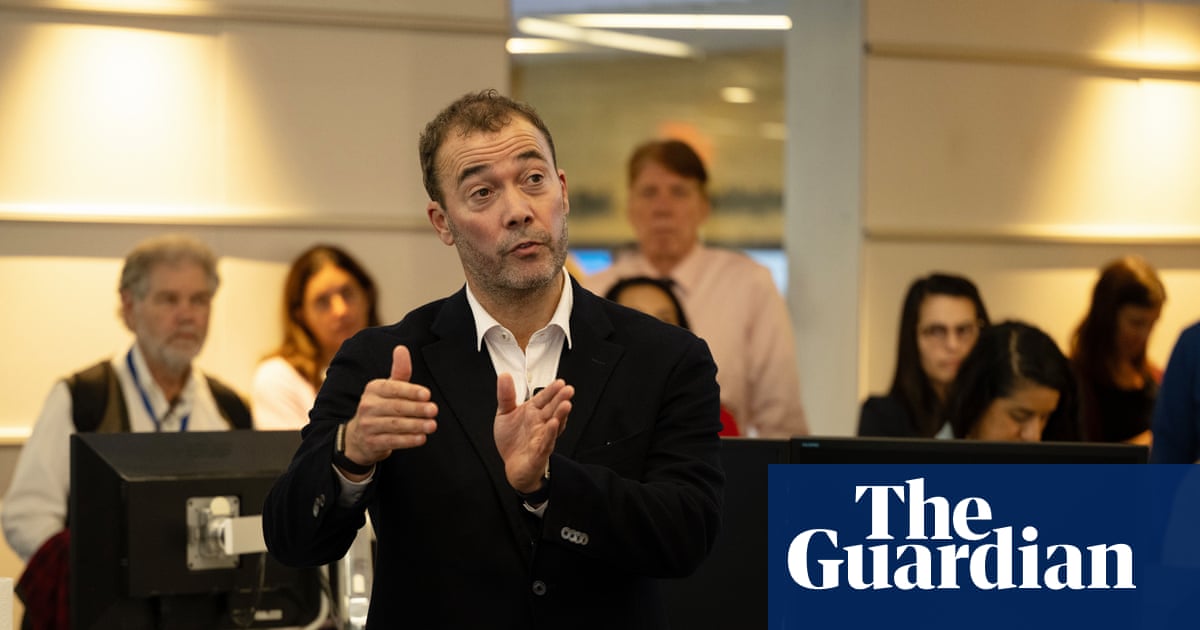
Standing on the seventh floor in the center of the Washington Post’s open newsroom on the morning of 3 June 2024, publisher Will Lewis decided to deliver some tough love to a news organization he had taken charge of five months earlier.
Lewis, a veteran of Rupert Murdoch’s media empire, had replaced Fred Ryan, a former Ronald Reagan aide who had presided over some of the Post’s profitable years – during the first Trump administration – but lost the confidence of some staffers after clashing with employees during a late 2022 town hall.
“We are going to turn this thing around, but let’s not sugarcoat it: it needs turning around, right?” Lewis said. “We are losing large amounts of money. Your audience has halved in recent years. People are not reading your stuff. I can’t sugarcoat it any more. So I’ve had to take decisive, urgent action to set us on a different path.”
It turned out to be one of the few times that Lewis would address the whole company. On Saturday evening, Lewis, 56, abruptly announced his resignation, just three days after the Post slashed nearly a third of its entire staff in one of the largest layoffs in US media history. Instead of putting the Post on a more promising financial path, Lewis’s two years were marked by controversy, clashes with staff and jargon-heavy initiatives that didn’t seem to amount to much.
Ire over the cuts was mostly directed at Lewis and the Post’s billionaire owner, Jeff Bezos. While Lewis nominally ran the company, it was left to top editor Matt Murray to deliver the news of the cuts during an early morning Zoom meeting.
But while he was a no-show for the meeting, Lewis was spotted a day later at the pre-game festivities for the Super Bowl by a former Post sports reporter, who noted his appearance came after he took apart the sports section, including football coverage.
While current and former staffers have suspicions about why, the bigger – and still unanswered – question about Lewis’s departure is why now? Lewis had long been unpopular with many Post employees and seemed to have made little progress in his business-side efforts. A senior Post journalist told the Guardian in November that Lewis was “universally reviled”.
“I was surprised by the timing. I was not surprised by the outcome,” Ruth Marcus, who resigned as a Post columnist in March 2025 after 40 years at the publication, said in an interview.
“The news of Lewis’s departure triggered a thousand celebratory messages and emojis – we were popping the digital champagne, caseloads of it,” said a longtime Post staff writer who was not authorized to comment. “Here was a man who’d been handed the reins of one of the world’s most storied journalistic institutions and who seemed, almost from the start, like a man who hated the job and hated us.”
Still, many Post employees believed that Bezos was not particularly interested in what they thought of Lewis. (Lewis did not respond to messages seeking comment.)
The Financial Times reported that senior management at the Post were “livid” about Lewis’s appearance at the Super Bowl and disliked the optics of him appearing at a glamorous event a day after hundreds of employees lost their livelihoods.
Some Post staffers, though, have pointed out that Bezos had not previously seemed concerned about optics; in June 2025, a month after the Post announced that it would once again incentivize staffers to leave the company via buyouts, Bezos and his now wife Lauren Sanchez hosted a foam party on a $500m yacht in advance of their star-studded wedding in Venice. (A Post spokesperson did not respond when asked whether Lewis’s Super Bowl cameo factored into his departure.)
Some Post staffers, including Marcus, were initially encouraged when Lewis was named to the job in November 2023. Early on, she recalled getting personal emails from Lewis complimenting her columns.
“The first time I met him was at a reception and I said: ‘Hi, I’m Ruth Marcus. I’m your pen pal.’ And he said: ‘Oh, can I give you a hug? Your stuff is great.’ I was initially well-disposed toward him – until I wasn’t.”
Sally Quinn, a former Post writer and the widow of the former Post executive editor Ben Bradlee, was asked to welcome Lewis to the Post and to introduce him around Washington DC.
She invited him to events and they had dinner every few months, she said. “We got along really well,” Quinn recalled. “He was very charming and funny and smart and we had a good time. He seemed very excited and upbeat about the job, so I was looking forward to working with him.”
But Quinn said she stopped hearing from Lewis after he faced blowback for his handling of the ouster of Sally Buzbee as executive editor in early June 2024. “He stopped calling and emailing,” she said. “I think he just didn’t want to know what I had to say.”
There were signs early on that Lewis would be hampered by his past. Even before assuming the job, Lewis told a Post reporter that he would not comment on allegations that he had helped cover up a major hacking scandal at Murdoch’s UK publications in the early 2010s as part of his work for News Corporation. (Lewis has not been found to have committed any wrongdoing.)
But Lewis’s ties to that sordid period in British journalism continued to dog him, even as they were unlikely to have factored much into Bezos’s decision to oust him.
Early in his tenure, Lewis faced accusations, which he denied, of infringing on the Post’s coverage of a lawsuit filed by Britain’s Prince Harry against Murdoch’s British publishing operation that could have reflected on him and his work for the company.
To get around the obvious conflict of interest, the Post tapped former managing editor Cameron Barr to oversee investigative coverage of Lewis and Robert Winnett, a former colleague he had picked to replace Buzbee.
“I think it was a credit to the Post to undertake and to provide the resources, which were extensive,” Barr recalled in an interview.
Barr, who stepped down from the Post in 2023, described Lewis’s tenure as publisher as “ineffective”. “I don’t see that any of the initiatives that he launched have been a success,” he said. “It certainly hasn’t turned around the financial fortunes of the Post.”
Ultimately, Lewis would get something of a reprieve in January 2025 when Prince Harry and Murdoch’s operation settled the case. But questions about his past persisted. Last September, the Guardian reported that Lewis had played a prominent role in the effort to save Boris Johnson’s prime ministership (Johnson, a former Telegraph colleague, knighted Lewis in 2023.)
Part of Lewis’s supposed appeal for the job was his background as a reporter. Lewis got his start at the Financial Times in 1994, gradually rising through the ranks before becoming business editor for the Sunday Times. He reached the upper echelons of British journalism in 2005, when he became editor-in-chief of the Telegraph, receiving acclaim for overseeing coverage of a scandal revealing lawmakers who were using public funds for personal benefit.
But, during that June 2024 meeting with staffers, Lewis immediately clashed with some of the Post’s most respected reporters.
One of those reporters, the Pulitzer prize-winning journalist Carol D Leonnig, wrote in a post on X on Monday that Lewis “showed his horrendous leadership when, at 1st staff mtg, he snapped at my question about his vision for @washingtonpost. He had none. In 18 months, @JeffBezos let him wreck a national treasure.” Leonnig left the Post for MSNBC – now called MS Now – last summer.
Lewis’s pick of Winnett to take over the newsroom turned out to be a disaster. Just a few weeks after his appointment, after his career was scrutinized by the Post in a story headlined “Incoming Post editor tied to self-described ‘thief’ who claimed role in his reporting”, it was announced Winnett would stick with his job as deputy editor of the Telegraph.
As the business continued to flounder into early 2025, Post staffers found new reasons to lash out at Lewis.
Late last April, some staffers chafed after reading that the Post had thrown an ostentatious, over-the-top brunch to commemorate the annual White House correspondents’ dinner weekend.
In May 2025, Lewis was conspicuously absent when Post staffers gathered to celebrate their Pulitzer prize wins, which some staffers took as a sign that he didn’t value their journalism. (Staffers were told that Lewis was away on a long-planned trip.)
All the while, Lewis rebuffed efforts by the Post’s unionized staffers to get him to participate in a town hall meeting. Last month, amid widespread anxiety at the Post about layoffs, he was in Davos interviewing Bill Gates.
At the end of last month, Lewis was still participating in the pomp and circumstance of the job, reportedly attending the prestigious Alfalfa Club dinner, along with Bezos and Murray – once again giving no indication that he was on the outs with his boss.
Just days before Lewis’s departure, Murray defended Lewis in an interview with Fox News. “Look, Will has been engaged with me very closely on this for a long time,” Murray said, explaining his absence by saying “he had a lot of things to tend to today.”
Back in November 2023, when Lewis’s appointment was first announced, Bezos said Lewis “embodies the tenacity, energy and vision needed for this role”. Lewis also had experience running a digital media startup, having launched the News Movement, a social media-focused venture, after leaving Dow Jones in 2020.
In rare public remarks on Saturday, Bezos said the Post “has an essential journalistic mission and an extraordinary opportunity” and praised Jeff D’Onofrio, the business executive who will serve as acting publisher, along with Murray and opinions editor Adam O’Neal. He said nothing about Lewis.
In a terse, subject-less email announcing his departure, Lewis thanked Bezos “for his support and leadership” throughout his time at the Post and, amid calls by some for Bezos to sell the paper, told staffers that “the institution could not have a better owner”.
