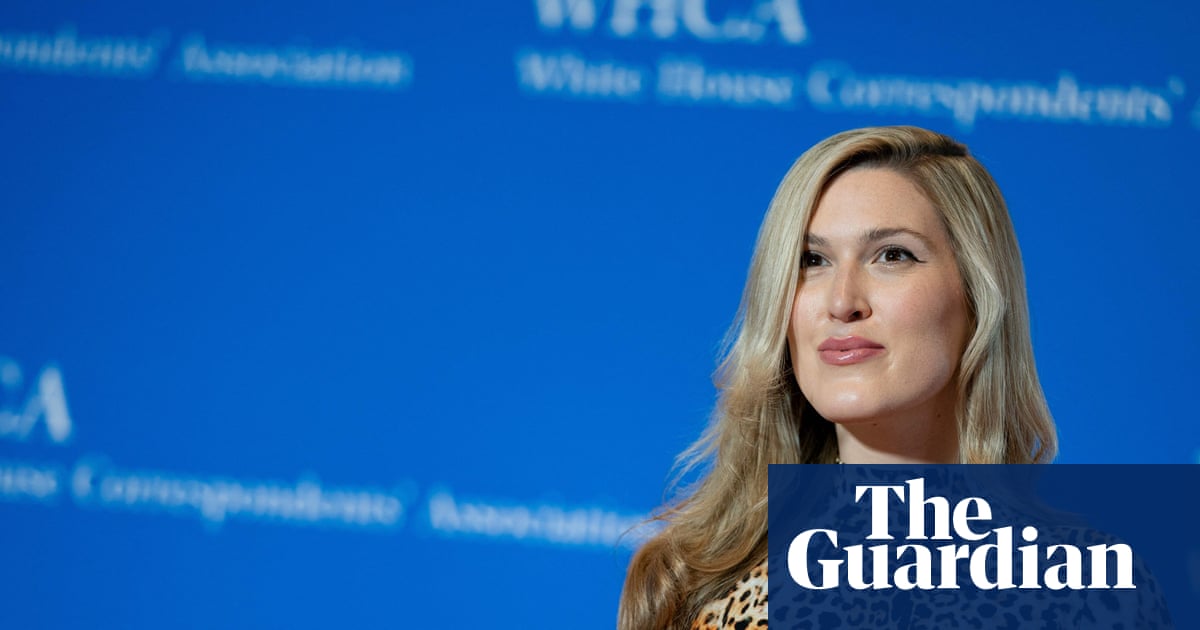

In September, under the leadership of new top editor Mark Guiducci, a thirtysomething favorite of Condé Nast eminence Anna Wintour, Vanity Fair announced a slate of new hires that included one prominent name that hadn’t been heard from in a while: the political writer Olivia Nuzzi.
At seemingly the height of her rapidly ascendant career, Nuzzi was cut loose by New York Magazine last October after the media newsletter Status broke the news that she had maintained a relationship with Robert F Kennedy Jr, whose presidential campaign she had covered for the magazine.
Guiducci, in announcing Nuzzi’s hire as west coast editor, among other appointments, said the magazine had been “seeking out a certain fearlessness – people with a point of view, able to express it in both substance and style”.
But Nuzzi’s nascent career at the magazine is now very much up in the air, after her former fiance Ryan Lizza began publishing a series of exposés about her and their relationship on 17 November. In the first edition, he accused her of numerous journalistic transgressions, including an additional affair with former South Carolina governor Mark Sanford, who had been a 2020 Republican presidential candidate.
Initially, Vanity Fair stayed mum about Lizza’s initial revelations, allowing four days to pass before releasing a statement saying simply: “We were taken by surprise, and we are looking at all the facts.”
Since then, the magazine has said nothing about Nuzzi’s status. Vanity Fair employees have also been kept in the dark recently about the magazine’s review of their colleague, the Guardian understands.
Asked about Nuzzi’s status and the magazine’s review, which is ongoing, a Vanity Fair spokesperson declined comment. Nuzzi also ignored a text message seeking comment on whether she still technically works for the magazine.
Nuzzi’s profile of Sanford had appeared in New York Magazine, which also declined comment when asked by the Guardian about the piece amid the revelation of her later relationship with the politician.
But, notably, Nuzzi is not a full-time employee at Vanity Fair – rather, she is on a temporary contract that expires at the end of the year, meaning it would need to be renewed by the magazine. (Puck’s Dylan Byers reported, however, that Nuzzi “was expected to join the magazine on a full-time basis in the new year.”)
Another question is whether the controversy surrounding Nuzzi will reflect poorly on Guiducci, who only began as the magazine’s global editorial director this summer, with Wintour describing him as “an energetic and creative editor at the center of his generation”.
“There’s such an impulse to do noisy things because it’s so hard to break through and people are consuming less media. I think the impulse was correct, but the execution was sloppy,” said Janice Min, chief executive of the Ankler and former editor in chief of US Weekly. “This is the benefit and peril of legacy media brands where often times you’re pursuing names and figures that can outshine or overwhelm the mother brand, and this is certainly the case with that.”
While she called the Nuzzi hiring a “rookie error”, she said the jury was still out on Guiducci.
Much could hinge on how much more material Lizza has to publish, and what it is. He has already promised more editions.
Lizza, reached by email and asked about Nuzzi’s standing at Vanity Fair, pointed to comments he made in his 26 November edition, when he wrote that “there are few journalistic crimes as serious as betraying a confidential source”, and asked: “How could any source – or reader – trust such a reporter again? And if they happened to become an editor, how could any reporter trust that editor with their own confidential sourcing?”
In that edition, Lizza leveled perhaps his most serious allegation, accusing Nuzzi of performing “catch-and-kill” operations for Kennedy, sussing out negative reporting about him or storylines that could hurt him. “As she later revealed to me during hours of conversations, Olivia did this regularly throughout 2024: canvassing sources who trusted her, obtaining their opposition research on Bobby, and then feeding it directly to the candidate,” he wrote.
Nuzzi publicly addressed Lizza’s allegations for the first time on Tuesday, in an online question-and-answer session tied to the release of her book, American Canto.
“It is abuse that I am all too familiar with now relocated to the public square and dressed up as some sort of noble crusade,” she said of Lizza’s series, which had included four parts to that point. “This obsessive and violating fan fiction/revenge porn he has written would never meet standards for publication at any legitimate outlet.”
Nuzzi’s combative response did not quiet Lizza, who early on Wednesday published what he described as a loving “political strategy memo” Nuzzi wrote for Kennedy, which allegedly included advice about what he should wear to a June 2024 campaign event.
“Your event should demonstrate that you are the candidate who people are actually enthusiastic about,” Nuzzi reportedly wrote to Kennedy, offering advice for what kind of media coverage he should demand for the event. (These communications cannot independently be verified, though Nuzzi acknowledged in her new book that she offered informal advice to Kennedy when asked.)
In her question-and-answer session and a video interview with the Bulwark, Nuzzi offered few clues about the status of her career – though she said she did not plan to return to campaign reporting, and indeed was not slated to do so as west coast editor for Vanity Fair.
“I think shame is really important and I had fucked up. I did something wrong,” she told the Bulwark’s Tim Miller. “Those ethics rules exist for a reason – they’re really good rules. And I had violated that.”
So far, the scandal seems to have done little for Nuzzi’s book, which has received mostly negative reviews. As of Thursday evening, it stands as the 5,219th most popular book on Amazon.