‘It’s betrayal’: Shetland’s scallop fishers brace for arrival of UK’s largest salmon farm | Fishing industry
- Business
 ThePostMaster
- 0
- 17 minutes read

At Collafirth, north Shetland, Sydney Johnson is unloading bags of two-dozen scallops by throwing them over his head like medicine balls to the pier above. Johnson, who has just finished a 10-hour shift on his boat, the Golden Shore, is concerned that plans for a new salmon farm will put fishers like him and his two sons out of business.
“They say it’s just one farm,” says Johnson. “But it’s one farm more. There’s only so much water and we’re at saturation point.”
The Shetland Islands council approved plans for the new farm last week. For decades, the Scottish archipelago’s fishing community has shared the nutrient-rich waters of Britain’s northernmost region with the fish farms clustered around its “voes”, or inlets.
But by approving what will become the UK’s largest-ever salmon farm, the council has deepened the rift between the islanders who make their living from fishing and the farm owners, and drawn criticism from environmental groups, which fear lasting ecological damage.
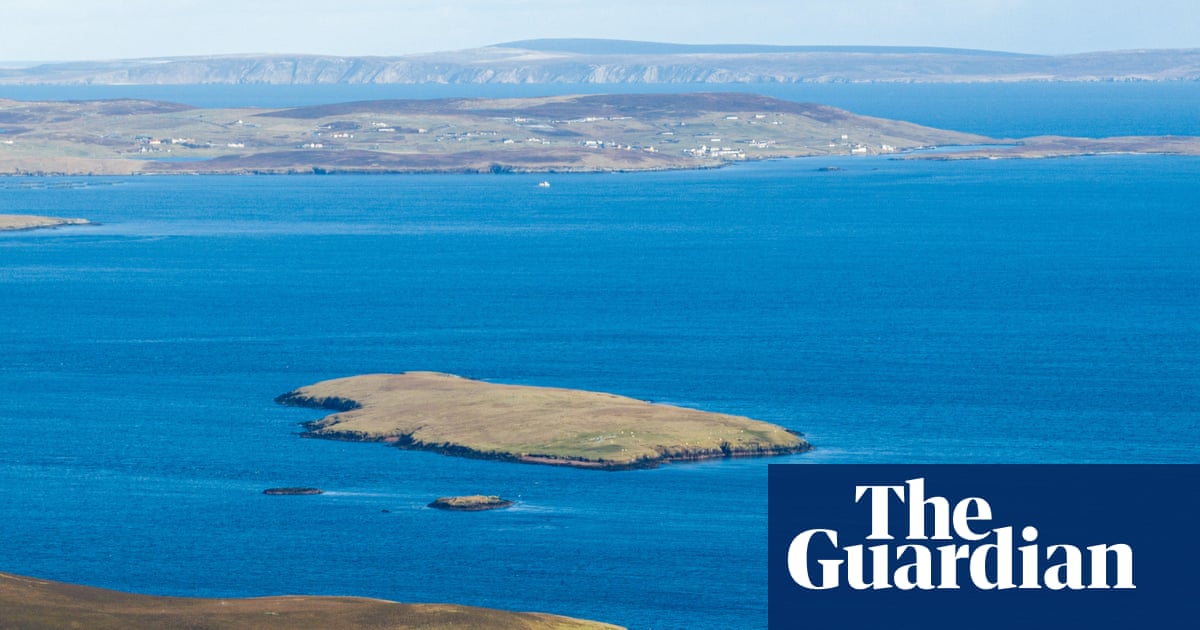
The site, next to Fish Holm, off Shetland’s east coast, is a place Johnson and others have long relied on as among Shetland’s most fruitful scallop beds. The scallop fleet, which itself is not without its critics, has 30 vessels, each crewed by between one and three people. The Shetland Fishermen’s Association (SFA), representing 450 members, says the company running the planned site, Scottish Sea Farms (SSF), has not considered the environmental impacts on fish and shellfish nursery grounds.
SSF, which says it has taken account of the fishing body’s demands by making the site smaller, employs almost 300 people, including 160 on 20 farms, making it the islands’ biggest employer after the council.
The company, which is jointly owned by the giant Norwegian seafood companies SalMar and Lerøy, will build 12 pens, each 160 metres in circumference, which will together hold up to 6,000 tonnes of salmon.
The farm has been described by SSF as marking a “new era” of aquaculture, expanding some of its existing sites in the strait into one bigger farm at Fish Holm. There would be more fish in fewer but larger pens located in deeper “high-energy” waters, where there are stronger tidal flows. This, the company says, will reduce problems with sea lice, disperse waste and keep fish healthier.
Johnson is not convinced. “It’s hard to figure out why our own council are hellbent on destroying our living for the gain of a few big Norwegians,” he says. “It’s betrayal at the highest level and it’s a fine shame to all involved.”
He dismissed as “laughable” claims submitted by SSF during the consultation, using its environmental impact assessment and data provided by the Scottish Fishermen’s Association, that the site was worth just £500 of scallops a year for each vessel.
Johnson pointed to that day’s catch, worth about £400 alone he says, adding: “I’ve had four times that at Fish Holm in a day. They need to sack their accountant.”
The SFA itself says the company misapplied the statistics and that it did not reflect the way the area was currently fished.
Most of the island’s once family-run salmon farms are now controlled by big business, largely owned by Norwegian and Canadian multinationals. They produced 38,000 tonnes of salmon, worth £174m, in 2024 – about a fifth of Scotland’s output.
Shetland is seen as a new frontier by an aquaculture industry keen to expand but struggling with high fish mortality rates and rampant disease. In May, SSF expects to open another farm – the largest in Shetland so far, with production expected to reach 4,000 tonnes – and is assessing an additional seven sites. Last week, before Fish Holm was approved, the Canadian-owned company Cooke Scotland also filed an application for a farm off the island of Vementry in western Shetland.
The approval of SSF’s huge site marks a crucial juncture for Scottish salmon farming, which is worth an estimated £950m to Scotland’s economy, according to a report commissioned by the industry.
On 25 February, the Scottish parliament’s rural affairs and islands committee is due to question salmon farming executives as part of a continuing inquiry. Last year, the Holyrood committee criticised the Scottish government for its “slow progress” on regulating the industry.
It called for stricter rules and greater transparency of mortality rates at farms, amid concerns over persistently high numbers of salmon deaths. The industry has said that many of the problems are outside its control and that warming seas spur the growth of blooms of plankton and micro-jellyfish, which sting, cut and block the gills of the fish, killing them or aggravating other problems. Campaigners blame welfare issues such as overcrowding.
In January 2025, Finlay Carson, the committee’s convener, told the Guardian that if no progress was made to address its concerns within 12 months, the committee would begin to look at a moratorium on industry expansion.
Since then, deaths in fish farms have got worse. The latest 2024 data, from the Scottish government’s figures across a whole production cycle to harvest, shows a survival rate of 61.8%, the lowest since the 1980s.
In October, more than 250,000 salmon died unexpectedly in Shetland’s farms alone, which one company blamed on plankton blooms and jellyfish in warm weather.
Ariane Burgess, Green MSP for the Highlands and Islands, tells the Guardian: “A moratorium on new farms and expansions would allow regulators to ensure that existing rules are being properly enforced and to begin addressing the impact of salmon farming on our seas, our local economies and other marine-based jobs.”
Edward Mountain, a Conservative MSP for the Highlands and Islands who convened the first parliamentary inquiry into salmon farming in 2018, says he would now vote for a moratorium on salmon farm expansion. “I say that with great difficulty as I believe it is a really important industry to Scotland. But continuing mortalities means to me that the industry hasn’t done what it promised to do in 2018, which was reduce mortalities and prevent problems,” he says.
Since then, Scottish farmed salmon production has soared by 23%, from 156, 025 tonnes in 2018 to 192,000 tonnes in 2024. More than 58 planning applications have gone ahead (20 for new farms and 38 for reconfiguring existing farms, which includes extensions), according to data compiled by community campaigners and analysed by the environmental charity WildFish. Only three applications have been refused, one of which is being appealed, the charity says.
Nick Underdown, Scotland director at WildFish, says the latest approval is an “unprecedented expansion of industrial salmon farming that carries significant environmental risk”.
“Salmon farming is costing our marine environment, while foreign-owned salmon farm companies shift their profits to Norway, the Faroes and Canada,” he says.
Back on Shetland, residents are weighing up the costs and benefits of the farm. SSF has donated more than £300,000 to local causes, from school laptops to Shetland’s girls’ football team.
“It’s a big employer and it pays good wages,” says William Cooper, a retired engineer from Mossbank, which overlooks Fish Holm. While his wife, Denise, is put off by images of sea lice infestations, he is unbothered by the environmental arguments but admits the row has changed his mind about the industry, despite the jobs.
“The peerie [small] boats are heritage – how it’s always been done,” he says. “For Shetland to be known for just producing millions of salmon would be quite sad really.”
SSF has declined to comment on Fish Holm, but says in a statement that it is committed to “coexisting with other marine users while delivering long-term benefits for the islands”. Karyn Lumsden, SSF’s head of communications, says the Fish Holm plans include vacating one site and adds: “One larger farm can also reduce overall seabed impact compared with several smaller farms producing the same volume of fish.”
A spokesperson for Salmon Scotland, which represents the salmon farming industry, says it is looking forward to updating Holyrood’s rural affairs and islands committee with the sector’s progress, including “improved survival and continued investment in fish health and welfare”.
