
Take a moment to picture the spine you rely on every day. It is not a pole, but a living column of thirty-three small bones, each separated by plump, jelly-filled cushions and held together by more than one hundred muscles and two hundred ligaments. This elegant tower was sculpted over millions of years for one clear job: to keep a two-legged creature balanced while walking long distances, squatting to gather food, and occasionally carrying a child or a hunted carcass back to camp.
Anthropologists who measure ancient skeletons tell us that early humans walked up to 15 kilometres a day, and suffered far less of the disc collapse and pinching nerves that plague modern human beings. Their spines stayed strong because regular movement pumped fluid in and out of each disc the way a sponge is squeezed and refilled, delivering nutrients and washing away waste.

Effects of modernity
Fast-forward to today. Most adults in the industrialised world sit for 9 to 12 hours every day, often moving no farther than the distance between bed, car seat, office chair, and sofa. Remote work, binge-watching on devices, and using food-delivery apps have only tightened the trap. In evolutionary terms, we asked our Stone Age spines to adapt to a Space Age lifestyle in the blink of an eye, and they have answered with stiffness, aches, and the global epidemic we now call non-specific low-back pain. The World Health Organization lists it as the leading cause of disability, outranking malaria, diabetes, and depression. Yet, unlike many diseases, most back pain is not an inevitable sentence; it is a predictable consequence of how we sit, stand, lift, and ride. That means the power to change the story is already in our daily choices.
The workplace
Begin with the place where many of us spend half our waking hours: the workstation. Whether you are in a gleaming office tower or at a kitchen table that doubles as a desk, think of your chair and screen as medical devices, because that is exactly what they are. Raise the top of your monitor to eye level and roughly an arm’s length away; this single adjustment prevents the head from drifting forward and adding the equivalent weight of a bowling ball to your neck joints. Choose a chair that has a slight bump or adjustable pad in the lower back, restoring the natural inward curve your lumbar spine is supposed to keep. If your feet dangle, slide a box beneath them so your hips and knees sit near ninety degrees. Every 30 to 45 minutes, stand up for two minutes: refill your water, look out the window, or simply march in place. A 2024 review of dozens of studies found that these micro-breaks reduce afternoon back discomfort by nearly one-third, and they cost nothing except a phone alarm to remind you.

The road
Now roll that same thinking out to the open road. Motorcycles free us from traffic, but they also expose the spine to two hidden hazards: vibration and flexion. The engine sends high-frequency shudders through the handlebars and seat which, over hours, can inflame nerves and discs. Meanwhile, leaning forward shortens the hip flexors and rounds the lower back, multiplying pressure inside each disc by more than a third. A few inexpensive fixes make a measurable difference. Add two-inch risers to lift the bars so your wrists, elbows, and shoulders relax; mount a small clamp-on backrest to stop you from slouching; move the foot pegs so your hips and knees sit at comfortable right angles; and wear gloves or grips designed to dampen vibration. Before every ride, do a quick “BRAG” check: Backrest, Risers, Angle, Gloves. It takes thirty seconds and saves days of aching later.

Lifting objects
The same principles apply when you lift a suitcase into an overhead bin, haul grocery bags, or pick up a toddler. Think of the discs as jelly doughnuts: if you squash one edge by bending forward, the filling can ooze out the other side. Instead, squat down close to the load, keep your chest up and your back straight, and push up with the strong muscles of your legs and hips while breathing out. A simple rule of thumb is to ask for help if the object weighs more than one third of your own body weight. If you must lift repeatedly—loading a truck, stocking shelves—slide on an elastic lumbar belt; recent research shows it can lower peak disc compression by about 15%, but only if you still use good form.

Daily habits
Beyond the desk, the bike, and the grocery aisle, the larger story is how daily habits have quietly shifted from motion to stillness. Our great-grandparents walked to the post office, chopped wood, and wrung laundry by hand. We tap screens and summon rides. Reclaiming small bursts of movement throughout the day is the closest thing we have to a wonder drug for the spine. Stand during television adverts, pace while talking on the phone, take the stairs for one or two flights, or park at the far end of the lot. A 2024 study that tracked 4,000 adults with motion sensors found that inserting just three minutes of light walking every half hour lowered the risk of developing low-back pain by nearly one-fifth over six months. The movement does not have to be heroic; it only has to be frequent.

Strength and sleep
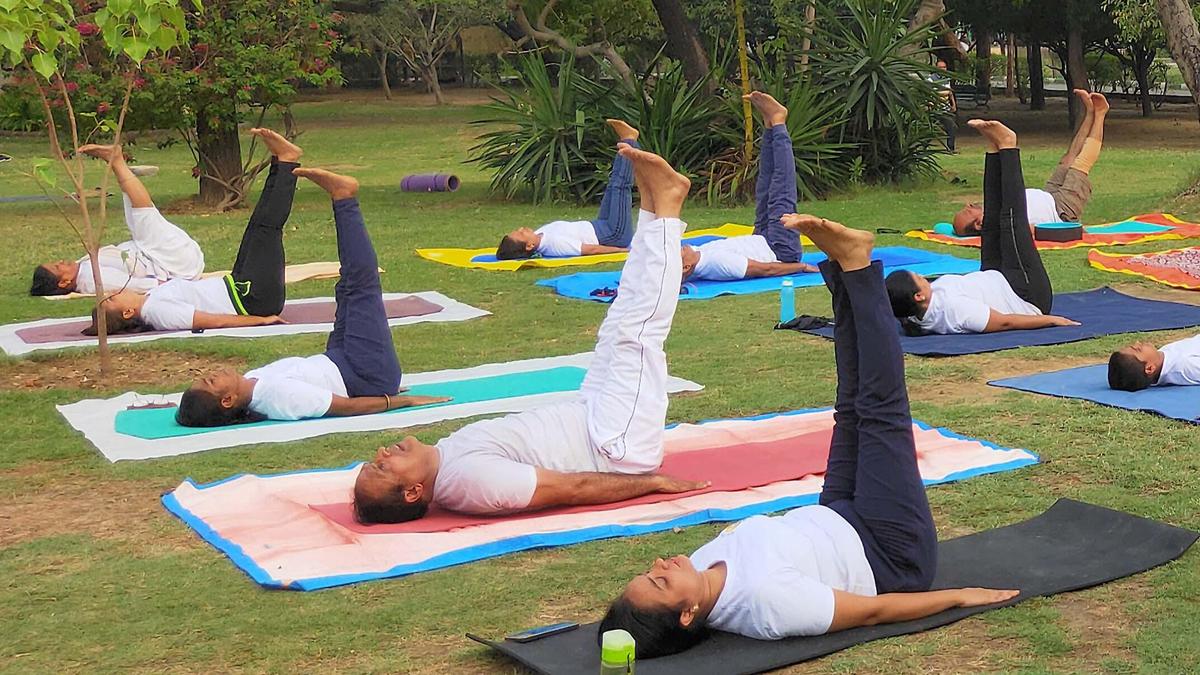
Strength also matters, but you do not need a gym membership or hours of sweat. Two or three times a week, spend five minutes on a living-room mat doing planks, side planks, and bird-dogs. These simple exercises teach the deep abdominal and back muscles to hug the spine like a natural corset, reducing the load on discs during everyday tasks by as much as 30%. Over weeks, the difference is felt in everything from tying shoes to swinging a golf club. Couple that with gentle stretching of the hip flexors and hamstrings—both tighten when we sit—and you restore the full range of motion that keeps the spine supple.
Even sleep can be medicine or menace. A medium-firm mattress proved superior in a 2023 randomised trial, cutting morning stiffness roughly in half compared with either a rock-hard board or a plush surface that sagged like a hammock. One pillow of appropriate height keeps the neck aligned whether you lie on your back or side. If you wake up sore, inspect your pillow and mattress first before blaming age or bad luck.

Tech that helps
Technology can lend a hand, too. New clip-on devices buzz gently when your shoulders slump, nudging you upright before pain sets in. Standing desks that rise at the touch of a button make it easy to alternate 30 minutes of sitting with 30 minutes of standing, a pattern shown to reduce afternoon back discomfort by nearly one-third. Apps count your daily steps and reward you with badges for every thousand extra strides. But gadgets are merely reminders; the real cure is the choice to treat your spine as a living structure that needs circulation, variety, and gentle challenges.
Start today
Put it all together in a day that could belong to anyone. Wake up, stretch like a cat for one minute to rehydrate the discs after a night of compression. Brew coffee while doing 10 shoulder-blade squeezes against the counter. During the commute, grip the steering wheel at nine and three o’clock to keep shoulders relaxed, and adjust the seat so your knees are slightly lower than your hips. At work, set a phone timer for 45 minutes; when it chimes, stand up, roll your shoulders, look out the window at a distant tree to relax your eyes and neck. At lunch, walk around the block for fifteen minutes, enough to boost blood flow to every disc. Mid-afternoon, convert one meeting to a walking meeting, dictating notes into your phone. After dinner, while streaming a show, lie on the floor for three minutes of gentle bridges and knee-to-chest stretches. Slide into a medium-firm bed with a pillow that keeps your head in line with your spine and let the day end as it began: with gratitude for a back that carried you well.
No single change is magic. The magic is in the accumulation of small, consistent choices that respect the way the spine was built and the way it still thrives. Movement is its native language; good posture and smart lifting are its dialects; rest and strength are its punctuation. Speak that language daily, and the story your spine tells will be one of resilience rather than regret.
This article was first published in The Hindu’s e-book Care and Cure.
(Dr. Backiaraj D. is a consultant in spine surgery at Naruvi Hospitals, Vellore, backiaraj.d@naruvihospitals.com; Dr. Boopesh Pugazhendi is a consultant in neurosurgery at Naruvi Hospitals, Vellore. boopesh@naruvihospitals.com)
Published – January 26, 2026 08:00 am IST