

New York Governor Kathy Hochul announced an agenda aimed at making New York more affordable that includes fighting auto insurance fraud and mandating property insurance discounts for mitigation efforts.
In her 2026 State of the State address, Hochul vowed to crack down on fraud including staged accidents that are behind “sky high” auto insurance premiums averaging $4,000 a year — $1,500 more than the national average. She advocated reforming the serious injury threshold under the state’s no-fault insurance law and other anti-fraud measures.
On the home insurance issue, she said she would focus on policyholder discounts and a “check” on insurer profitability.
She also expressed support for dedicating resources to reduce workers’ compensation fraud.
In addition to insurance costs, Hochul’s affordability agenda includes advancing universal childcare statewide, bringing down utility costs, strengthening protections for renters, expanding food assistance, and eliminating state income taxes on tipped wages up to $25,000.
Auto Insurance Fraud
Why do New Yorkers pay so much for auto insurance?
“Not because New Yorkers are doing anything wrong, but because rampant fraud and runaway litigation costs are jacking up prices,” Hochul said. “We’re putting the brakes on fraud and ending a system that rewards illegal behavior. If you were driving drunk, driving without a license, or committing a felony at the time of a crash, you should not get a payday.”
In her 2026 State of the State report, New York Governor Kathy Hochul also proposed flood risk management and workers’ compensation fraud initiatives.
Mitigating Flood Risk: Noting that climate change continues to increase the frequency of flooding across New York, Hochul said she will advance FloodSafe NY to help communities identify flood-prone areas, especially where streams and watersheds have not been adequately researched. FloodSafe NY seeks to align watershed studies, implementation grants, and stream monitoring into a single, coordinated effort that should help communities anticipate flood risks earlier and reduce damage from future flooding events.
Workers’ Compensation Fraud: The Workers’ Compensation Board provides annual funding to the Workers’ Compensation Fraud Inspector General to investigate fraud. However, WCFIG’s referrals to law enforcement often go unprosecuted because district attorneys lack the funding and staff to establish dedicated workers’ compensation fraud units. Hochul said she will advance legislation that allows the Workers’ Compensation Board to use employer assessments to fund a program for district attorneys to staff dedicated workers’ compensation fraud units.
The Democratic governor said New Yorkers “should not pay more for the same coverage” and vowed this is the year, the state does “something about it.”
According to the state, there were more than 1,729 staged crashes in the state in 2023. In total, insurance carriers reported 38,270 incidents of suspected motor vehicle insurance fraud that year — a record high.
Hochul promised to take on medical providers who sign off on phony medical diagnoses that result in big payouts. The state will also move to ensure that prosecutors can seek criminal penalties against those responsible for organizing a staged accident.
Serious Injury Threshold
New York’s no-fault insurance law has a “serious injury” threshold intended to screen out minor injuries from personal injury litigation. However, the definition of serious injury is vague and can include temporary injuries. The governor is proposing reworking the threshold with objective and fair medical “standards for what actually qualifies as a serious injury.” This, she offered, should avoid unnecessary litigation and reduce payouts that are not aligned with the severity of injuries.
The governor wants a cap on non-economic damages for drivers engaging in criminal behavior at the time of an incident including uninsured motorists who have violated state financial responsibility laws; individuals convicted of driving while impaired; and those committing a felony or fleeing at the time of an incident.
She said insurance companies must play a central role in tackling fraudulent behavior but current law “handcuffs insurers” by limiting the time they have to identify, investigate, and report fraud to just 30 days. Hochul is proposing an increase in that timeframe for insurers.
Hochul’s agenda includes taking steps to “reinvigorate” the state’s Motor Vehicle Theft and Insurance Fraud Prevention Board, allowing it to partner with law enforcement and redouble its efforts to prosecute insurance fraud. She wants additional resources and staff dedicated to fighting auto insurance fraud.
Also, her plans include requiring insurance companies to provide benefits to incentivize safe driving and notify policyholders about rate changes.
A number of Hochul’s proposals align with calls by industry and consumer groups for the state to tackle fraud. Ridesharing giant Uber is among the funders of Citizens for Affordable Rates (CAR) that has been advocating for lowering insurance costs that it says have become a “growing burden for families and businesses alike, adding to an already severe affordability crisis in the state.”
Uber and a number of insurers have taken aim at legal abuse by suing personal injury law firms, doctors and medical clinics it claims are involved in staging fake car accidents and performing unnecessary surgeries to take advantage of no-fault insurance policies.
Residential Insurance
Hochul also promised to address home insurance affordability and availability challenges.
“Homeowners and housing providers across the state are contending with escalating home insurance premiums and shrinking options for coverage, which threaten the affordability of New York’s single and multi-family homes,” she said.
Even though single-family home insurance rates in New York are on average lower than they are in many other states, Hochul maintained insurance rates still “threaten to sap money from family’s pocketbooks and make multi-family housing less and less affordable for homeowners and renters.”
Also, insurance is one of the fastest growing operating expenses for the state’s more than one million rent-regulated units of housing, she maintained.
Hochul said she will tackle home insurance by expanding automatic discounts for homeowners and commercial multifamily properties if they make safety and weatherproofing upgrades.
She is also calling for “a first-in-the-nation check on home insurer profitability” that will require insurers with more than “two consecutive years of outsized profit margins” to either lower their rates or submit a justification of why their rates should continue, subject to review by the Department of Financial Services (DFS).
Lawmakers’ Interest
Hochul said she will convene stakeholders and experts from the affordable housing, real estate and insurance industries to explore ways to reduce costs and increase affordability.
Last August, several state Senate committees launched a formal investigation into the residential insurance market and rising costs by requesting documents from the state regulator, insurance associations, and insurers.
In November, the Senate held a hearing at which more than 40 organizations representing insurers, landlords, renters, public housing, rural nonprofits, builders, realtors, tort reformers, trial lawyers, environmentalists, regulators testified on the costs and availability of residential property insurance in the state.
The lawmakers heard about a market for homeowners that is in better shape than many may have thought and a market for multi-family, public and senior housing that needs help.
There was general agreement that the main causes of rising residential insurance prices include increasing weather severity, natural catastrophes and flooding; older housing stock; surging real estate values; economic inflation in labor and construction; reinsurance; fraud and litigation.
However, advocates for multifamily, public and affordable housing expanded their list of causes in maintaining that unfair pricing, underwriting and claims practices by the industry, including the use of “flawed data tools,” contribute to their affordability and availability problems.
After a state report in 2022 cited the potential for unfair discrimination, the state enacted laws banning discrimination against affordable housing in insurance premiums and coverage decisions. However, the Senate committees noted, “the larger issues of rising insurance costs remain unresolved and a key burden for affordable as well as market-rate multifamily affordable housing operators and individual homeowners.”
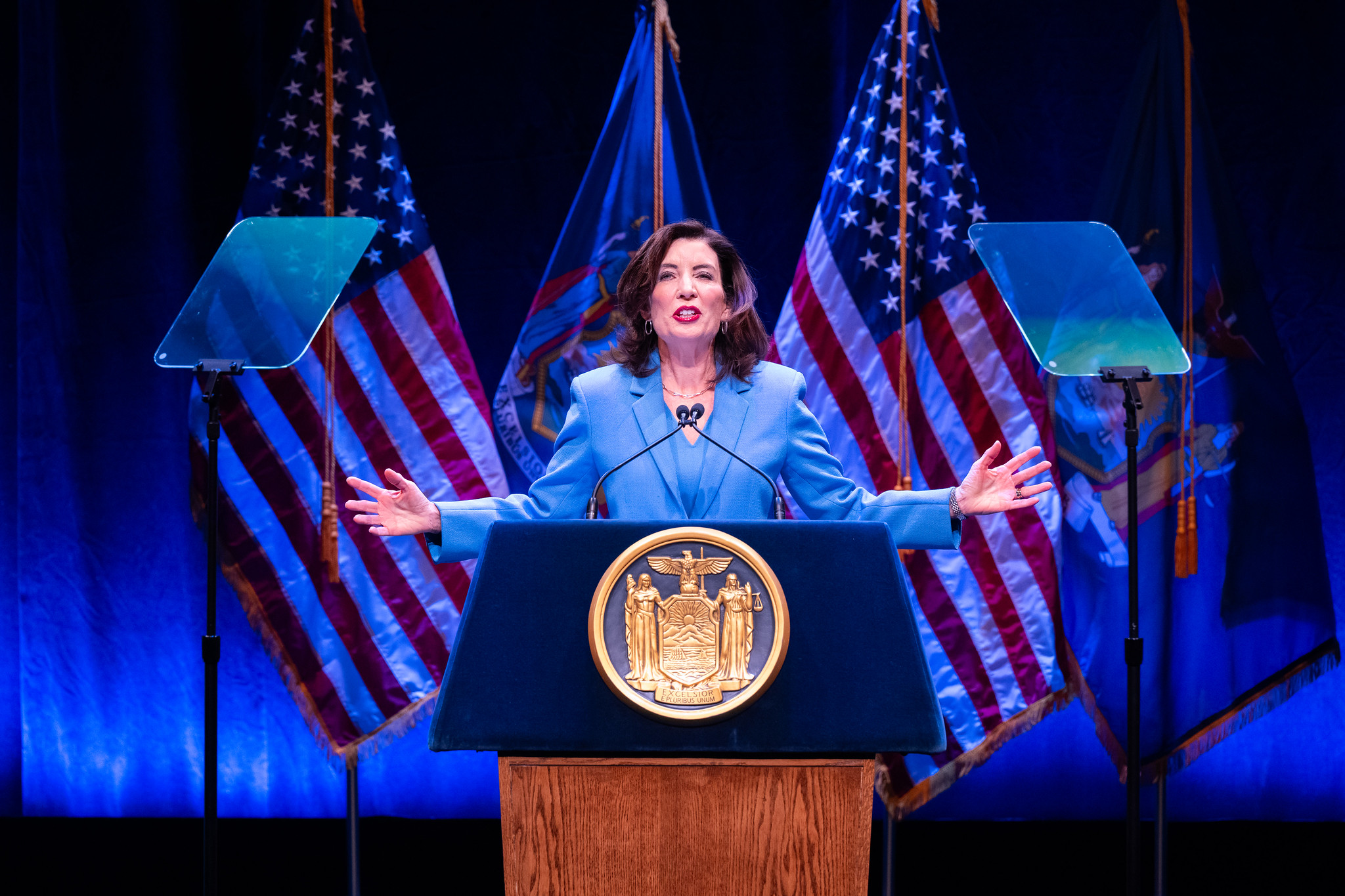
Photo: New York Gov. Kathy Hochul
Topics
Lawsuits
Fraud
New York