


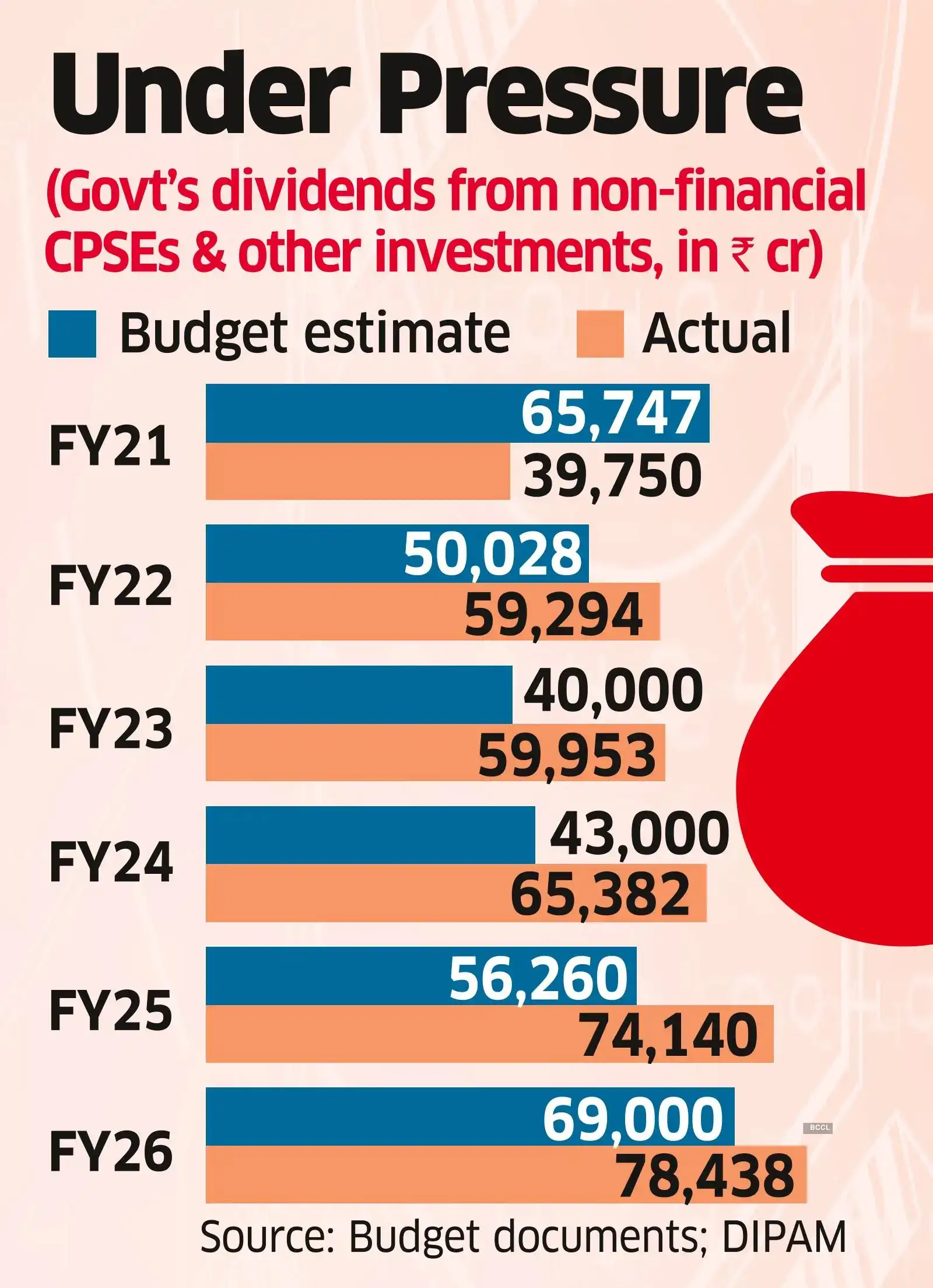
High oil prices could hurt state-run petroleum firms, which alone accounted for a third of the government’s dividend collection of ₹78,438 crore from all CPSEs and other relevant entities last fiscal. Brent crude oil prices on April 10 remained almost 32% above the pre-war levels, despite a fall last week in the wake of a two-week ceasefire agreed between the US and Iran.
Also Read: After failed US-Iran talks, what next for Trump?
The dividend collection exceeded the budget estimates for a fifth straight year last fiscal. Elevated dividend inflows, apart from reflecting strong performance by CPSEs, have helped cushion the impact of weak disinvestment receipts in recent years.
“The ceasefire remains fragile. If it collapses and the war lingers on for more than a quarter, pushing up global prices of oil and other inputs, profits of CPSEs would be impacted this fiscal,” said a senior finance ministry official, who did not wish to be identified. However, if the war abates in a month and commodity prices pull back, the CPSE profitability is unlikely to be impacted substantially, he said.

The Bloomberg Commodity Index, which tracks the price movement of 23 items, has risen about 9% since the war started on February 28.
Also Read: Trump orders Hormuz blockade, warns Iran of ‘hell’The government doesn’t intend to revise the 2026-27 dividend target yet, considering that it’s too early in the financial year. But it could revisit the calculations internally in the second half if the war persists, according to the official.
Petroleum firms, together, were the biggest contributors to the government’s dividend kitty last fiscal with a payout of ₹25,798 crore, followed by entities in sectors such as power (₹13,213 crore) and coal (₹10,876 crore). These three sectors, with heavy commodity exposure, accounted for 64% of such dividends to the government last fiscal.
On March 27, the government cut the excise duty by ₹10 per litre on both petrol and diesel with an aim to shield consumers and oil-marketing companies from the war shocks.
Disinvestment revenue
Last fiscal, the government’s combined disinvestment and asset monetisation receipts touched ₹45,306 crore, surpassing the revised target of ₹33,847 crore but slightly short of the budget estimate of ₹47,000 crore, showed DIPAM data.
