


There is a ward at the government Epidemic Diseases Hospital in Bengaluru from where every single patient is wheeled out dead. The windows are blackened, the room is airless, the only piece of furniture is a solitary cot. This room is not a punitive space: on the contrary, it is refuge for rabies patients who suffer hydrophobia, the fear of light, even of air.
Recently, a 50-year-old construction worker from Delhi was brought in after a rabid dog bit him months ago. “He will be dead by tonight,” says Suresh N.V., Bengaluru district surgeon, who is also the medical superintendent of the hospital. This was patient number 17 this year, just in this one hospital. “Some patients can be sedated to stop them from hallucinating and for hyperactivity, but others can get very aggressive,” he says. One patient, the doctor recalls, lay crumpled with fear that the army was out to get him. And yet another suffered for 10 days before he finally died. Death by rabies is frightening, painful, and inexorably cruel.
The Indian scenario
Of the 59,000 rabies-mediated human deaths in the world every year, India represents a third, around 20,000, and more than any other country, according to a paper published in One Health in December 2024. Rabies is endemic to India, with the main reservoir of the virus being dogs, and the poorest, the majority of the patients.
Days, weeks or months after a rabid dog bite, if the victim is not vaccinated, death is inevitable. The symptoms begin with paralysis from the feet upwards, typically followed by cardio-respiratory failure that finally strikes the victims down. Rabies is a neurotropic virus, and unlike other pathogens, travels via the peripheral nerves (not blood) to the spinal chord, and then to the brain. Post-exposure prophylaxis (PEP) involves immediately washing the wound under running water with soap for 15 minutes, followed by the anti-rabies vaccination (ARV), rabies immunoglobulin (RIG) and a tetanus shot.
Who is at risk? “Human populations inhabiting areas that sustain free-roaming dogs are at the high risk of being bitten,” says Harish Kumar Tiwari, of the Indian Institute of Technology Guwahati, and co-author of the One Health paper, describing rabies as being a disease of the poor and vulnerable. These are usually daily wage workers, often living on the margins of the society: brick kiln workers, waste collectors, rural and remote populations, farming communities. “Besides a lack of awareness of the disease, there is poor accessibility, affordability, and availability of PEP,” he points out.
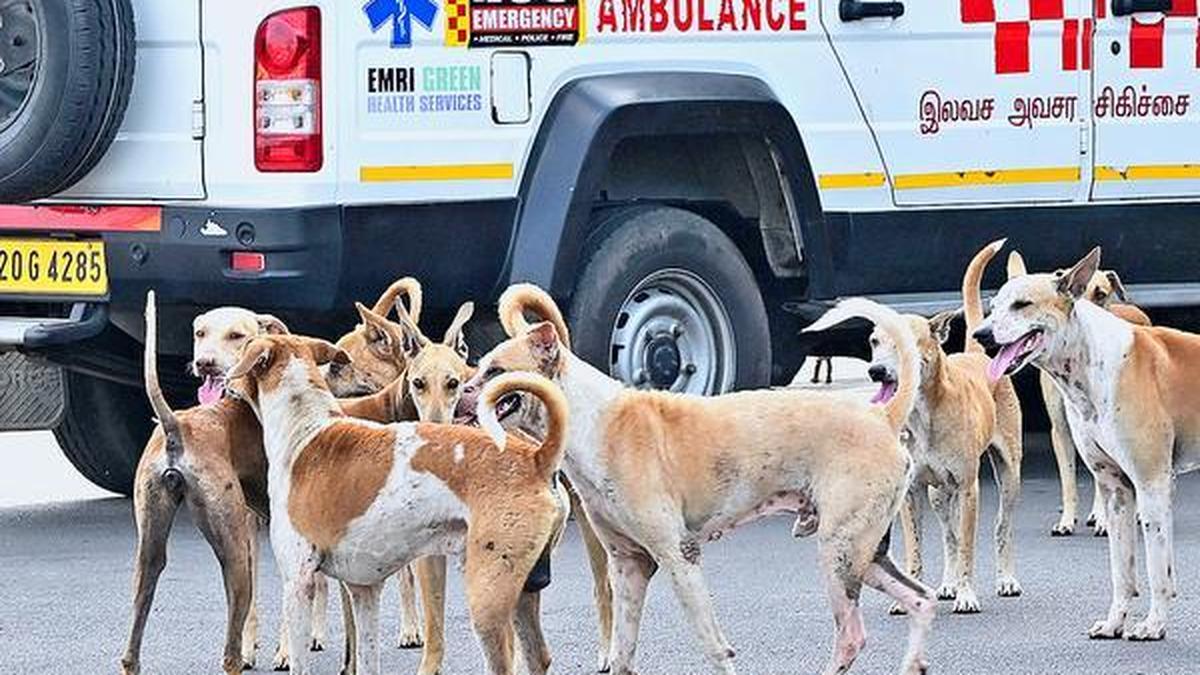
In November 2025, the Supreme Court directed all States to remove stray dogs from hospital premises, educational institutions, railway stations and other spaces of public use and place them in shelters after they are sterilised and vaccinated. Animal rights activists have, ever since the court order, claimed that this prospective programme is “impractical” and “cruel”. According to data available, thereare 80 million free roaming dogs in India and 20 million dog bites per year, making rabies a large public health problem.
The economics at play
Access to good quality, affordable healthcare continues to remain unavailable to large parts of the country, out-of-pocket expenditure on health is high, and families, to date, are pushed into poverty due to medical costs. But with rabies, finances play a role even before health is compromised.
Take the case of a 59-year-old man in a village in Assam (as recounted by the One Health paper researchers), who succumbed to rabies after being bitten by a neighbour’s pup. The pup was not immunised by the family because of financial constraints. In May 2023, the pup “attacked the victim unprovoked, causing deep bite wounds.” Even though he was administered PEP and RIG (at a private hospital because the government one refused to hospitalise him citing “unsatisfactory care by the staff”) he soon developed a headache, high fever, began drooling saliva and experienced difficulty in drinking or swallowing one month later. He then became violent, and eventually died.
“In the order of significance of the actions that led to rabies death, the lack of seriousness on the part of the hospital staff to attend to dog bite injury, prompting the patient to approach a local private nursing home, ranks foremost,” states the One Health paper.
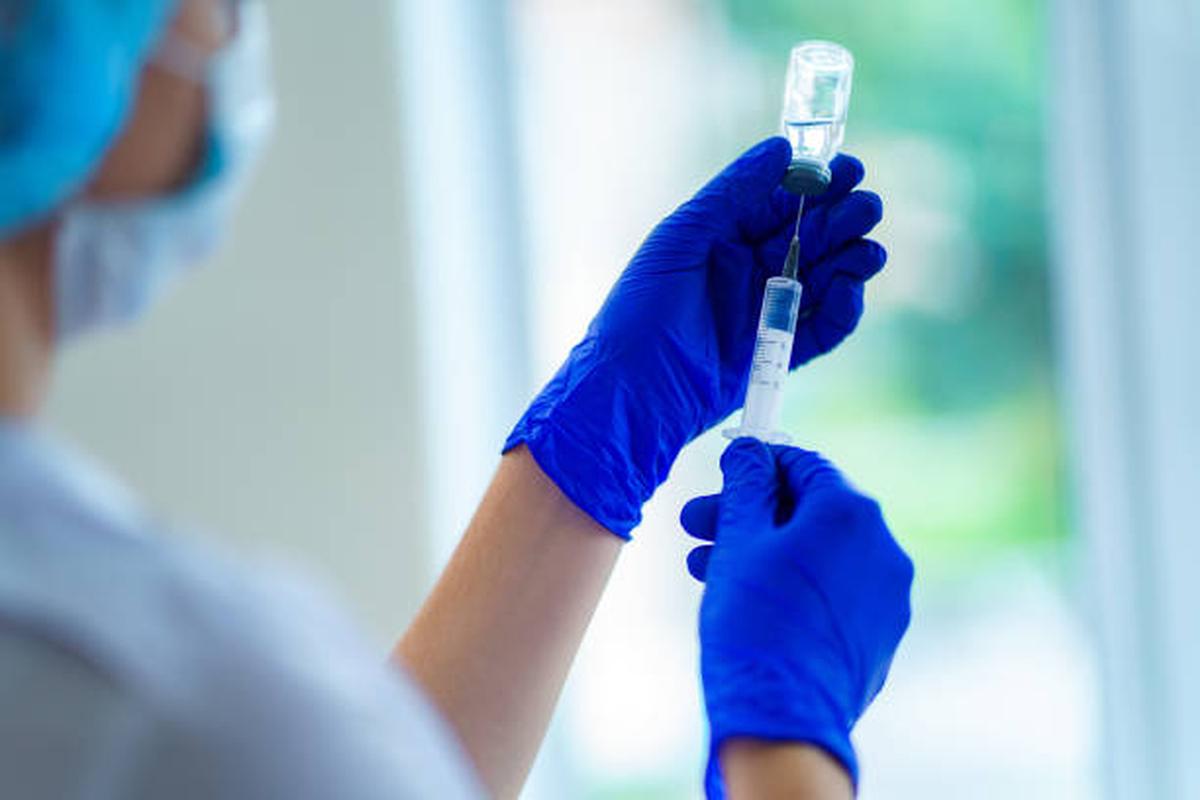
Inadequate dog-bite wound management practises, is part of the many reasons behind rabies in humans.
| Photo Credit:
Siarhei Khaletski
While the patient in this case faced unacceptable delays in treatment, the treatment itself — PEP and RIG — continues to remain out of reach for many dog bite victims. A January 2025 study in The Lancet Infectious Diseases, which surveyed 3,37,808 individuals in 60 districts in 15 Indian States, found that among those who had been bitten by a dog, 20·5% did not receive ARV and nearly half (49%) of those who received one dose “did not complete their full course of vaccination”, says M. K. Sudarshan, member of the National Technical Advisory Committee on Rabies, one of the authors of the paper.
, .
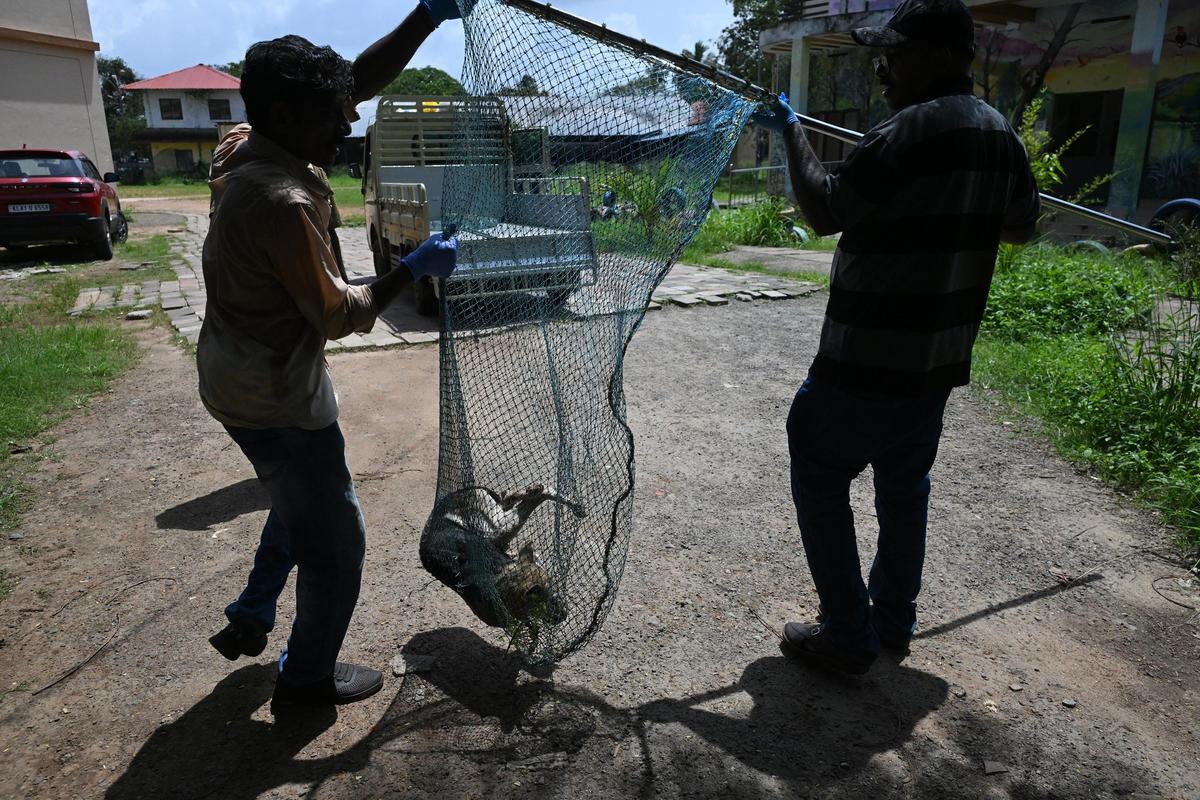
A scientist advises that dog lovers, who feed free ranging dogs on the streets, should fully support 20 dogs in their area, have them neutered and and reglarly vaccinated.
| Photo Credit:
THULASI KAKKAT
Doctors note that when it comes to a small bleed or severe dog / animal bite, the rabies vaccine alone is not enough. An RIG that is injected into the dog bite wounds is needed: RIG is life saving. But the country suffers from a severe shortage of RIG, and it is only used for bites that bleed, not for a lick on a scratch, which could cause rabies too, says Aniruddha Belsare, assistant professor of disease ecology at Auburn University, U.S. “Most public health hospitals do not even have doctors, leave alone RIG for bite victims,” he says, forcing families to run from pillar to post to try and obtain it. RIG is also prohibitively expensive: costing anywhere between ₹5,000 to ₹20,000. As a result, dog bite victims, mainly children under 15 (forming 40% of cases in India), are taken to local quacks who use substances such as chilli powder and chalk to ‘cure’ the disease, Dr. Belsare says.
RIG apart, even ARV is in short supply. “We need 60 million doses of ARV vaccinations. But India produces only 50 million, out of which 15 million are exported,” he adds.
Hearteningly, recently, two novel rabies monoclonal antibodies have been produced in India. RmAbs are cheaper than human rabies immunoglobulin, but being new drugs, are currently under pharmacovigilance and are yet to be included in the national guidelines, says Dr. Sudarshan, who is also the founder president and mentor of the Association for Prevention and Control of Rabies in India.
Tackling the source
Even though India has one of the highest populations globally of free-ranging dogs (FRD) and the highest incidence of dog-mediated human rabies, it “only deploys Catch–Neuter–Vaccinate–Release for FRD control as a humane alternative to lethal methods, without evidence of it working successfully,” the One Health paper states. A 2020 paper in Nature co-authored by Dr. Belsare said that long ago, lethal methods including poisoning or electric chambers, now outlawed, were used “haphazardly for decades,” but dog populations only rebounded.
So what is the solution? Animal birth control and mass vaccination have limitations because the turnover of dogs is enormous (there is a 40% replacement by unsterlised dogs every year). Community action is one option.
“My advice would be that dog lovers, who feed strays on the roads, should fully support 20 dogs in their area, have them neutered and regularly vaccinated,” says Dr. Belsare. Every city, municipality, gram panchayat has to ensure a dog bite is attended to with PEP and and also that families are compensated for the expenses they bear, he emphasises. Dr. Tiwari adds that we need “good quality shelters, with closed and enclosed spaces for homeless dogs.”
Meanwhile, increasing awareness about washing wounds from animals and seeking immediate medical help, ensuring the vaccine and immunoglobulin are available across the length and breath of the country and speeding up processes to make cheaper, indigenous drugs available, are all crucial.
In the end, it comes down to protecting both human health and animal welfare, and certainly, no human being should be allowed to die of a completely preventable disease.


