



India is seeing a significant rise in cancer diagnoses among women of reproductive age. Breast cancer, in particular, has become the most common cancer affecting Indian women and is increasingly being detected in those between 25 and 40 years of age. At this stage of life, many women are still planning their future—pursuing careers, considering marriage, or aspiring towards motherhood. A cancer diagnosis, while emotionally overwhelming in itself, brings on added distress when these women are informed that chemotherapy, targeted therapy, or radiation may irreversibly affect their ovarian reserve.
In an era where cancer treatments are saving more lives than ever before, survivorship is no longer defined solely by remission. It also includes the potential for quality living post-treatment, including the ability to conceive. For many young women, the loss of fertility is not merely a side-effect of the treatment but may feel like an emotional blow to their womanhood. This makes the concept of preserving their gametes, not a luxury, but a necessary part of holistic, mindful and meaningful cancer care.
The greatest barriers to fertility preservation are time and lack of awareness. Often, cancer treatment must begin quickly, leaving only a narrow window to inform patients about their reproductive risks and offer available options. This is where the integration of oncologists and fertility specialists becomes vital. The dialogue, if begun at the primary consultation, goes a long way towards making positive and well- informed decisions. Oncologists are often the first point of contact; their awareness and timely referral can make all the difference. Fertility specialists, in turn, must be equipped with rapid, safe, and effective protocols that preserve fertility without delaying cancer therapy.

Science of fertility preservation
Over the past decade, fertility preservation techniques have evolved remarkably, offering hope to women who once had no options. The main methods include:
Oocyte cryopreservation (egg freezing): Egg freezing has become the preferred choice for many young and unmarried women. The process involves controlled ovarian stimulation followed by retrieval of mature oocytes, which are then vitrified (rapidly frozen) to preserve their quality. Advances in laboratory techniques have increased survival and pregnancy rates from frozen oocytes making this a viable option.
Embryo cryopreservation: For women with partners or those choosing donor sperm, embryo freezing offers excellent success rates. Embryos created through IVF/ICSI are frozen for future use, ensuring the highest predictability of outcomes. This method has been used for decades and remains the gold standard when indicated.
Ovarian tissue cryopreservation: In rare cases where women cannot undergo hormonal stimulation—such as those needing urgent treatment or pre-pubertal girls—ovarian tissue cryopreservation is an alternative. A small portion of the ovarian cortex is laparoscopically removed and frozen. After cancer treatment, the tissue can be reimplanted to restore hormonal function and even enable natural conception. While technically complex, this method has seen 300 live births worldwide and is not experimental at a global level.
Testicular tissue freezing for prepubertal/pubertal boys remains experimental globally. For men, semen freezing is performed: obtained either by ejaculation or surgical sperm retrieval known as PESA (Percutaneous Epididymal Sperm Aspiration) and TESE (Testicular Sperm Extraction).

Choice, dignity and hope
Fertility preservation is fundamentally about giving patients choice, dignity, and hope for parenthood. The possibility of having biological children after cancer treatment may significantly contribute to emotional wellbeing and long-term quality of life.
In India, where cultural expectations around marriage and motherhood remain deeply rooted, the psychological impact of potential infertility can be particularly devastating. Offering fertility preservation may shift this narrative—from one of fear to that of hope in future possibilities.

The Indian scenario
The fertility preservation movement in India began taking organised shape with the establishment of the Fertility Preservation Society of India (FPSI) in 2014, founded by the eminent fertility expert Nalini Mahajan. At a time when the subject was scarcely discussed and rarely offered in clinical practice, this society brought national attention to a crucial gap in cancer care. Through its annual conference and year-round educational efforts, FPSI has strengthened oncofertility practices across India. The platform encourages:
• Early fertility-risk counselling
• Nationwide referral pathways
• Improved access to fertility preservation services
• Collaboration between cancer centres and IVF units
• Training for clinicians and ancillary staff across specialties
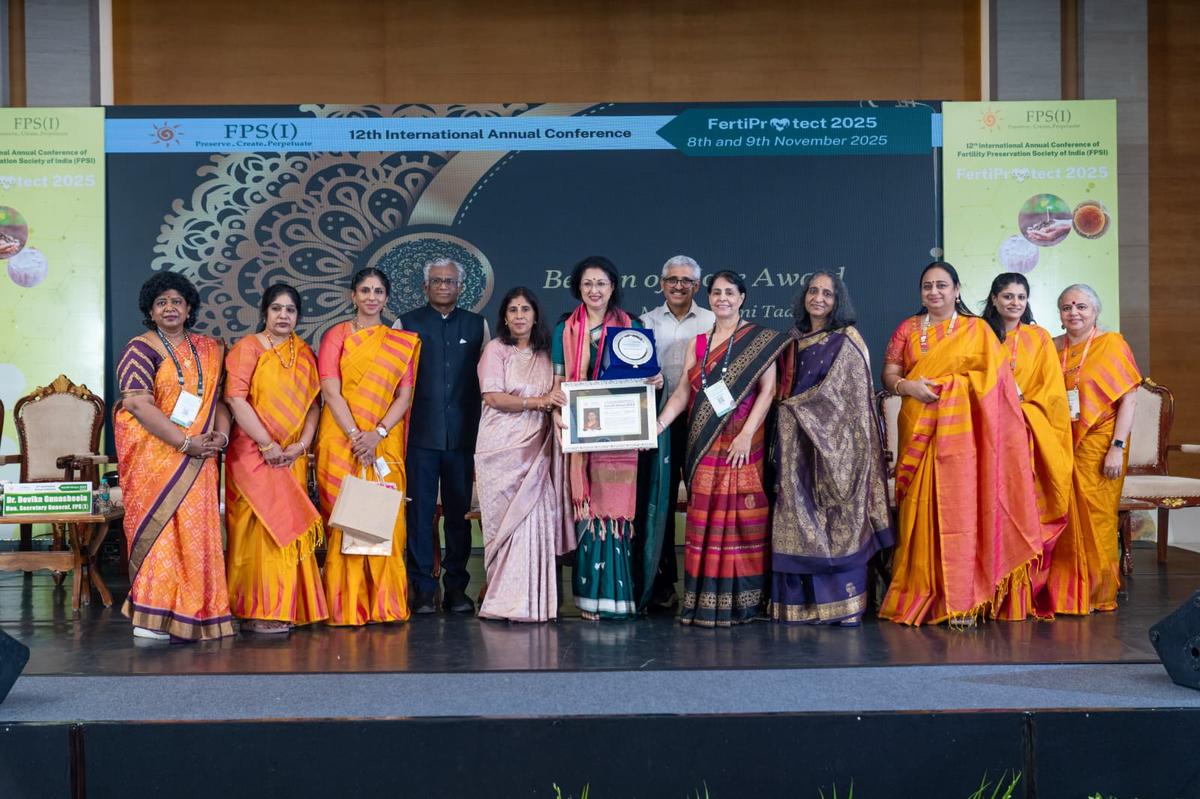
Fertiprotect2025 conference
| Photo Credit:
Special Arrangement
Recently, at FPSI’s 12th annual international conference -Fertiprotect 2025, was held in Chennai, bringing together leading national and international experts. As organising chairperson, for me, the key highlight this year was FPSI’s launch of its first certificate course in oncofertility for practitioners, conceptualised by Dr. Nalini Mahajan and executed under the leadership of FPSI President Padmarekha Jirge. Senior mentors, including past presidents Madhuri Patil and P. M. Gopinath, were acknowledged for their academic guidance and support.
With strong participation from clinicians, oncologists, surgeons and embryologists, FPSI remains committed to preserving fertility, preserving hope, and safeguarding the future for cancer survivors.
Fertility preservation must become a standard part of oncology care—not a special service offered to select few. Every woman diagnosed with cancer deserves to be informed about her options before beginning treatment, while every clinician involved in her care must recognise fertility protection as a critical component of comprehensive cancer management. For countless young women, that includes the hope of motherhood—today, tomorrow, or whenever they are ready.
(Dr. Priya Selvaraj is Director, GG Hospital, Fertility Research and Women’s Specialty Centre, Chennai. drpriya@gghospital.in)
Published – December 11, 2025 06:00 pm IST


