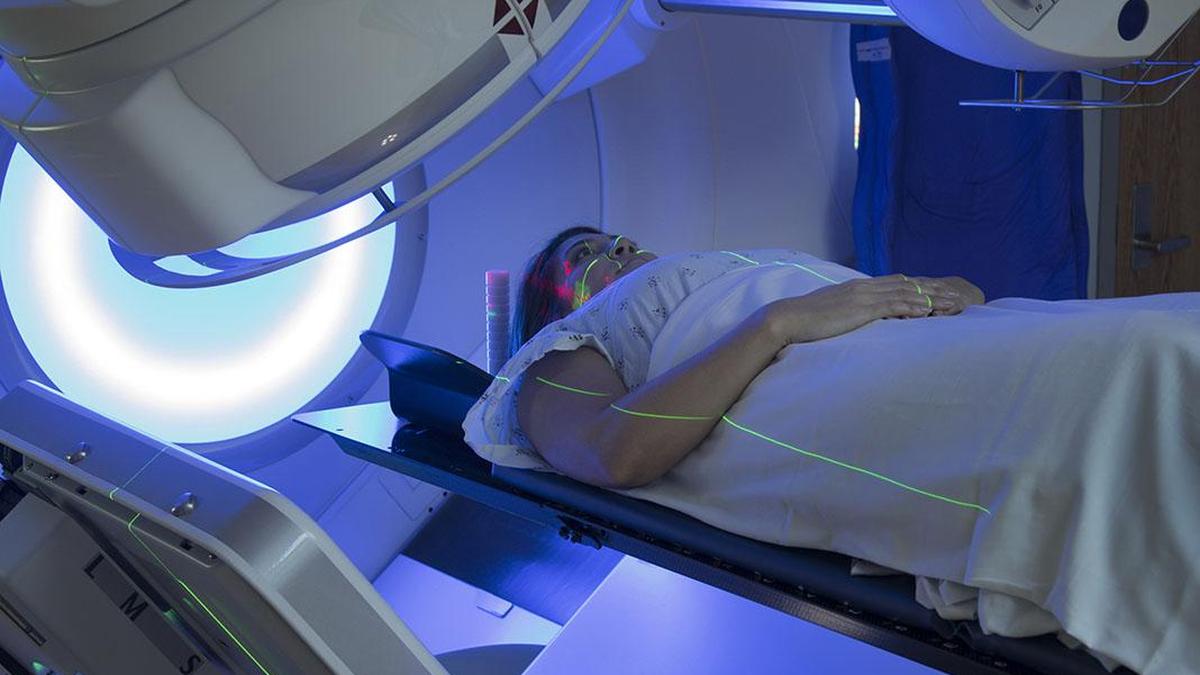
Calculated by forecasting age-standardised mortality rates, for 23 major cancer types to the year 2030, the study found an ongoing epidemiological transition that is a clear shift towards cancers associated with lifestyle and economic development
| Photo Credit: Getty Images
A recent disease-forecasting study — which analysed data from the Global Cancer Observatory (GCO) — has indicated a rise in cancers linked to lifestyle and metabolic factors and a decline in infection-related and tobacco-related cancers in India.
The study, projecting the future burden of 23 major cancer types up to the year 2030, has been published in the BMJ Open this week. Calculated by forecasting age-standardised mortality rates (ASMR), the study found an ongoing epidemiological transition that is a clear shift towards cancers associated with lifestyle and economic development.
The ASMR is a way to fairly compare death rates between populations that have different age structures. The authors used an autoregressive integrated moving average (ARIMA) model to forecast ASMR for 23 major cancer types until 2030, using aggregated, national-level cancer mortality data for the Indian population from 2000 to 2019.

Males vs females
Led by researchers and oncologists from MS Ramaiah University of Applied Sciences, Bengaluru; Amrita Institute of Medical Sciences and Research Centre, Kochi; Great Lakes Institute of Management, Chennai, and Department of Statistics, Assam University, Silchar – the study revealed that among males, mortality rates due to colorectal cancer and pancreatic cancer are expected to increase by 6.55% and 9.59%, respectively, from 2025 to 2030. Among females, breast cancer is expected to have the highest increase from 2025 to 2030, followed by lung, colorectal cancer, pancreas, ovary, kidney, and lymphomas.

Cancers that will dip
However, among both genders, mouth and oropharynx cancers and urinary bladder cancer mortality are projected to decrease between 2000 and 2030, attributed to the reduction in tobacco use and household air pollution, said Denny John from MS Ramaiah University of Applied Sciences, who is the lead author of the study.
“The study provides the first comprehensive, long-range forecast of age-standardised mortality rates for 23 cancer types in India using a robust time-series approach. We used an autoregressive integrated moving average (ARIMA) model that has a greater ability for prediction and applicability for cancer forecasting in the country,” Dr. John told The Hindu.
“The ASMR of 23 major cancer types was selected for forecasting cancer mortality as this metric takes into account changes in the population’s age structure over time, enabling a more accurate comparison of mortality risk across different periods, regardless of the impact of population ageing. Projections of cancer mortality would be helpful for clinicians, researchers, healthcare administrators, and policymakers in planning facilities, equipment, and staffing allocation in the country,” he said.
Also Read: Cancer-related mortalities increased faster among females in past decade, expected to continue rising in next two decades: ICMR analysis
Primary prevention
Highlighting the public health implications of the study, K. Pavithran, professor and head, department of medical oncology at Amrita Institute of Medical Sciences and Research Centre, Kochi, said it underscores the importance of strengthening primary prevention and early detection strategies, especially for cancers that show steeply increasing projections, such as breast and colorectal cancer. “Improving early detection through expanded screening programmes, such as mammography and colonoscopy, and improving diagnostic infrastructure in rural and underserved regions are essential,” the professor said.

State-specific prediction
Narassima M.S., assistant professor at Great Lakes Institute of Management, Chennai, said that since the analysis is based on national-level estimates from the Global Cancer Observatory, this may mask significant subnational and regional heterogeneity in cancer patterns across States,an area that also needs to be focused on for better allocation of resources depending on region-specific patterns.
The authors emphasise the need for future research using State-specific predictions, to facilitate the development of tailored interventions at the regional level.
Published – October 22, 2025 07:00 am IST