

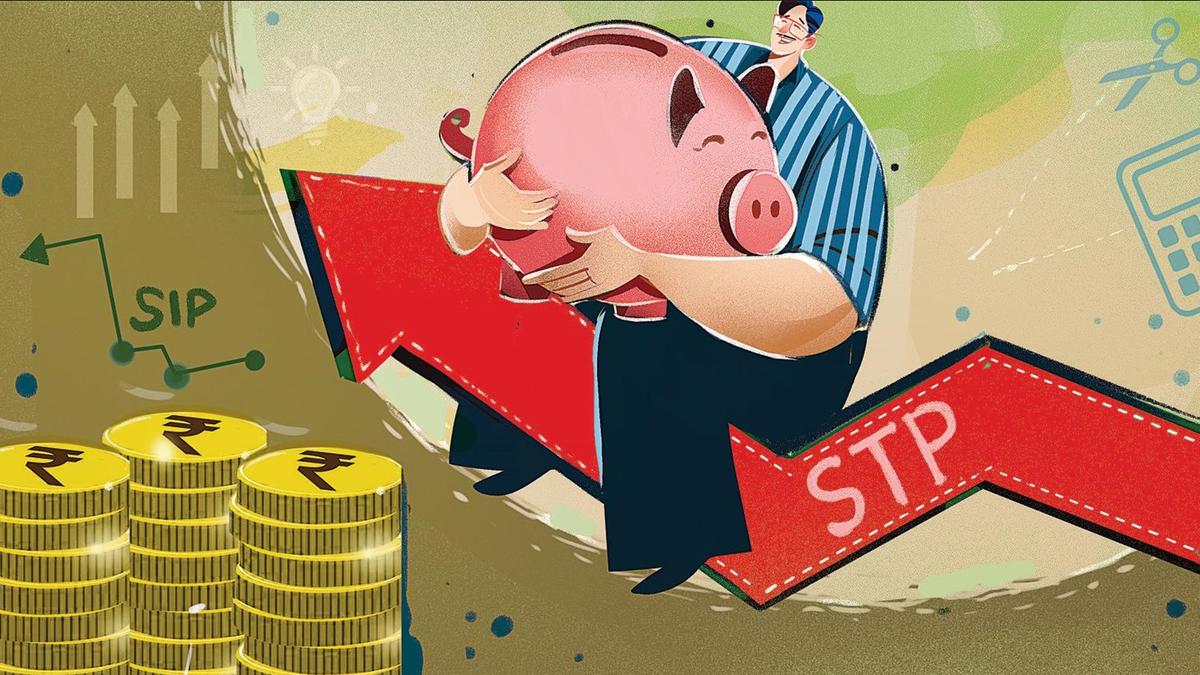

We are all familiar with Systematic Investment Plans (SIP) and to an extent, Systematic Transfer Plan (STP). The goal is similar: when you invest in a disciplined manner over a long period of time, the average cost of acquisition works in your favour as you purchase across market cycles. There are certain differences as well, between SIP and STP.
SIP, STP
SIP is a mandate given by you to the Mutual Fund (MF) where a certain sum of money flows from your bank to the MF at a defined frequency, usually monthly, for investment in the designated funds. In a STP, you invest lump sum in a fund, usually a liquid fund and mandate the transfer at a defined frequency, usually monthly, into designated funds of the same MF. It is used to systematically transfer from the source fund, say liquid fund, usually to equity-oriented funds. The purpose is averaging out the cost of acquisition across market cycles. The reason for using liquid or ultra short term fund as the source fund for STP is these funds are stable in performance. Both SIP and STP are flexible i.e. you can start or pause or stop at any point if you so desire.
Though the purpose of SIP and STP is the same, there is a subtle difference. SIP is a cash-flow solution. You will earn the money gradually over a period of time via monthly salary or income from business or profession. Part of the income will be invested. SIP acts as a discipline; before it is spent, it is channelised into investments in MFs. Cost averaging in a SIP is an added advantage.
STP is a cost-averaging solution. You have the money; rather than investing lump sum, you prefer to average out investments. If you keep the money in savings account, the ‘propensity to spend’ comes into play. Hence you park the money in a defensive fund viz. liquid or ultra short term fund. Usually monthly, the defined amount flows from the source fund to the designated funds to give you the advantage of rupee cost averaging.
Wealth creation
SIP’s purpose is long-term wealth creation. STP’s purpose is strategic deployment of lump sum to average out. In STP, the amount in the source fund, continues to earn. If you have deployed in a liquid or ultra short-term fund, usually the accrual level is more than that of bank savings account, comparable to bank fixed deposits. In STP, in case there is a significant correction in the equity market you can take a call on timing the market and transfer the balance amount one-shot from liquid to designated funds.
Taxation
In the growth option of MFs, you pay tax when you redeem i.e. you don’t have to pay tax every year. In a SIP, there are multiple dates of investment. The basis of taxation is called First-In-First-Out (FIFO) i.e. the initial date of investment in the fund is considered first, then the second investment and so on, matched with the redemption price to compute capital gains. In a STP, you are redeeming from source fund and have to pay tax on capital gains till that point of time. When you redeem from the designated funds after a long period of time, it is FIFO.
Other use of STP
The other dimension is derisking or rebalancing portfolio. You would have a certain portfolio allocation e.g. 60% to equity. Let us say allocation to equity is higher than planned and you do not wish to withdraw from the equity market. In such a situation, you may start profit booking at the margin. It is here STP comes in handy. From the equity funds, you designate a certain sum to be transferred to, say, a liquid fund. The benefit is profit booking and rebalancing is averaged out rather than timing the market. Since no one knows the market peak, you average it out via STP. At the end of the STP, your allocation comes back to the intended level.
Suitability
SIP is suited more for salaried individuals or those with regular earnings. STP is for those who earn in irregular chunks so that the acquisition cost is averaged out. For salaried individuals, STP is useful when you receive a chunk e.g. bonus or windfall. The other dimension of STP is anyone may need gradual rebalancing of portfolio.
Conclusion
Both of these are methods of investment (or withdrawal as in the case of other use of STP) and not an investment product per se. The usage depends on your objectives and financial situation e.g. available funds. You can combine the two i.e. SIP for regular income and STP for lump sum deployments.
(The writer is is a corporate trainer (financial markets) and author)
Published – January 05, 2026 06:04 am IST


