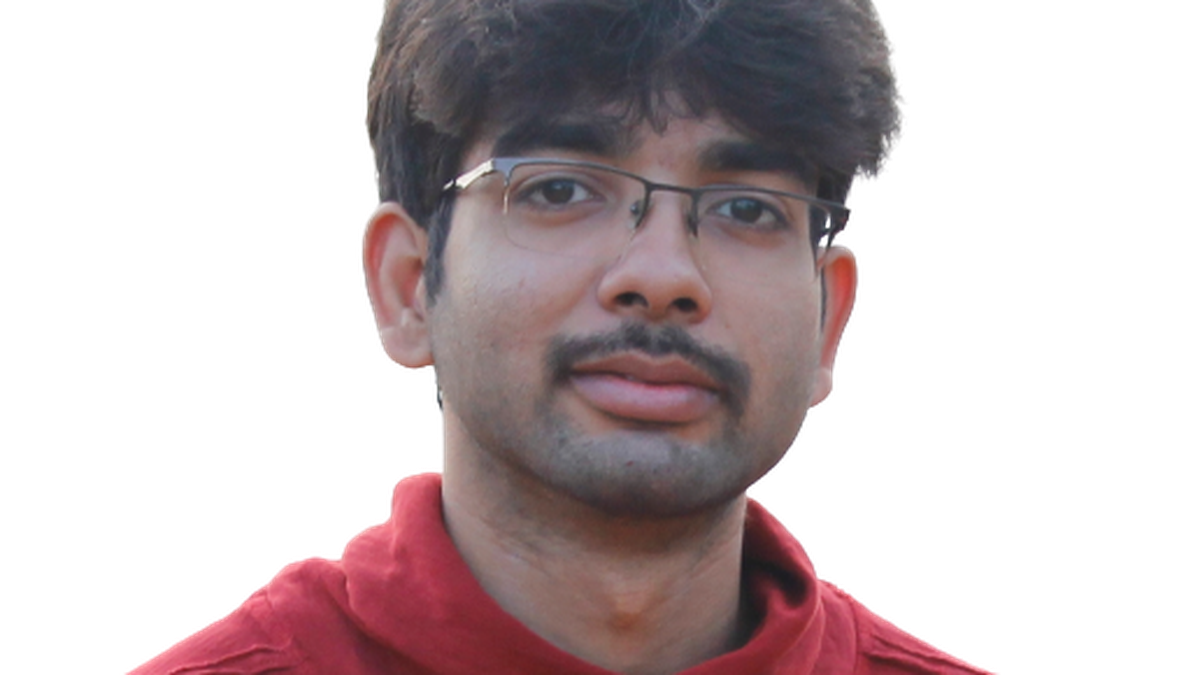
Siva Teja Kakileti, Principal Research Scientist at Niramai Health Analytix.
| Photo Credit: Special Arrangement
What do you do?
I am Siva Teja Kakileti, Principal Research Scientist at Niramai Health Analytix. This is a start-up building non-invasive, AI-driven healthcare solutions for early disease detection. We combine affordable thermal cameras with advanced AI to analyse temperature maps of the human body without radiation, needles, or discomfort. For example, Thermalytix enables breast cancer screening by identifying subtle thermal patterns associated with abnormal tissue activity. My work focusses on developing AI algorithms to assist both doctors and imaging technicians and ensuring reliable performance in real-world clinical settings.
Why is your work important globally?
Early diagnostic tools are often invasive, expensive, and dependent on heavy infrastructure, limiting their reach. With over half of the world’s population lacking full access to even essential healthcare services, access to organised screening and specialised diagnostic services is limited. As a result, most cancers, including breast cancer, are detected at advanced stages when treatment is more complex and outcomes are poorer. Non-invasive AI systems enable early detection through portable, scalable, and low-cost infrastructure, helping shift healthcare from late-stage treatment to preventive or early-stage, improving outcomes at the population level.
What is exciting about your work?
What excites me most is uncovering meaningful health signals from thermal data that was once considered clinically irrelevant and mere “noise”. Advances in AI now allow us to visualise human physiology in new ways. For example, thermal patterns that reflect underlying tissue metabolism and vascular activity. Beyond research, the clinical impact is inspiring.
Any experiences in college that led you to be a technologist?
During my second-year internship at IIT-Hyderabad, I worked on detecting age-related macular degeneration using 2D OCT images. This gave me first-hand exposure to real clinical challenges and the opportunity to collaborate closely with doctors. I saw how research in Engineering, when aligned with healthcare needs, can directly impact millions of lives. This sparked my interest in medical imaging AI and inspired me to work on developing scalable, non-invasive healthcare solutions.
What should students specifically know about AI in healthcare?
AI in healthcare goes far beyond building accurate models. Strong fundamentals in Maths, signal and image processing, and machine learning are essential, along with an understanding of biology, clinical workflows, ethics, and regulatory requirements. Healthcare data is often noisy and biased, making robustness and interpretability critical. More importantly, models must be validated independently across multiple sites and earn the trust of clinicians through safety, transparency, and real-world performance. The most impactful professionals are those who can bridge Engineering, Medicine, and human-centred design, grounded in scientific rigour and patient safety.
The writer is an avid follower of emerging technologies and their applications.
Published – January 11, 2026 10:00 am IST