Ed Yardeni foresees gold having a long runway ahead. Despite the recent sluggishness, the veteran strategist believes the shiny yellow metal has the potential to reach $6,000 an ounce by the end of 2026 (a 20% increase from current prices) and $10,000 by the end of the decade. At the time of writing, spot gold…
Ed Yardeni foresees gold having a long runway ahead.
Despite the recent sluggishness, the veteran strategist believes the shiny yellow metal has the potential to reach $6,000 an ounce by the end of 2026 (a 20% increase from current prices) and $10,000 by the end of the decade.
At the time of writing, spot gold traded at around $5,017.70 per ounce, or nearly $161.32 per gram, according to Kitco data. In addition, spot silver was trading near $80.45 per ounce, or roughly $2.59 per gram.
However, Yardeni’s rationale is not the usual inflation fears or commodity demand.
In his opinion, gold’s incredible run underscores a deeper shift in geopolitics, global reserves, and the search for assets investors can diversify into.
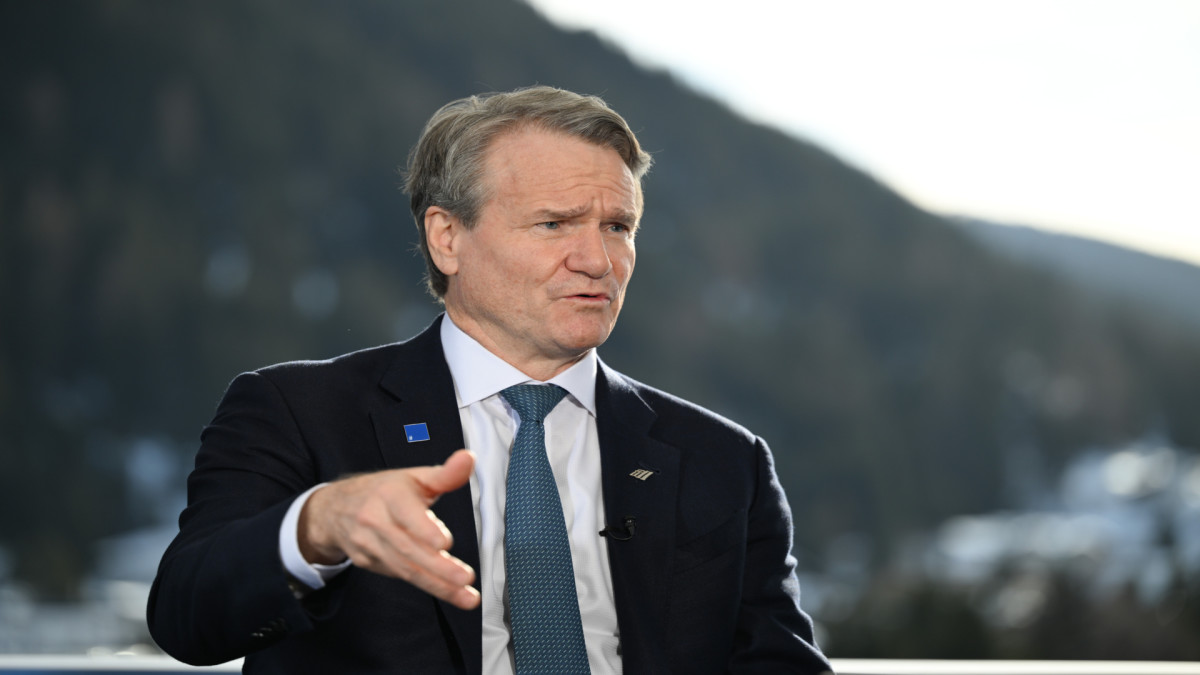
In a recent Bloomberg interview, Yardeni traced the origins of gold’s bull run to the moment the U.S. and Europe froze nearly $300 billion in Russian central bank reserves following the invasion of Ukraine.
That moment pushed governments and investors around the world to rethink where they keep their wealth.
Suddenly, investors felt that assets that sat outside any government’s balance sheet looked much more attractive.
That’s exactly where the king metal comes in.
Though Yardeni feels the metal is currently consolidating near $5,000 an ounce, the forces pushing it higher are only getting started.
Ed Yardeni’s voice matters on Wall Street because he wears multiple hats and often delivers some of the market’s most prescient takes.
He currently serves as the president and chief investment strategist of Yardeni Research, a firm he founded back in 2007, with his work covering the economy, the stock market, bonds, and commodities.
More Gold:
What sets him apart is that he doesn’t sound like a typical bank house analyst, giving his views a lot more weight when the markets get shaky.
Perhaps his most far-sighted calls include him predicting in 1988 that the Dow would hit 5,000 by 1993. He later predicted in 1995 that it would reach 10,000 by 2000.
Yardeni is also famous for coining the term “bond vigilantes,” which has essentially become a shorthand for how markets enforce fiscal discipline.
JPMorgan: $6,300 by end-2026
UBS: $6,200 for March, June, and September 2026
Deutsche Bank: $6,000 in 2026
Societe Generale: $6,000 by year-end
Goldman Sachs: $5,400 by end-2026
Bank of America: $5,000 in 2026 Source: Reuters
Gold prices remain in focus after a longtime analyst shared a fresh outlook for investors.Shutterstock ·Shutterstock
Yardeni feels that gold’s rally has everything to do with diversification at a time when traditional hedges are no longer working as effectively.
In his Bloomberg interview, he remarked that gold and the S&P 500 typically move in opposite directions, especially in the short term. Over the long run, though, the two assets share a similar upward trajectory as wealth expands and investors spread their money across a variety of asset classes.
The bigger issue at hand is that investors seem to be running out of options to hide. Bonds, which usually offer a classic hedge against stock volatility, have not provided the same protection as inflation has kept yields elevated.
Related: Goldman Sachs resets Marvell price target after earnings
Bitcoin is often considered a modern alternative, but its current lackluster performance has exposed its lack of credibility compared with gold.
That is exactly what billionaire Ray Dalio discussed in a recent breakdown on gold, as I noted in this article. And as I’ve mentioned in several other pieces lately, central bank demand remains as strong as ever.
According to the World Gold Council, central banks scooped up 1,092.4 tonnes of the safe haven metal in 2024 and 863.3 tonnes in 2025, comfortably above the 473-tonne annual average between 2010 and 2021.
Moreover, gold’s rally has increasingly been linked to geopolitics. That’s why, per the World Gold Council, the shiny yellow metal set 53 new all-time highs in 2025.
Surveys from OMFIF also show that 31% of reserve managers cite geopolitics as a critical investment driver, up from just 4% a year prior.
Gold’s performance over the past month remained mostly muted.
Spot gold was up just 0.6%, from $5,022.06 on Feb. 13 to $5,052.15 on March 13. However, within that narrow gain, it jumped to $5,230.56 by Feb. 27 and then later spiked above $5,400 in early March with the Iran conflict triggering a rush into safe-haven assets.
Related: 5-star analyst revamps Micron stock price target before earnings
That rally didn’t last for long, though, due to a shift in the macro narrative.
Initially, we saw softer inflation readings, expectations for 0.63% of Fed cuts in 2026, supercharging gold. Later, rising oil prices, a healthier dollar, and fears of “higher-for-longer” interest rates capped the rally.
From a technical perspective, things look relatively bearish for the precious metal in the short term, but a lot more bullish in the medium term.
The near-term case is the obvious, with gold posting two straight weeks of weekly declines, and has failed to hold moves above the $5,200-$5,230 zone.
The early-March breakout above the $5,400 level looks like a breakout failure, a negative technical signal suggesting that buyers weren’t able to sustain an obvious momentum surge.
However, in the medium term, we can gauge that gold is still trading well above the critical $5,000 psychological area, meaningfully above its mid-February level, and still in a broader uptrend.
So clearly, the broader uptrend seems mostly intact, pointing to healthy upside after the recent bout of profit-taking.
Related: Veteran analyst shares warning for stock market investors
This story was originally published by TheStreet on Mar 14, 2026, where it first appeared in the Investing section. Add TheStreet as a Preferred Source by clicking here.