What will happen to Trump’s tariffs after supreme court verdict? | US supreme court
- Business
 ThePostMaster
- 0
- 7 minutes read

What did the court ruling say?
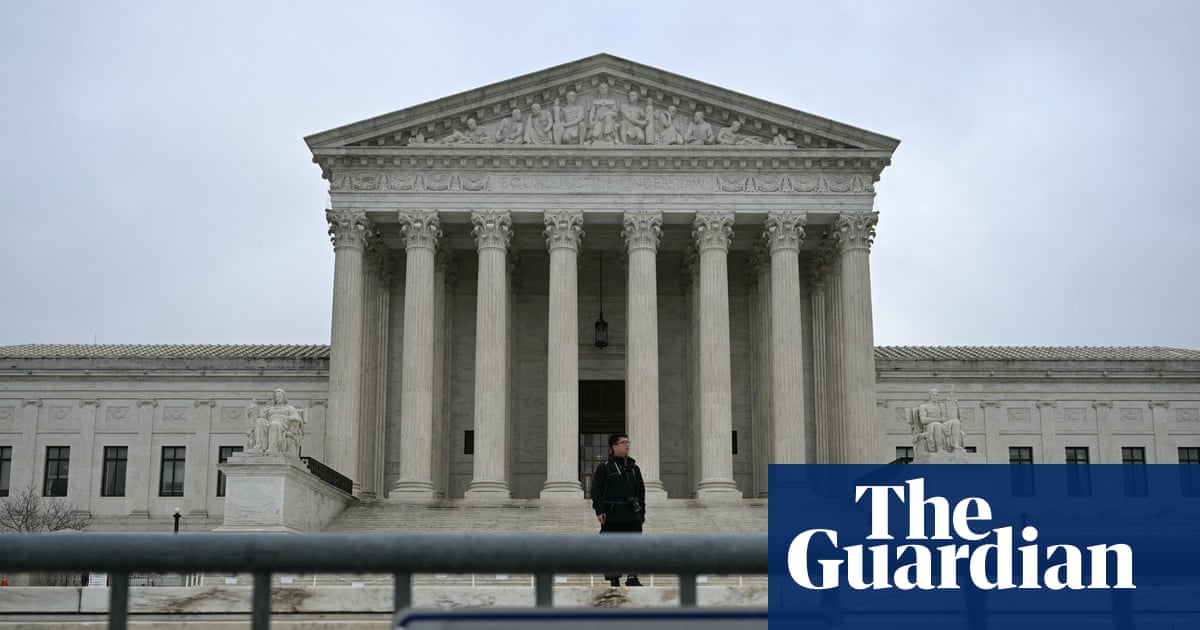
The court ruled that Trump exceeded his authority and should have got congressional approval for the tariffs, which he announced on what he dubbed “liberation day” last April. The tariffs, set at varying rates, covered dozens of countries from war-torn Syria and impoverished Lesotho to the UK, China, Canada, Mexico, Japan and EU countries.
The conservative-majority court ruled six to three in the judgment, saying the International Emergency Economic Powers Act (IEEPA) – the 1977 law designed to address national emergencies Trump had used to implement them – “does not authorise the president to impose tariffs”.
The decision affirms earlier findings by lower courts that tariffs Trump imposed under IEEPA were illegal.
Will Trump now abandon his tariff war?
Highly unlikely, experts have said.
Trump – who faces a backdrop of slowing economic growth – has made it clear that he is not going to abandon his international trade policy, and will find other ways to implement it.
“The US administration may pivot to other tariff regimes or trade barriers to replace the lost income,” said Basil Woodd-Walker, disputes and investigations partner at global law firm Simmons & Simmons.
“The tariffs are here to stay,” said Erin McLaughlin, senior economist of US thinktank The Conference Board. She said the supreme court ruling on tariffs is a “blow” to Trump – but not a knockout one.
She told the BBC that Trump had other tariff routes to continue his strategy – and not just the section 232 investigations that have seen targeted tariffs imposed on sectors such as steel. The EU is charged 50% on steel and steel derivatives, with the UK paying 25%.
He also has section 122 of the 1974 Trade Act, which would allow him to impose temporary import surcharges of up to 15% for 150 days while he addresses alleged “large and serious” deficits in the country’s balance of payments.
Trump’s annual State of the Union address next week could shed light on his next steps.
Companies that have invested significant time and money to adapt to America’s new import red tape will not adjust supply chains again until they know the long-term plan.
Richard Rumbelow, director of international business at Make UK, said: “As the situation continues to evolve, businesses now need clear, practical guidance on how the ruling will be implemented, alongside progress on resolving the remaining section 232 tariffs on UK steel and aluminium.”
Will the tariffs be paid back?
Tariff revenues for last year are estimated to have been between $240bn and $300bn, most of it owing to US manufacturers and consumers. The cost to the US government could be vast if it is forced to pay the money back to US importers.
McLaughlin says that “many studies show that US firms have paid 90% of that” with much of it passed on the consumer through price rises in shops.
Even if the US administration was forced to pay that back, it would “not be paid back soon”, she said. Supreme court justice Brett Kavanaugh said the refund process is likely to be a “mess”.
What has the UK and the EU said?
The UK’s Department for Business and Trade (DBT) said the ruling did not impact the preferential deal the UK negotiated on steel, automobiles (10% down from 27.5%) and pharma, which has zero tariffs compared with 15% in the EU.
“The UK enjoys the lowest reciprocal tariffs globally, and under any scenario we expect our privileged trading position with the US to continue. We will work with the administration to understand how the ruling will affect tariffs for the UK and the rest of the world,” said a spokesperson for DBT.
The European Commission trade spokesperson, Olof Gill, said it was analysing the ruling “carefully”.
“Businesses on both sides of the Atlantic depend on stability and predictability in the trading relationship. We therefore continue to advocate for low tariffs and to work towards reducing them,” he added.
The German confederation of industries, BDI, said the ruling sent a “strong signal for the rules-based trade order”.
Can the EU-US trade deal be paused again by MEPs?
The EU parliament has yet to ratify a deal struck in Scotland last year and may well decide to pause it again on fresh legal grounds.
MEPs paused and then unpaused it amid the diplomatic row over tariff threats related to Trump’s bid to take over Greenland.
A formal vote of the International Partnership Committee is due on Tuesday, followed by a session of all MEPs, expected in early March.
