



Find it hard to stop at exactly one potato chip or cookie? And why does a bar of chocolate fill you up in ways that fruit cannot, when you are craving a sweet treat on a stressful work day?
Going by Food Noise: How weight loss medications & smart nutrition can silence your cravings, a new book by Jack Mosley, which delves into the GLP-1 drug landscape, the reason is more sinister than you think. According to it, the big food industry, which took off around the same time as the Beatles, “began processing food in clever ways to entice us to buy and eat more,” around then, which in turn led to an acceleration of both their bottom lines and the obesity epidemic.
These “clever concoctions of salt, fat, sugar and carbs that you would not see in ‘whole foods’ or in nature” are especially hard to resist when they have “this two-to-one, carbohydrate to fat ratio, which is the same ratio you see in breast milk,” says the Manchester-based 33-year-old, who studied medicine at Newcastle University and holds a Masters of Research in diabetes.
This particular ratio, not typically found in most whole foods, “sends our primitive stone-age brains haywire,” he says, pointing out that while our genes have not changed dramatically over the last few millennia, our food environment has. “We are adapted for the Savannah and the Stone Age lifestyle, not for our Western diets. Obesity is a clear sign that our hunter-gatherer bodies are struggling,” writes Dr. Mosley in the book.
Enter Ozempic
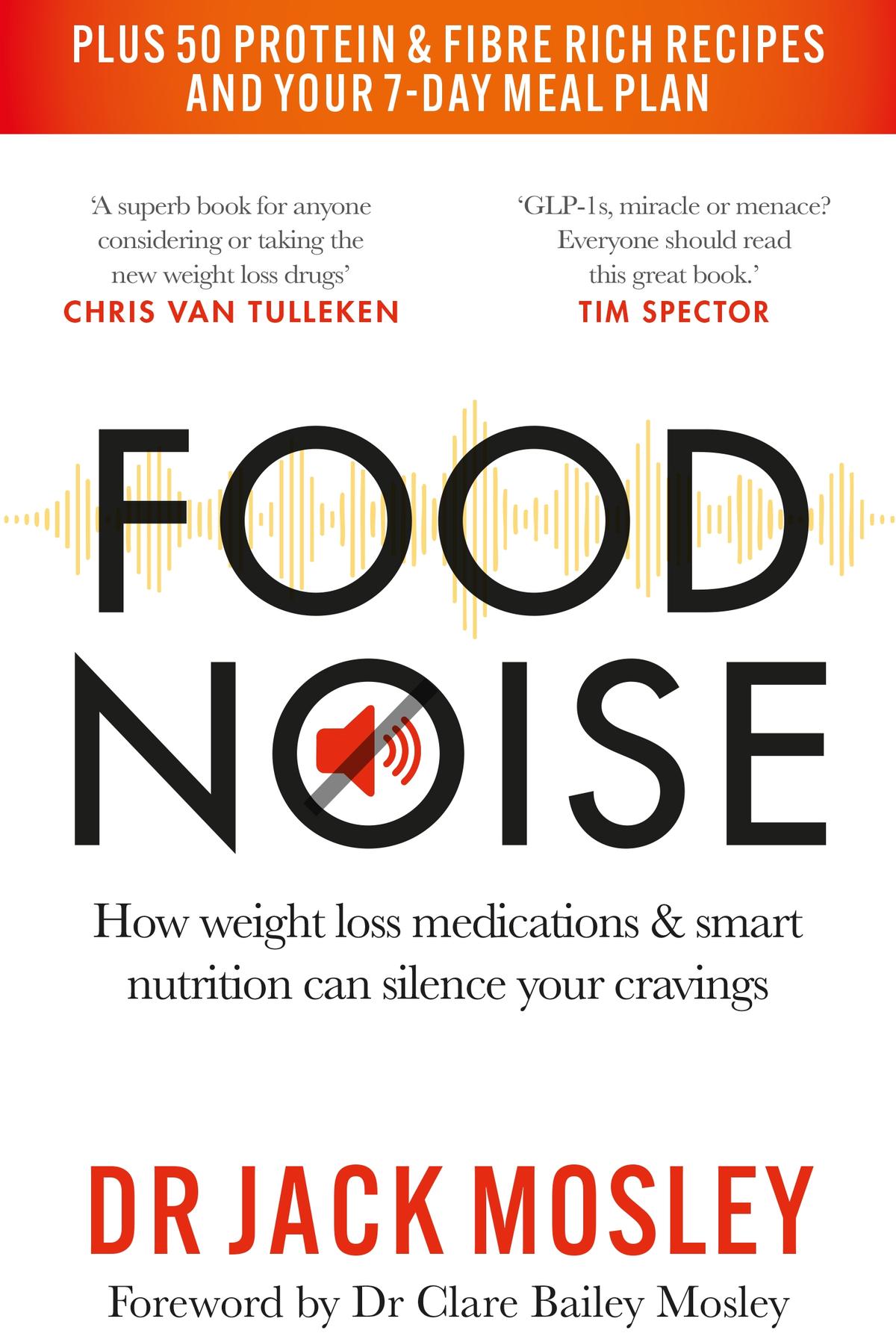
Food Noise: How weight loss medications & smart nutrition can silence your cravings, a new book by Dr Jack Mosley, delves into the GLP-1 drug landscape
| Photo Credit:
Special Arrangement
Obesity is a complex problem, not simply, as it is often assumed, a behavioural issue stemming from a lack of self-control, gluttony or sheer laziness. “Willpower is somewhat overrated, and, if you look back at the last sixty years, we’ve not had a collective collapse of willpower,” he says. Instead, we live in a food environment in which we are surrounded by an abundance of ultraprocessed foods that are designed to be overeaten, leading to persistent food noise, “your cravings…that voice that tells you to grab the extra slice of cake, crisps or chocolate bar,” says Dr. Mosley. “So, it is very difficult in today’s age to lose weight.”
This is where GLP-1 drugs, aka glucagon-like peptide-1 receptor agonists, a class of medications primarily used to treat type 2 diabetes, which are now also being used to manage obesity, can help. “They work on three areas,” he says, listing them out. Firstly, he says, they reduce blood sugar levels, which is why they’ve been used to treat diabetes for nearly 20 years. They also act on the gut, slowing down your digestive tract and keeping you full longer. “Thirdly, and this is where they’re so interesting and have a big impact on weight loss, they act on the brain, reducing appetite,” he says.

Since these drugs, which include Ozempic, Wegovy, Rybelsus, Mounjaro and Zepbound, seem to regulate the brain’s reward centres and regulate cravings, ”they are so effective at silencing that food noise. That is one of the reasons why people lose a lot of weight,” says Dr. Mosley, who thinks of them as a tool in the toolbox to combat obesity, and not a replacement for other traditional weight-management strategies, such as a healthy diet, hydration, adequate sleep, stress management and exercise.
Genesis

The book emerged from a conversation between Jack and his mother, Clare Bailey Mosley
| Photo Credit:
LEZLI+ROSE
The idea for Food Noise emerged from a conversation between Dr. Mosley and his mother, Clare Bailey Mosley, while they were travelling on a busy train from Austria to Germany. While not a magic fix, “these are really powerful drugs”, and he also could see how valuable they could be for certain people, he says. He has been closely following GLP-1s and was struck by the lack of information available about them. “I felt that people should be well-informed about them. So, I kind of said, ‘why don’t I write a book about it?”
“It is the Wild West out there. I don’t think people are provided that much information about how they work, their risks and rewards, their side effects and how to manage them,” he says.
Also, because they are expensive and there is such a massive demand for them, “there are a lot of sharks and cowboys out there who are providing fake GLP-1s as well,” he says. Another concern he has is that, since they’re so accessible, they may be misused by people who don’t need them: those who are metabolically well with a healthy BMI, trying to drop a few vanity pounds or people with eating disorders for whom “they could be really, really dangerous.”
The Mosley mission

Jack is a strong advocate for the Mediterranean diet, which is packed with plenty of vegetables, fruits, nuts, seeds, legumes, some oily fish and plenty of olive oil
| Photo Credit:
Courtesy Food Noise: How weight loss medications & smart nutrition can silence your cravings
Son of the late writer, television presenter and health maverick, Michael Mosley, best known for his frequent forays into self-experimentation and popularising the 5:2 diet, Dr. Jack Mosley admits that his father significantly influenced his interest in metabolic health and weight management. Michael Mosley, who would do all these “weird whacky things… in the name of science”, including ingesting tapeworms, keeping a pet leech and even undergoing a colonoscopy on camera, had also been deeply interested in these new weight loss drugs, he says.
“My dad and I talked about these GLP1s quite substantially. They were clearly going to make a massive impact on the diet and weight loss world, but we also discussed the risks that were emerging,” says Dr. Mosley, adding that carrying his father’s legacy forward, “whether it was helping people reverse Type 2 diabetes, lose weight or even making one or two small changes in their habits”, was important to him. “I wanted to continue this Mosley mission. That has been really important to me in the aftermath of his death.”

In addition to offering a nuanced take on these drugs, neither proclaiming them to be a magic bullet nor deriding them as an easy shortcut to weight loss, Food Noise also contains a selection of recipes created by Dr. Mosley’s mother, Clare, which appear to be primarily influenced by the Mediterranean diet, “the most evidence-based dietary pattern in the world,” he says of the diet, which is packed with plenty of vegetables, fruits, nuts, seeds, legumes, some oily fish and plenty of olive oil. “It is a dietary pattern in that it is good for your health and easier to stick to,” he says.