

The year 2025 unfolded as a challenging yet transitional phase for the Health department, marked by a blend of incremental reforms, budgetary support and recruitment gains, alongside recurring disruptions, regulatory lapses and delayed infrastructure projects. While the government initiated several long-pending measures, the year also brought out the continuing gap between policy intent and execution.
The year began with unrest among MBBS students at the Government Medical College Asifabad, who protested against faculty shortages. Their agitation brought attention to concerns over academic standards, training quality and patient care in newly established government medical colleges, many of which continue to struggle with staffing and infrastructure constraints.
Soon after, the State’s flagship Aarogyasri health insurance scheme faced a major disruption when the Telangana Aarogyasri Network Hospitals Association (TANHA) announced a temporary halt to admissions, citing unpaid dues of over ₹1,100 crore. The 10-day standoff affected access to care for thousands of beneficiaries before services resumed following assurances from Health Minister C. Damodar Raja Narasimha on phased payments.
Regulatory oversight came under scrutiny with the exposure of an illegal kidney transplant racket at Alakananda Hospital in Saroornagar. Investigations revealed that the private hospital had carried out transplants without mandatory authorisation, raising concerns over monitoring mechanisms and enforcement of transplant laws in the State.
Amid these developments, the government made a key administrative move by appointing Dr A. Narendra Kumar as the first full-time Director of Medical Education (DME) since Telangana’s formation in 2014. The post had remained under additional charge for more than a decade.
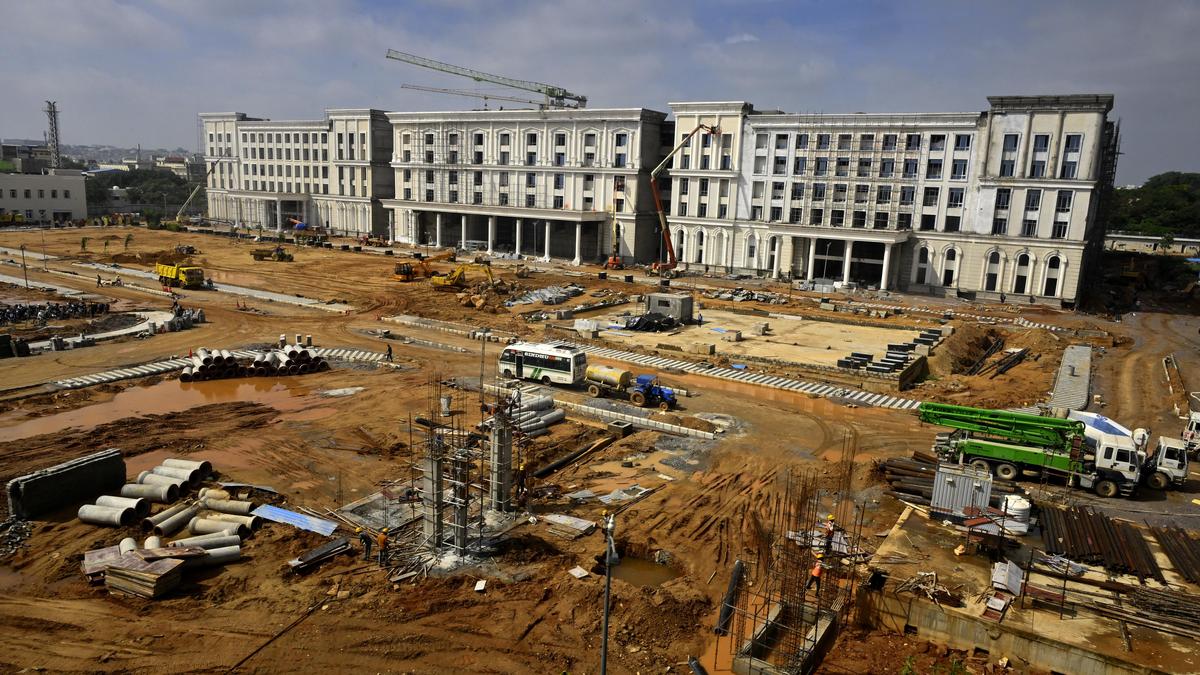
Infrastructure projects, however, continued to face delays. In January, the foundation stone was laid for the new Osmania General Hospital (OGH) building at Goshamahal, a long-pending demand of doctors working in the dilapidated heritage structure. The hospital was announced to be built at a cost of ₹2,700 crore with an initial completion timeline of two years. Construction, however, began only in October, and the executing agency later stated that the project would take 30 months, pushing timelines further.
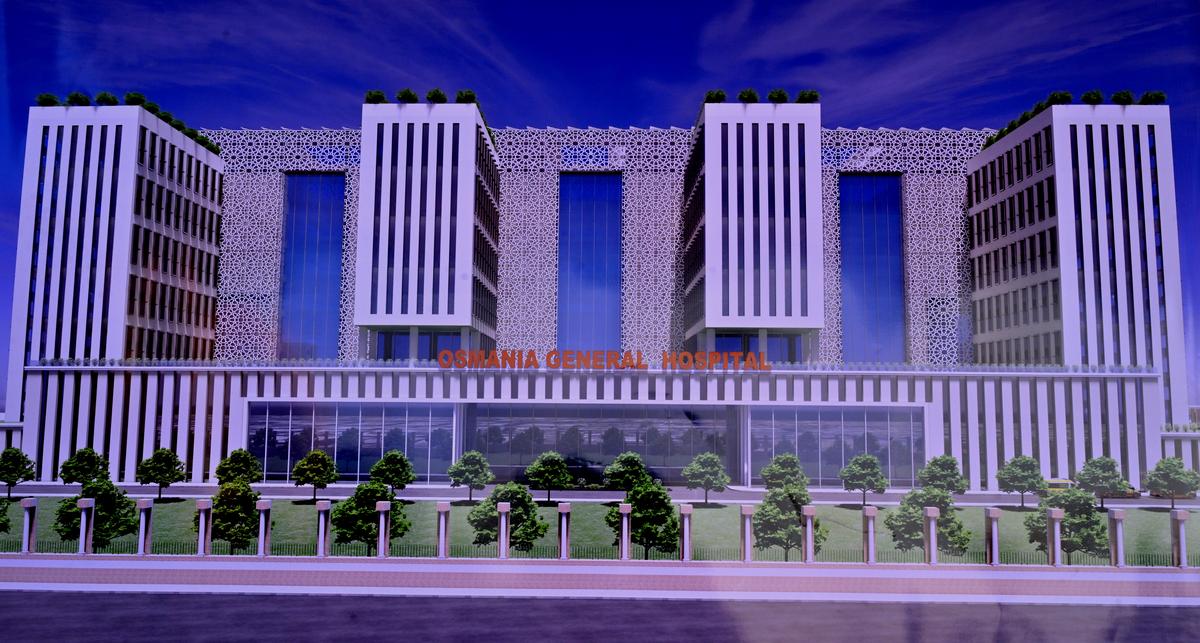
Photographs of the proposed Osmania General Hospital building. The foundation stone for the new building was laid by Telangana Chief Minister A. Revanth Reddy at Goshamahal, Hyderabad on Friday, January 31, 2025.
| Photo Credit:
NAGARA GOPAL
Similarly, the 1,000-bed Telangana Institute of Medical Sciences (TIMS) at Sanathnagar, which was expected to be inaugurated this year, remained unopened despite multiple proposed dates.
On the policy front, the State budget for 2025-26 allocated ₹12,393 crore to the health department, an increase of ₹925 crore or 8% over the previous year. In March, the Legislative Assembly unanimously passed the Telangana Transplantation of Human Organs Bill, 2025, aimed at aligning State regulations with the Central Act and strengthening safeguards against illegal organ trade.
Public health indicators offered a mixed picture. Data from the Special Bulletin on Maternal Mortality in India 2019-21 showed Telangana’s maternal mortality ratio (MMR) at 45 deaths per 100,000 live births, a marginal rise from 43 in the previous period. While the increase contrasted with the national decline, Telangana continued to rank among the better-performing States in maternal health outcomes.
June saw renewed scrutiny of hospital management following a food poisoning incident at the Institute of Mental Health (IMH) in Erragadda, which resulted in one death and illness among around 70 patients. The Health Department relieved the in-charge Resident Medical Officer (RMO) and suspended the food supplier’s contract.
The same month, the National Medical Commission (NMC) issued show-cause notices to 26 government medical colleges over deficiencies in infrastructure, clinical material and faculty. Following a report in The Hindu, Chief Minister A. Revanth Reddy directed officials to prepare a comprehensive action plan for all 34 medical colleges in the State.
Unrest among MBBS interns in private medical colleges over non-payment of stipends also prompted the government to order a statewide vigilance inquiry. By September, the year came full circle with TANHA hospitals once again announcing suspension of Aarogyasri services, citing arrears nearing ₹1,400 crore.
Despite these challenges, recruitment remained a bright spot. Over the past two years, more than 11,000 posts have been filled in the Health Department, and recruitment is underway for over 5,000 more positions.
As 2025 ends, Telangana’s health sector stands at a crossroads, with momentum in staffing and policy reforms tempered by the need for timely execution.
Published – December 26, 2025 06:41 pm IST